

Trinidad and Tobago Grants Visa-Free Access to Sierra Leoneans
 Sorie Abubakar
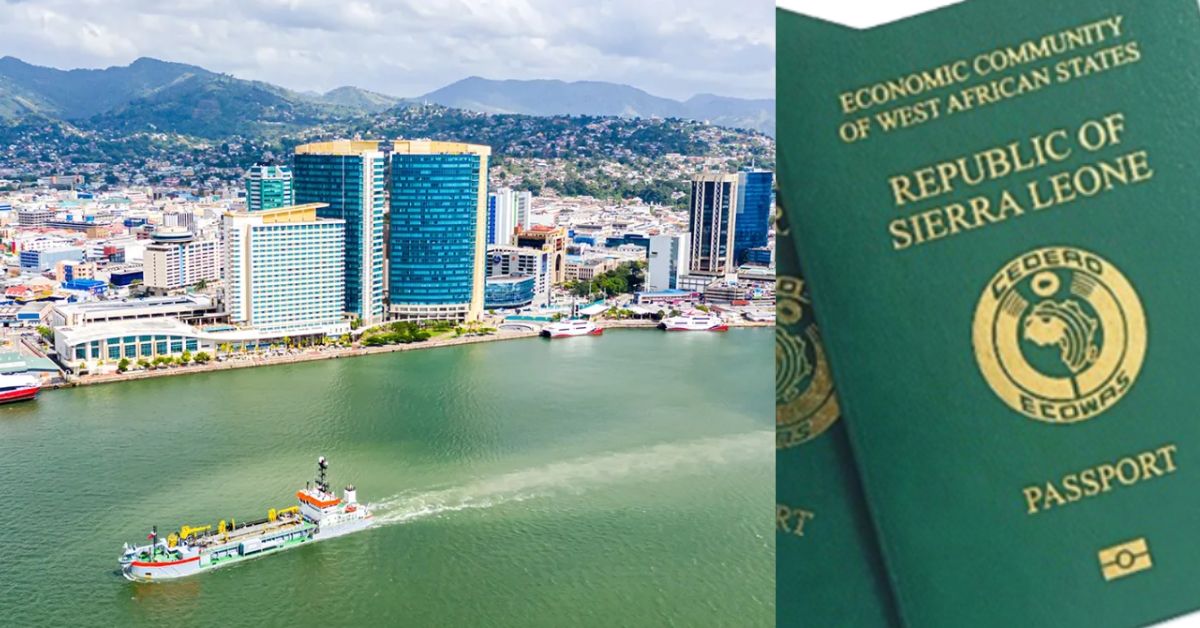
 The Caribbean nation of Trinidad and Tobago has granted visa-free access to Sierra Leoneans, along with citizens of 13 other African countries. The announcement was made public by the Trinidad and Tobago Immigration authorities earlier in August 2026.
Trinidad and Tobago joins countries such as Jamaica, which have opened their doors to Sierra Leonean travellers through visa-free or visa-exemption arrangements in 2026.
The other African countries included in Trinidad and Tobago’s new visa policy are Botswana, Eswatini, The Gambia, Ghana, Kenya, Lesotho, Malawi, Mauritius, Namibia, Seychelles, South Africa, Zambia, and Zimbabwe.

A good number of the African countries benefiting from the policy are members of the Commonwealth, reflecting the historical and cultural ties shared between Trinidad and Tobago and several African nations.


The visa-free policy is expected to strengthen people-to-people connections between Trinidad and Tobago and Africa, while creating opportunities for tourism, business, cultural exchange, and investment.
Beyond the new travel opportunity, Sierra Leone and Trinidad and Tobago share a number of striking cultural and historical similarities. Both countries have populations shaped by African heritage, and music, dance, food, storytelling, and community traditions play important roles in their national identities.
Both nations also have a strong connection to the English-speaking Caribbean and West Africa, with English serving as the official language. Their histories have been influenced by British colonialism and the wider movement of Africans and people of African descent across the Atlantic.
There are also similarities in their music and cultural expressions. Sierra Leone’s vibrant musical traditions and Trinidad and Tobago’s globally influential genres such as calypso and soca reflect the creativity and resilience of communities with deep African roots.
From their shared Commonwealth heritage to their African cultural connections, Sierra Leone and Trinidad and Tobago are separated by the Atlantic Ocean but connected by history, culture, language, and people-to-people ties. The new visa-free access could therefore serve as more than a travel arrangement—it could open the door to stronger cultural, economic, and social relations between the two countries.