

Sierra Leone Positions for Potential Oil Production as Bio Announces $225 Million Deal
 Osman Tolo Sesay
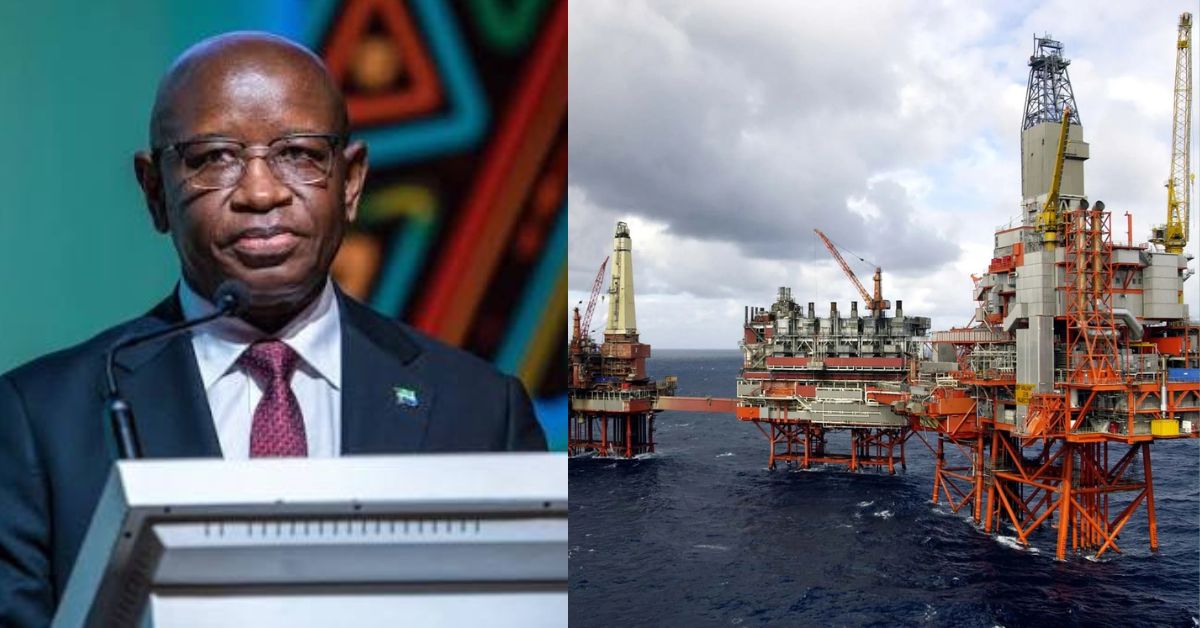
 Sierra Leone is positioning itself for a possible entry into oil and gas production after President Julius Maada Bio announced a proposed $225 million investment and renewed interest in the country’s offshore basin.
Bio disclosed in his State Opening Address to Parliament on August 7 2026, saying recent seismic work has improved understanding of Sierra Leone’s offshore petroleum prospects and attracted renewed international attention.
The president cautioned, however, that seismic data alone cannot establish commercial viability. He said drilling would ultimately determine whether the country can make a commercially viable oil or gas discovery.

The announcement builds on Sierra Leone’s recent efforts to revive its upstream petroleum industry. In April, the government signed a Petroleum Licence Agreement with Nigeria-based Marginal Energy Limited covering offshore exploration, development and production activities. Reports on the agreement put the investment commitment at $225 million and said it covers five offshore blocks.

Bio said the government had concluded negotiations with Marginal Energy for the proposed seven-year investment, subject to parliamentary approval.
The development marks a significant step in Sierra Leone’s efforts to attract capital into a sector that has generated exploration interest but has yet to produce commercial oil or gas.
The government has also been building the geological and technical basis for future exploration. In its 2025 State Opening Address, the government said an offshore prospectivity study had identified more than 80 deep water exploration leads, while a 3D seismic survey was completed to help guide future drilling decisions.
Bio also used his latest address to highlight Sierra Leone’s participation in the proposed Africa Atlantic Gas Pipeline, a major regional energy project intended to connect gas-producing countries in West Africa with Morocco and onward markets.
The president said Sierra Leone’s participation could strengthen regional energy security, attract investment and support deeper economic integration across West Africa.
Sierra Leone’s role in the petroleum sector is expected to be supported by the Sierra Leone National Petroleum Company Limited, which will act as the government’s commercial arm. Bio said the institution would be responsible for ensuring that investments generate value and opportunities for Sierra Leonean businesses and professionals.
The government has previously described the country as a frontier destination for oil and gas exploration, while stressing the need to develop the sector responsibly and transparently. A 2026 presidential address also said Sierra Leone was working to develop its oil and gas potential in ways that could support domestic power generation, industrial development and regional energy security.
For now, the prospect of oil production remains conditional on successful exploration and drilling. The proposed Marginal Energy investment and ongoing offshore studies therefore represent preparation for possible production rather than confirmation that Sierra Leone has discovered commercially recoverable petroleum.
Bio said the government’s objective is to ensure that any future petroleum development creates broad economic benefits.
“Our objective is to create value, jobs, and opportunities for Sierra Leoneans while strengthening our role in regional energy security,” Bio told lawmakers.
If exploration and subsequent drilling establish commercial reserves, the development could open a new source of government revenue, investment and employment while adding a new dimension to Sierra Leone’s position in West Africa’s evolving energy market.
Good Lord. The land of Sierra Leone is for every Sierra Leoneans. No one is exempt from it. So I hope Sierra Leoneans will benefits from the oil resources. Any government, whether SLPP OR APC don’t have to borrow money from any country, IMF, world Bank, etc, etc, etc, etc, to develop Sierra Leone. It is a SIN, and God will never forgive if you don’t stop from such situations. Generations will continue to pay for that debts. Please our governments think like Burkina Faso, Mali and Niger. No more IMF, world Bank, etc, etc, etc, etc. They are developing their country with their own national resources. Why not Sierra Leone? Peace, respect and love. God bless Sierra Leone.