

UK Aid Cuts Threaten Sierra Leone’s Hard-Won Health Gains
 Sorie Abubakar
 Britain is set to sharply reduce its bilateral development assistance to Sierra Leone as part of a wider restructuring of the UK’s foreign aid budget, raising concerns about the potential impact on Sierra Leone’s health sector and other essential public services.
The UK Government has announced that its overall bilateral aid spending will fall by about 43 percent, from £3.14 billion in 2024–25 to £1.79 billion by 2028–29. Sierra Leone is among the countries facing some of the steepest reductions. According to UK aid allocations, bilateral assistance to Sierra Leone is expected to fall from £16 million in 2025–26 to £9 million in 2026–27 and £5 million from 2027–28, representing an overall reduction of about 83 percent from pre-cut levels.
The British Government says the policy is part of a broader shift from traditional grant-based assistance towards investment, technical expertise and strengthening national systems, with the ultimate goal of helping countries become more financially self-reliant.

For Sierra Leone, however, the timing is significant. The country continues to depend heavily on external financing to provide essential health services, including maternal and child healthcare, immunisation and disease-control programmes.
Health gains at risk
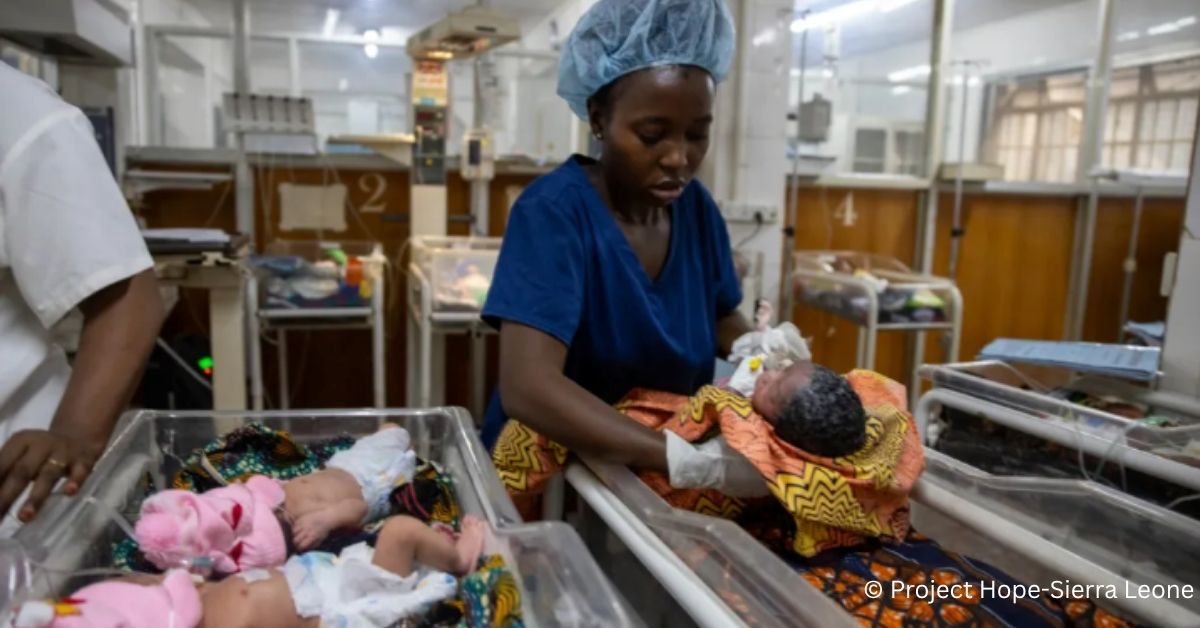
Sierra Leone has recorded major improvements in child and maternal health since the introduction of the Free Health Care Initiative (FHCI) in 2010. The programme removed user fees for pregnant and lactating women and children under five, helping to address the cost barrier that had prevented many vulnerable people from seeking healthcare. UK-supported research found that the initiative contributed to increased staffing, stronger facility financing and improvements in health-system management.
According to UNICEF, Sierra Leone’s under-five mortality rate fell from 165.2 deaths per 1,000 live births in 2009 to 90.5 in 2024.
Maternal mortality has also fallen dramatically. UN estimates show that Sierra Leone’s maternal mortality ratio declined from 1,682 deaths per 100,000 live births in 2000 to 354 in 2023, including a reduction from 443 in 2020 to 354 in 2023.
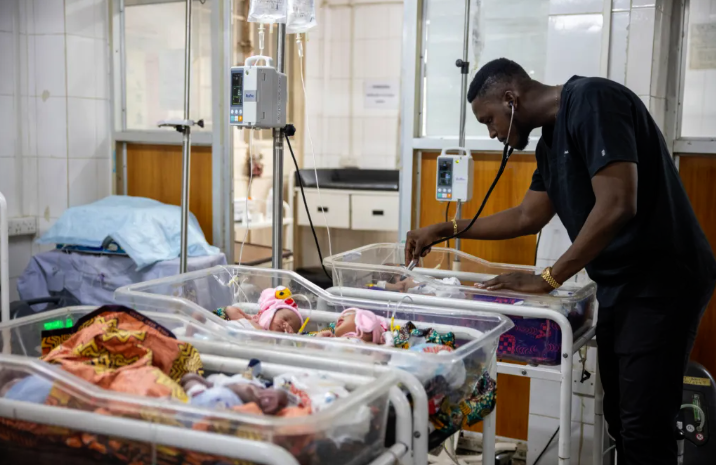
Health experts caution, however, against attributing the entire decline to the Free Health Care Initiative alone. Improvements in maternal and child survival have also been associated with increased use of health facilities, malaria prevention and treatment, immunisation, sanitation, health-worker deployment and broader investments in the health system.
Nevertheless, there is broad recognition that free healthcare has made essential services more accessible to some of the country’s poorest and most vulnerable populations.
A heavily donor-dependent health system
The UK reduction comes at a particularly vulnerable moment for Sierra Leone’s health system. A 2026 ReBUILD analysis found that external development assistance accounted for a large share of health expenditure between 2020 and 2024 and warned that reductions in donor financing could create shortages, weaken service quality and widen inequalities, particularly in rural districts that depend heavily on donor-funded programmes.
WHO’s 2025 annual report on Sierra Leone also paints a grim picture of the country’s financing vulnerability. Donor contributions accounted for about 43 percent of total health expenditure in 2023, while government contributions accounted for only 12.7 percent. Household out-of-pocket payments represented another 43 percent.
The concern is therefore not simply that fewer foreign-funded projects may be implemented. A prolonged financing gap could affect medicines and medical supplies, frontline health workers, maternal and newborn services, immunisation, malaria programmes and other essential services.
UNICEF says sustaining Sierra Leone’s progress will require continued investment in essential supplies, service-delivery systems and targeted technical support.
What should Sierra Leone do?
The aid reduction is also forcing a larger question: how can Sierra Leone protect free healthcare while reducing its dependence on foreign assistance?
Health-financing experts and development partners are calling for stronger domestic financing, better coordination of donor resources and reforms that make the health system more financially sustainable. A recent ReBUILD analysis recommends stronger domestic resource mobilisation, improved coordination and sustainable health-financing mechanisms to protect essential services from future funding shocks.
The WHO has similarly urged governments facing international health-financing cuts to make health a political and fiscal priority, mobilise more domestic resources, improve efficiency and protect essential services for vulnerable populations.
For Sierra Leone, this means the Government will need to increase domestic funding for health, improve tax and other revenue mobilisation, reduce waste and strengthen accountability in health spending. It will also need to accelerate reforms to the country’s health-insurance system.
The Ministry of Health and WHO have already been working towards a proposed Sierra Leone Agency for Universal Health Coverage, which would bring together the Free Health Care Initiative and the Sierra Leone Social Health Insurance Scheme under a more integrated financing structure.
The Government itself has acknowledged the challenge. Its Ministry of Finance says declining international aid makes it necessary for Sierra Leone to generate more domestic revenue to finance national priorities, including health.
The road ahead
The UK’s aid cuts do not necessarily mean Sierra Leone’s health gains must be reversed. But they expose the vulnerability of a system in which donors continue to finance a substantial proportion of health expenditure.
The immediate challenge for the Government is therefore to prevent the withdrawal of external funding from translating into higher costs for patients or reduced access to essential services. In the longer term, experts argue that Sierra Leone must use the moment to build a more domestically financed, accountable and resilient health system.
The country’s progress in reducing maternal and child mortality demonstrates what sustained investment can achieve. The challenge now is whether Sierra Leone can protect those gains when a great portion of the external financing that helped support them begins to disappear.
Well, it’s sad to read this, but Sierra Leone as a nation wealthy of billions of resources doesn’t need those temporary helpers. Sierra Leone don’t need any of them to develop Sierra Leone. Leaders please think about the way forward, the future for the generations still coming. That’s my opinion. Think about it. Peace, respect and love. God bless Sierra Leone.
This report about health care funding in Sierra Leone in 2023 and other years is nothing to be proud of. The government contributed the least amount of money using the percentages in the report: GoSL 12.7% , UK Aid 43% and Sierra Leonean households 43% . How can we talk about TRUE independence if the country cannot support the health of its women and children without significant EXTERNAL financial assistance. Where are the natural resources? These resources are not enough to support a population of less than 10 million people? We are waiting for UK and other western nations with HUGE populations to fund the survival of women and children in Salone. Let’s all get down to discover the possible CAUSES of this unfortunate scenario. My opinion.