

Keketoma Sandi, Blyden Engage in Heated Online Exchange Over 2013 Amendment Procedure
 Sahid Bangura
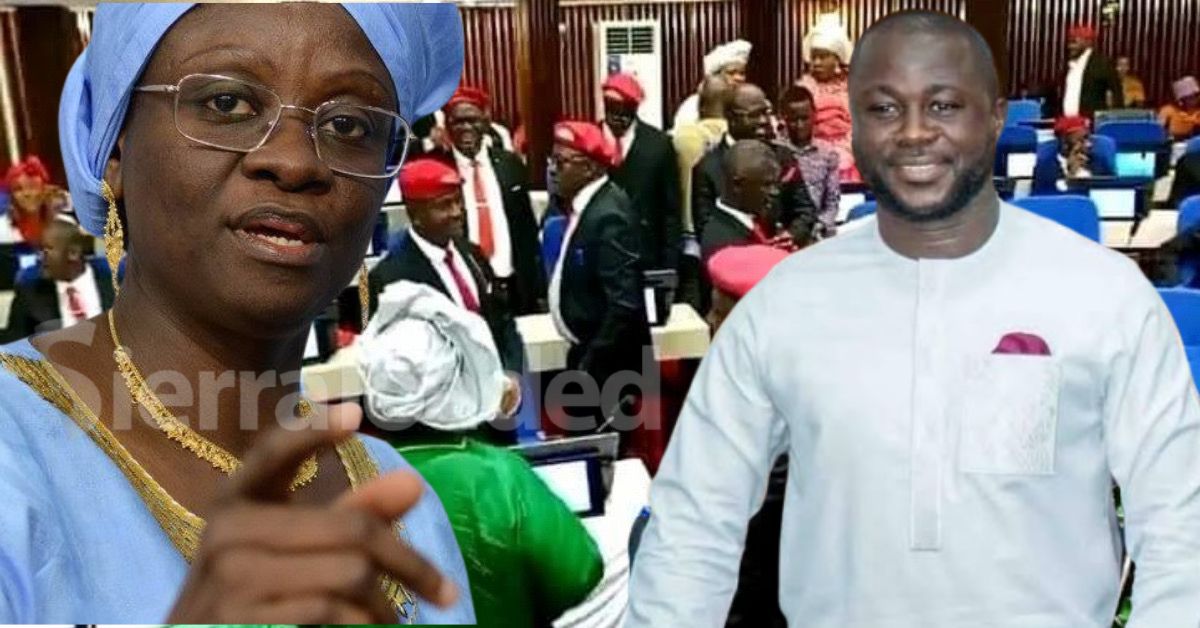
 Presidential Press Secretary Yusuf Keketoma Sandi and political commentator Sylvia Olayinka Blyden have engaged in a public exchange over the parliamentary procedure used to pass Sierra Leone’s 2013 constitutional amendment, with both disputing each other’s interpretation of the process.
The latest exchange took place on Sandi’s Facebook page, followed by Blyden’s criticism of Sandi’s earlier remarks that the 2013 constitutional amendment was an initiative of the then APC administration and that the opposition party was now applying double standards in its objections to aspects of the ongoing constitutional amendment process.
Sandi subsequently challenged Blyden’s understanding of parliamentary procedure, arguing that she had failed to distinguish between parliamentary debate and voting.

He maintained that the Constitution of Sierra Leone (Amendment) Act, 2013 was passed through the collection of voices under Standing Order 45, suggesting that the procedure used at the time was consistent with parliamentary practice.


“Sadly, Sylvia Blyden DOES NOT understand the difference between Parliamentary Debate and Voting,” Sandi stated, adding that the 2013 amendment “was passed by recourse to collection of voices (S.O 45).”
Blyden, however, rejected Sandi’s interpretation and argued that the collection of voices can be used in passing a constitutional amendment where the required parliamentary majority is present and no division is called.
Responding to Sandi’s latest remarks, Blyden said a constitutional amendment could be passed through a voice vote provided that more than two-thirds of Members of Parliament were in the chamber and no division was demanded when the question was put.
She further argued that this was the same procedure used during the second reading of the current Constitutional Amendment Bill, claiming that MPs proceeded by the collection of voices because no division was called.
Blyden, who served as Special Executive Assistant to former President Ernest Bai Koroma, said her involvement in the 2013 process included liaising between State House and Parliament. She therefore maintained that she had first-hand knowledge of the circumstances surrounding the amendment.
She disputed Sandi’s account that the 2013 amendment was an APC government initiative, insisting that the Bill originated from Members of Parliament and received bipartisan support from APC and SLPP lawmakers.
According to Blyden, the lawmakers were responsible for the Bill before it was sent to the Law Officers for final drafting approval. She also claimed that MPs from both parties were prepared to invoke Section 106(8) of the Constitution if President Koroma had refused to assent to the legislation.
Blyden challenged Sandi to verify his account with Bernadette Lahai, who was the SLPP Leader in Parliament at the time, saying her account could help establish the bipartisan nature of the 2013 process.
The dispute has now shifted beyond the historical circumstances of the 2013 amendment to the interpretation of parliamentary voting procedures in the ongoing constitutional amendment debate.
Blyden has maintained that the use of a voice vote does not, by itself, invalidate a constitutional amendment process, while Sandi has emphasised the distinction between parliamentary debate and voting and pointed to the procedure used in 2013.
The exchange comes amid heightened public and political scrutiny of the current Constitutional Amendment Bill, with disagreements continuing over whether parliamentary procedures used during its consideration meet the constitutional requirements.