

Government Sets $7 Billion Target for Water, Sanitation Development
 Aaron Parker
 The Government of Sierra Leone has outlined an ambitious 10-year development programme for the water, sanitation and hygiene (WASH) sector, with an estimated investment requirement of approximately US$7 billion to expand access to essential services and strengthen the sector’s institutional framework.
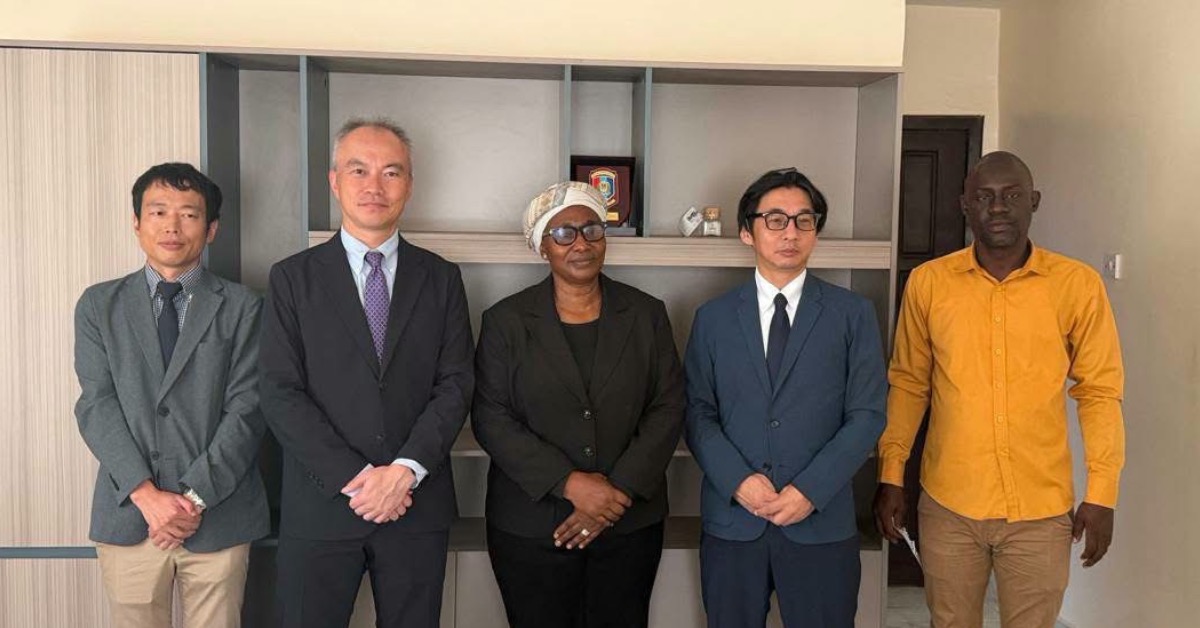
The plan was highlighted by the Minister of Water Resources and Sanitation, Dr. Sao-Kpato Hannah Isatta Macarthy, during high-level discussions with officials of the Japan International Cooperation Agency (JICA) on renewed cooperation in Sierra Leone’s WASH sector.
Minister Macarthy said the Government’s WASH priorities include expanding access to safe water, improving sanitation and waste management, strengthening institutions and regulations, building technical and community capacity, and developing sustainable financing mechanisms.

She said the newly established Ministry is working to bring previously fragmented responsibilities together and coordinate interventions across the WASH sector under a unified development framework.
The Minister also emphasised the need for stronger collaboration with development partners and the private sector, particularly in areas such as water storage, reservoirs and desalination, to help address the country’s water and sanitation needs.
While the broader WASH programme is estimated at US$7 billion, the Government has already begun implementing an initial US$180 million phased project with support from the World Bank. The first phase, valued at US$40 million, focuses primarily on the Western Area and institutional strengthening.
The discussions also opened the way for renewed Japanese technical cooperation in Sierra Leone’s WASH sector. JICA Chief Representative for Ghana, Uchiyama Takayuki, said the agency is prepared to re-engage with the sector after more than a decade of limited activity.
He recalled JICA’s previous support to water-sector initiatives in Kambia, including a rural water supply project and capacity-building interventions.
As part of the renewed cooperation, Japanese experts are expected to work alongside technical teams from the Ministry’s Water and Sanitation Directorates. The Ministry will provide office space, while JICA will support logistics for the experts.
The two sides will jointly assess priority areas, explore technology-based and private-sector solutions, and identify potential areas for future technical cooperation and feasibility studies.
The Government’s 10-year WASH programme is expected to provide a framework for mobilising investments and coordinating interventions aimed at improving water, sanitation and hygiene services across Sierra Leone.