Bank of Sierra Leone Takes Fresh Monetary Action as Inflation Rate Hits 15.66%
 Sahid Bangura
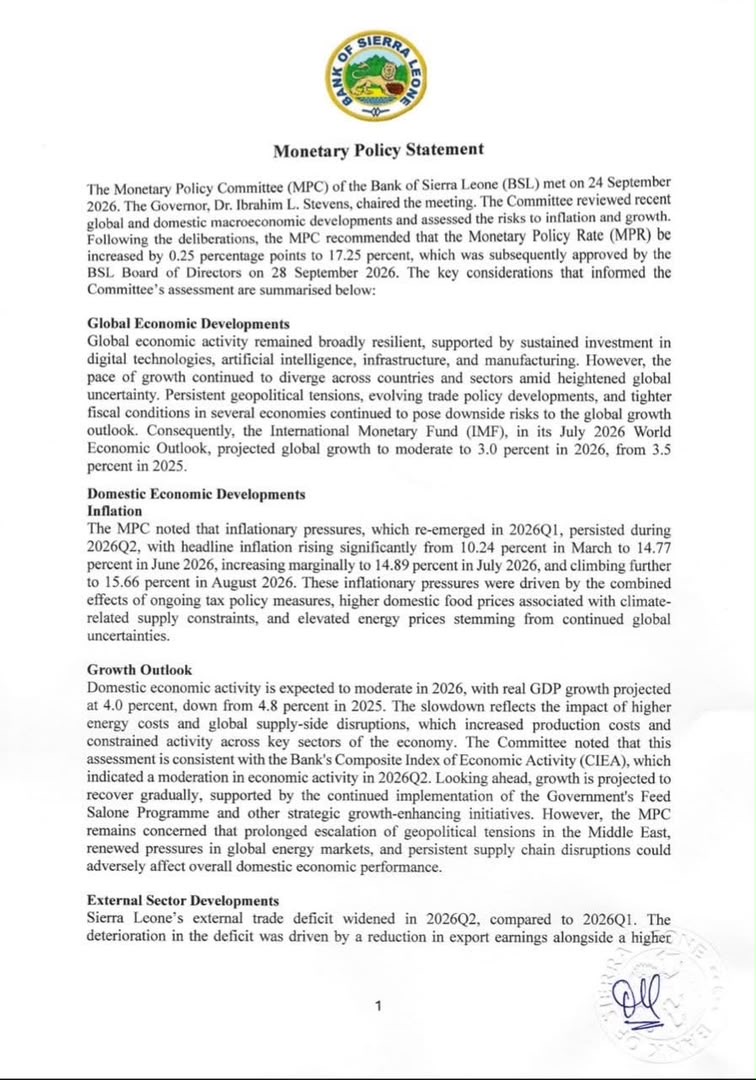
 The Bank of Sierra Leone (BSL) has increased its Monetary Policy Rate (MPR) by 0.25 percentage points to 17.25 percent, citing persistent inflationary pressures and growing risks to price stability.
The decision was taken by the Monetary Policy Committee (MPC) at its meeting on 24 September 2026 and subsequently approved by the BSL Board of Directors on 28 September. The new policy rate took effect on 29 September 2026.
According to the BSL, headline inflation increased from 10.24 percent in March to 14.77 percent in June 2026, before rising to 14.89 percent in July and 15.66 percent in August. The Bank attributed the continued inflationary pressures to tax policy measures, higher domestic food prices linked to climate-related supply constraints and elevated energy prices resulting from global uncertainties.

The MPC said the inflation outlook remains exposed to upside risks and that further tightening of monetary policy was necessary to contain potential second-round effects, anchor inflation expectations and maintain macroeconomic stability.


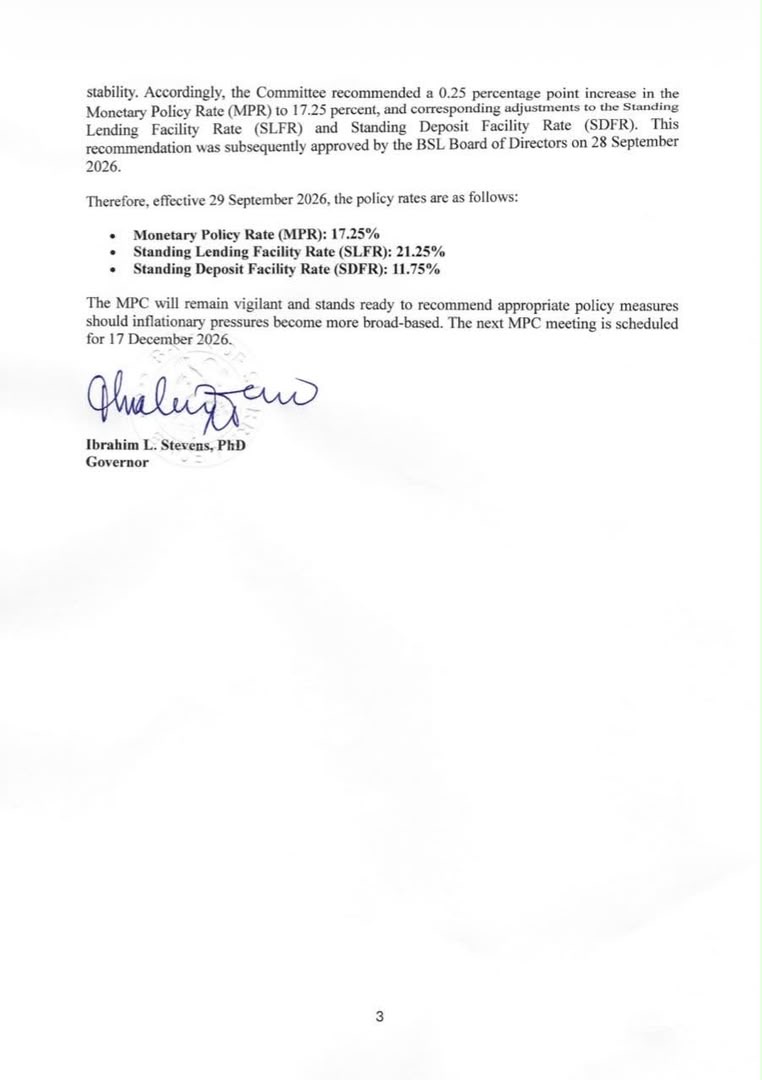
Alongside the MPR increase, the Bank adjusted its Standing Lending Facility Rate (SLFR) to 21.25 percent and the Standing Deposit Facility Rate (SDFR) to 11.75 percent.
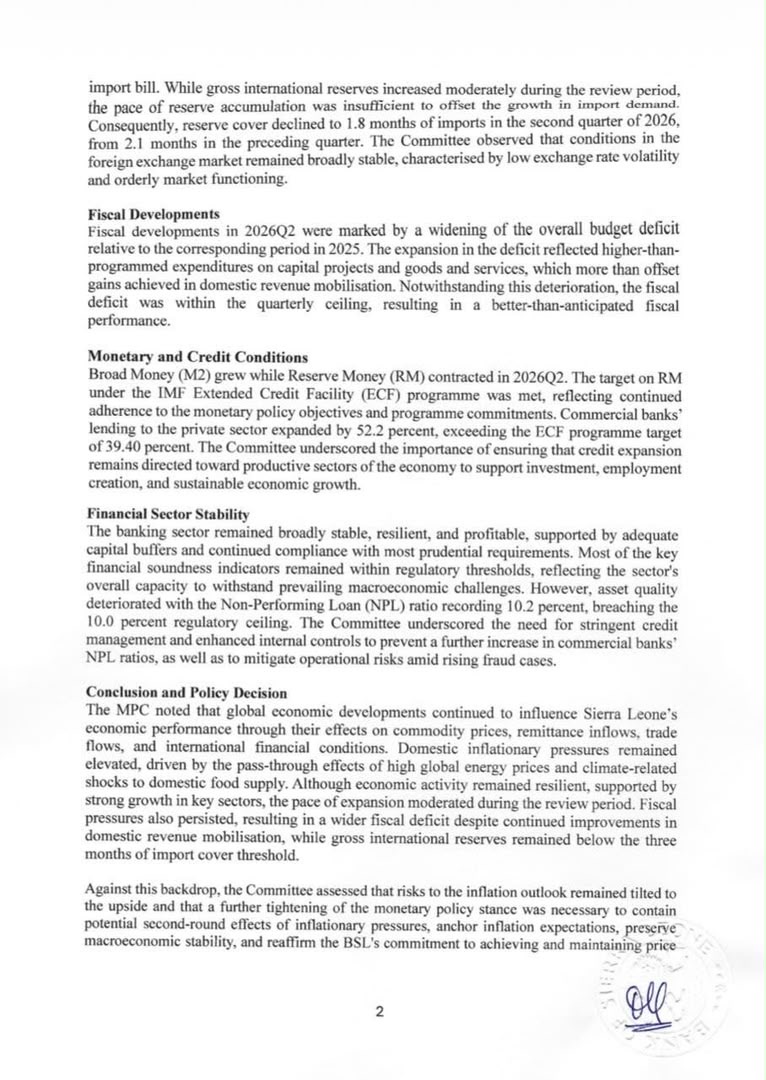
The BSL also reported that Sierra Leone’s economic growth is expected to moderate to 4.0 percent in 2026, compared with 4.8 percent in 2025. The Bank attributed the projected slowdown to higher energy costs and global supply-side disruptions, while noting that growth could gradually recover through the implementation of the Government’s Feed Salone Programme and other growth-enhancing initiatives.
The Bank expressed concern over the potential impact of continued geopolitical tensions, particularly in the Middle East, on energy prices, supply chains and domestic economic activity.
On the external sector, the BSL reported that the country’s trade deficit widened during the second quarter of 2026 as export earnings declined while the import bill increased. Although gross international reserves recorded moderate growth, reserve cover fell from 2.1 months of imports in the first quarter to 1.8 months in the second quarter.
The Bank, however, said conditions in the foreign exchange market remained broadly stable, characterised by low exchange-rate volatility and orderly market functioning.
The BSL also reported strong growth in commercial bank lending to the private sector, which expanded by 52.2 percent, exceeding the 39.40 percent target under the IMF Extended Credit Facility programme. The MPC stressed the need for increased lending to productive sectors to support investment, employment and sustainable economic growth.
Meanwhile, the banking sector remained broadly stable, resilient and profitable, supported by adequate capital buffers and compliance with most prudential requirements. However, the Non-Performing Loan ratio rose to 10.2 percent, exceeding the regulatory ceiling of 10 percent, prompting the MPC to call for stronger credit management and internal controls.
The Bank said it would continue to monitor inflation and other economic developments and stands ready to recommend further policy measures if inflationary pressures become more broad-based.
The next meeting of the Monetary Policy Committee is scheduled for 17 December 2026.