

Sierra Leonean Man Reportedly Killed While Fighting for Russian Military in Ukraine
 Sahid Bangura
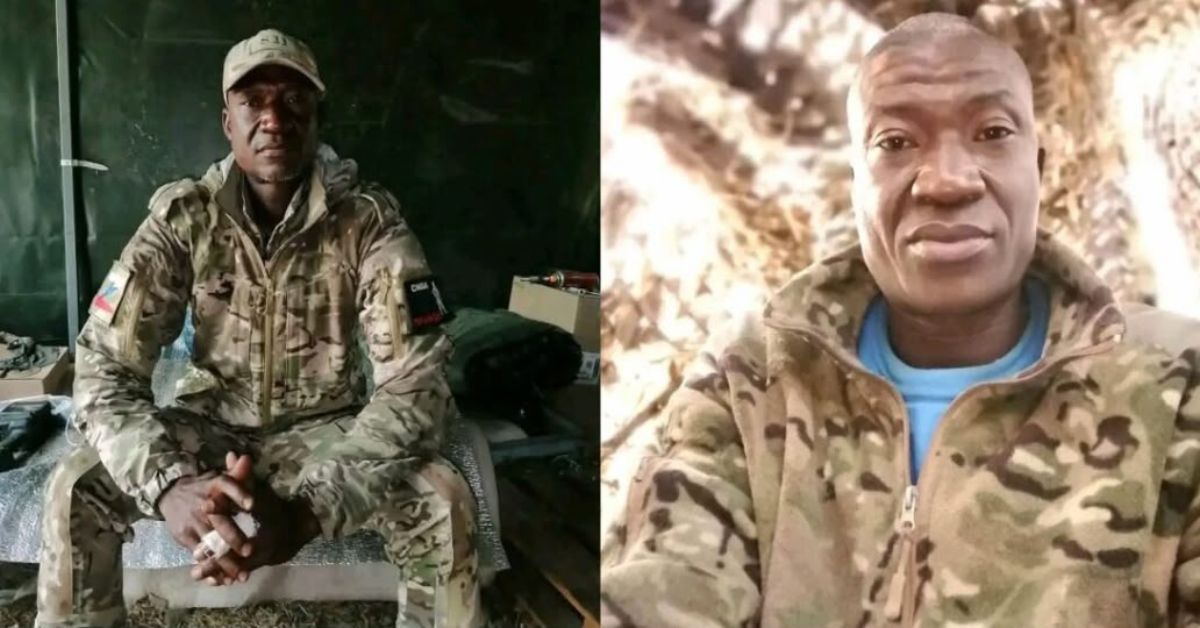
A young Sierra Leonean man identified as Sorie, reportedly from Calaba Town in Freetown’s east end, is said to have been killed while serving in the Russian military on the frontline of the war in Ukraine.
Reports of his death emerged on social media over the weekend, accompanied by photographs showing him in a Russian military uniform and messages from relatives and friends mourning his loss.
According to claims circulating among his relatives, Sorie left Sierra Leone a few months ago in search of better employment opportunities abroad but later found himself involved in active combat in Ukraine.

However, as of Monday, November 2, 2026, neither the Sierra Leone Government nor the country’s Embassy in Moscow had officially confirmed his identity or the circumstances surrounding his reported death. Sierraloaded is withholding his full name pending confirmation from his family.

His reported death comes amid growing concerns over the recruitment of Sierra Leoneans and other African nationals into the Russian military to fight in the ongoing war against Ukraine.
According to information published by Ukrainian Defence Intelligence (HUR) and the Ukrainian humanitarian initiative ‘I Want to Live’, at least 13 Sierra Leoneans have signed military contracts with Russia since 2023, with two reportedly being held as prisoners of war in Ukraine.
One of the previously reported casualties was 41-year-old Kamara Alhaji, a native of Bo who was registered in Freetown. On October 2, 2026, HUR disclosed details of his journey to Russia and subsequent deployment to the battlefield.
According to the account, Alhaji travelled from Conakry, Guinea, to Dubai on March 15, 2026, before connecting to Moscow the following day. He reportedly signed a contract with the Russian military after arriving in Russia and was deployed to the Donetsk region in early April, following only a few days of training.
He was reportedly killed in early June near Shakove village in Donetsk, with his identity established through documents recovered from the battlefield.
Another unnamed Sierra Leonean was reportedly killed in Donetsk in February 2026. In June, former Republic of Sierra Leone Armed Forces soldier Richard Kanu, 42, was captured by Ukrainian forces after spending approximately two weeks on the frontline.
Speaking to the BBC after his capture, Kanu described how he ended up in a Russian military camp, saying: “When I arrived in Rostov, I saw myself in a military camp, and they told me I have a military contract.”
The recruitment of African nationals into the Russian military has also attracted international attention, with concerns that some individuals are being deceived into travelling to Russia under the promise of civilian employment.
In a report published on September 10, 2026, Amnesty International described the recruitment of Africans, including Sierra Leoneans, as a form of human trafficking. The organization reported that brokers use social media platforms, including Facebook and TikTok, to advertise jobs in security, factories, warehouses and driving, before allegedly coercing some recruits into signing military contracts.
The report further alleged that some recruiters charge prospective workers up to US$2,000 in fees, confiscate their passports upon arrival in Moscow and pressure them into signing contracts written in Russian.
A separate investigation titled The Death Contract, published by The Hague-based Journalists for Justice (JFJ) on October 29, 2026, during the Third Russia-Africa Summit, also highlighted the scale of African recruitment into the Russian military.
The investigation reported that 3,034 Africans from 40 countries had joined the Russian military since October 2022, with at least 502 reportedly killed by June 2026. It further estimated that the average period between arrival in Russia and death, injury or capture was approximately 44 days.
For Sierra Leone, the report identified 13 recruits and five confirmed deaths. It also listed Kenya, Burundi and Zimbabwe among the countries with significant numbers of nationals recruited into the Russian military.
The reported death of Sorie adds to concerns about the vulnerability of Sierra Leoneans seeking employment abroad and the risks associated with recruitment networks operating under the guise of civilian job opportunities.
Meanwhile, confirmation of his identity and the circumstances surrounding his reported death remains outstanding from the relevant Sierra Leonean authorities.