

Lungi Bridge: Government Receives Preliminary Engineering Assessment from ACROW Engineering Experts
 Deborah Sorie
International engineering experts from US-based Acrow Corporation of America and its partner firms have presented a preliminary engineering assessment for the proposed Lungi Bridge, marking another step in efforts to develop a direct road connection between Freetown and the country’s international airport.
The technical presentation was made to key national stakeholders at the National Investment Board (NIB) on Friday, November 20, 2026, outlining preliminary engineering considerations for the proposed bridge linking Tagrin to Portee in Freetown.
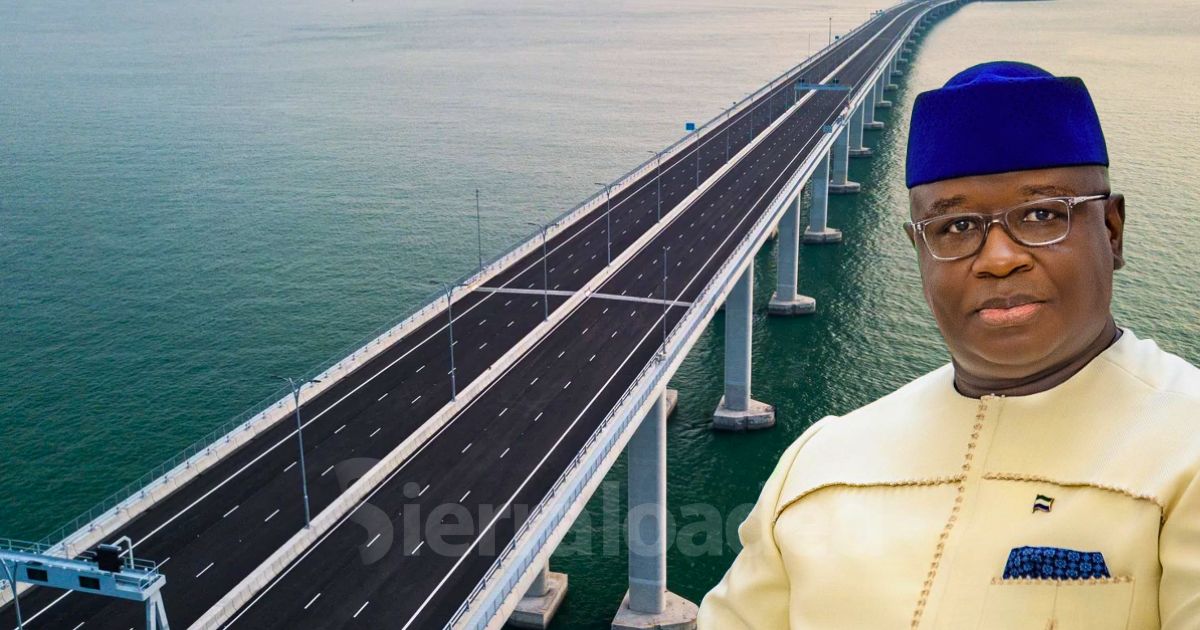
The proposed structure is expected to feature a two-lane carriageway, reinforced concrete piers and metal decking, with sufficient clearance to allow vessels to navigate beneath the bridge. Improved road connections are also envisaged as part of the wider infrastructure development.

Following the presentation, the next phase is expected to take place between January and June 2027. This stage is expected to involve detailed engineering designs, feasibility studies, preparation of the Bill of Quantities (BoQ) and cost estimates.


These assessments will be important in determining the technical requirements, financial implications and overall viability of the proposed project before further implementation decisions are taken.
The latest development builds on the Memorandum of Understanding signed between the Government of Sierra Leone and Acrow Corporation of America on June 19, 2025.
The agreement established a Design, Build, Operate and Transfer (DBOT) framework for the proposed bridge, placing the American engineering company at the centre of efforts to develop the project.
The National Investment Board described the agreement as an important foundation for advancing the project, which has remained part of Sierra Leone’s infrastructure ambitions for several years.
In September 2026, Chief Minister Dr David Moinina Sengeh announced that the United States Trade and Development Agency (USTDA) was providing US$1.6 million to support preparatory studies for the bridge.
The studies were expected to cover traffic flow, environmental and social considerations, among other technical requirements necessary to establish the project’s investment viability.
Sengeh disclosed the development following engagements with representatives of Acrow Corporation and National Investment Board Executive Director Dr Edward Hinga Sandy during the 81st United Nations General Assembly week in New York.
The Chief Minister also indicated that the project had received a commitment from the US International Development Finance Corporation (DFC), although details of the proposed support and its final terms have not been publicly established.
A 2026 investment opportunity document published by the National Investment Board places the preliminary feasibility-stage cost of the proposed approximately seven-kilometre bridge at between US$600 million and US$700 million.
The document identifies Acrow Corporation as the developer under the DBOT framework and indicates that the project will require long-term debt, equity and other structured infrastructure financing.
It also identifies possible traffic-based, toll or hybrid payment arrangements, although the final commercial model, government support and allocation of financial risks remain subject to further assessment.
The final project cost and financing arrangements will therefore depend on the outcome of the technical and financial studies.
The proposed bridge is expected to provide a direct road connection between Freetown and Lungi, where the country’s main international airport is located.
At present, passengers travelling between Freetown and Lungi generally depend on water transport services, including ferries and private boat operators, or helicopter transfers.
A direct road connection could reduce reliance on these services, improve access to the airport and facilitate the movement of people and goods between the capital and the northern part of the country.
The project is also expected to create opportunities for trade, investment, tourism and other economic activities.
However, despite several years of proposals, agreements and preparatory work, construction has yet to begin.
The next phase of engineering and feasibility assessments will be important in establishing whether the proposed bridge can progress towards financing, final approvals and eventual construction.