

NMJD Audit Exposes Mining Revenue Gaps, Abandoned Projects in Sierra Leone
 Osman Tolo Sesay
 A social audit has raised concerns over alleged underpayments by mining companies, weaknesses in financial accountability and abandoned development projects in mining-host communities across Sierra Leone.
The findings were presented by the Network Movement for Justice and Development (NMJD), in collaboration with the Natural Resource Governance and Economic Justice (NaRGEJ) Network, at the VANILLA Complex in Aberdeen, Freetown. Development and Peace Caritas Canada (D&P) supported the initiative.
The 2024 Social Audit on Subnational Mining Revenue Transfers examined funds paid by mining companies to Community Development Committees (CDCs) between 2017 and 2023, assessing how the funds were managed and used for community development.

With technical and financial support from D&P and professional accompaniment from the Budget Advocacy Network (BAN), the audit covered five chiefdoms across Kono, Kenema, Moyamba and Bonthe districts. It examined the operations of Koidu Limited, Sierra Diamonds, Gold Lion Mining Company Limited, Sierra Mineral Holdings and Sierra Rutile Limited.
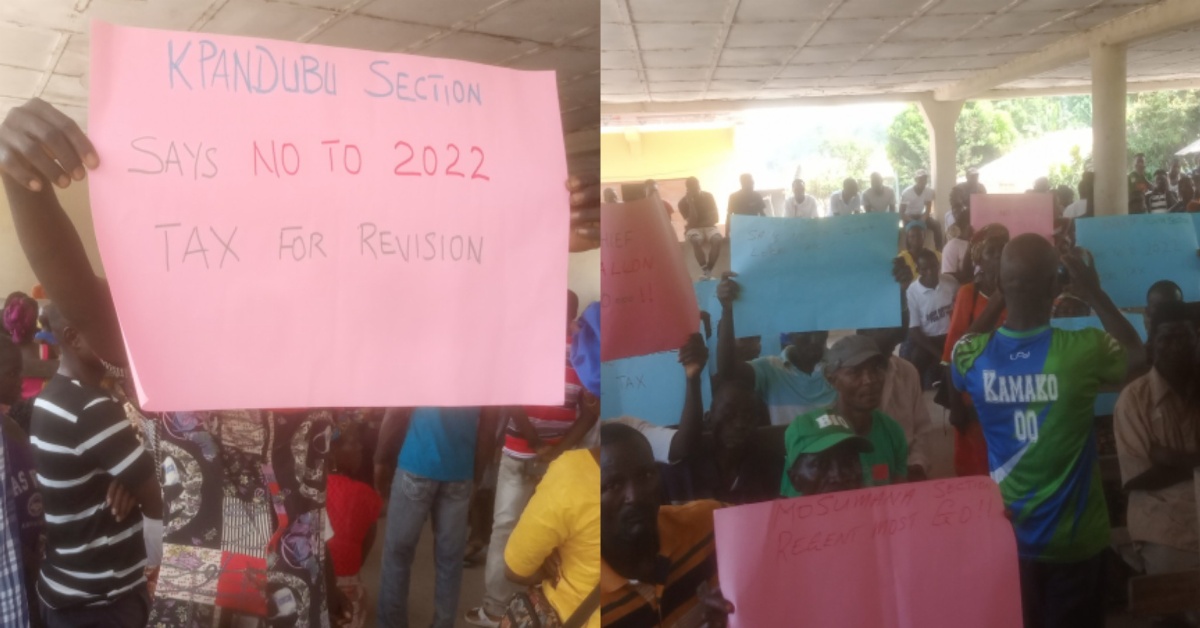

Presenting the findings, Natural Resource Governance and Economic Justice Coordinator Emmanuel M.T. Gbondo highlighted weaknesses in the management of community development funds, including limited transparency, inadequate public participation and insufficient oversight of CDC activities.
According to the report, several CDCs lacked effective governance arrangements and proper handover procedures between outgoing and incoming executives. These shortcomings reportedly contributed to mistrust within communities and weakened the management of development projects.
The audit also raised concerns about mining companies’ compliance with legal requirements governing contributions to community development funds. It found that most of the companies examined did not fully meet the requirement to contribute at least one per cent of their gross annual revenue to the funds.
Sierra Rutile reportedly contributed a fixed US$100,000 annually, regardless of its revenue, while Koidu Limited paid 0.25 per cent of its gross annual revenue before ceasing operations, according to the report. Sierra Diamonds was also reported to have fallen below the prescribed contribution threshold, leaving substantial unpaid obligations to communities after halting operations.
The audit further found that host communities had limited access to information about how mining companies calculated their gross annual revenues, making it difficult to verify whether the correct amounts were transferred to local development funds.
Environmental concerns were also highlighted, including complaints about land degradation, water pollution and inadequate rehabilitation of mined-out areas. The report criticised what it described as insufficient responses from regulatory institutions.
Weak financial management and limited technical capacity among CDC executives and community members reportedly affected their ability to monitor expenditure, scrutinise transactions and track project implementation. The audit identified additional shortcomings in procurement, recordkeeping and project monitoring.
In bauxite-producing communities, the report raised concerns about Sierra Mineral Holdings’ role in administering development funds. It alleged that the company retained control over the management of the funds while the Bauxite Community Development Committee lacked access to key financial records.
The audit also linked irregular payments by some mining companies and poor project planning to the abandonment of development initiatives.
Among the projects cited were a proposed 100-bed hospital in Upper Banta Chiefdom, Moyamba District, and a community health centre and staff quarters in Nimikoro Chiefdom, Kono District.
The report noted that limited engagement among mining companies, CDCs and residents further restricted information sharing and public awareness of available funds and planned development activities.
Speaking on behalf of NMJD, Communications Lead Sallieu Kamara outlined recommendations aimed at strengthening oversight and ensuring that mining revenues deliver measurable benefits to host communities.
The recommendations include reviewing mining legislation to strengthen enforcement of community benefit obligations, providing additional training and mentoring for CDC executives, and establishing independent community monitoring groups to track revenue transfers and expenditure.
The audit also called for participatory budgeting to enable residents to identify and prioritise development projects. It recommended accessible channels for reporting suspected financial misconduct and the mandatory public disclosure of CDC financial records by the National Minerals Agency.
Regular town hall meetings involving mining companies, community representatives, CDCs and government agencies were also proposed to improve communication, transparency and accountability.
NMJD said the audit was intended to promote transparency and public trust rather than undermine the government or mining companies. The organisation stressed that communities hosting mining operations should receive tangible benefits from the extraction of natural resources in their areas.
The findings highlight concerns about whether existing revenue-sharing arrangements are translating into improvements in infrastructure, healthcare, education and livelihoods in mining-affected communities.
The report calls for stronger enforcement of existing obligations, improved community oversight and greater public access to financial information to enable residents to hold mining companies and development committees accountable.