

Government Reviews Labour Regulations After Employers Report Compliance Difficulties
 Aaron Parker
The Ministry of Employment, Labour and Social Security has commenced a review of the Second Schedule of the Employment Regulations 2023 following concerns from employers over difficulties in meeting some of the requirements under the existing provisions.
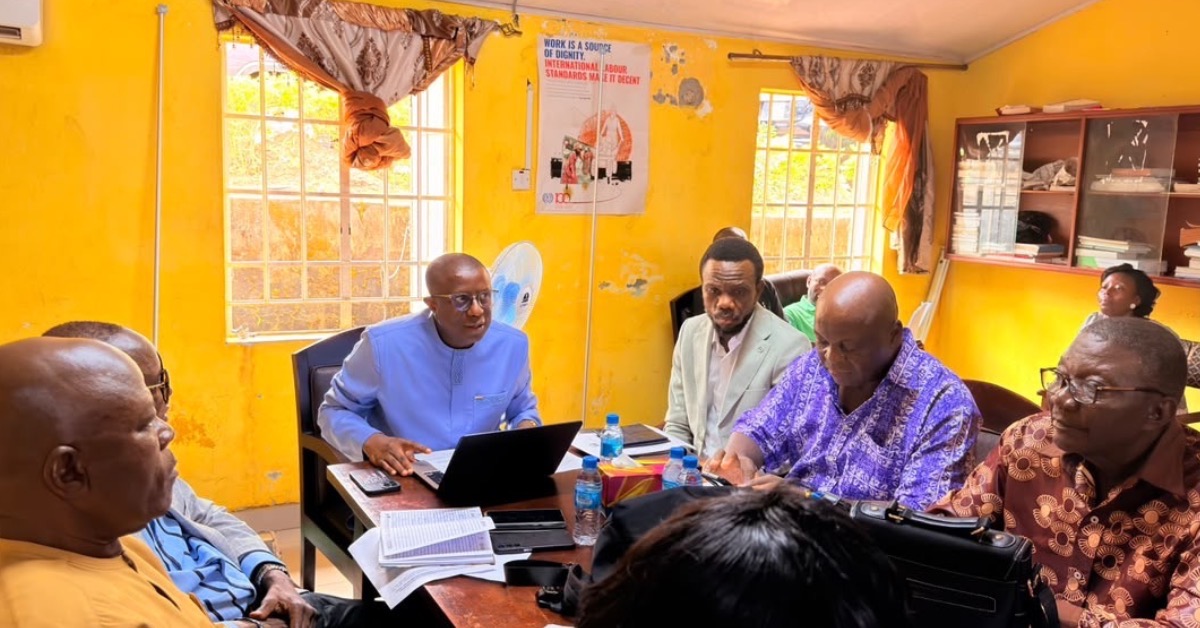
The review was discussed during a tripartite engagement held in Freetown on Wednesday, November 11, 2026, bringing together representatives of government, the Employers’ Federation and the Sierra Leone Labour Congress to examine the challenges surrounding the implementation of the regulations and consider possible adjustments.
Employers have raised concerns that some of the existing requirements are difficult to implement, despite their willingness to comply. The concerns have reportedly come from different sectors, including mining, banking and other industries.

Speaking at the engagement, the Minister of Employment, Labour and Social Security, Hon. Umaru Napoleon Koroma, said concerns about the implementation of the Second Schedule predated his appointment and had continued to be raised by stakeholders.



He emphasised that the Ministry could not independently determine the outcome of the review without the involvement of employers and workers, stressing the importance of reaching a position that all three parties would accept and collectively defend.
The Minister called on participants to engage openly and work towards a mutually agreed position, assuring them that the Ministry would stand by the outcome of the deliberations.
He further indicated that once an agreement was reached in good faith, the Ministry, Employers’ Federation and Labour Congress would jointly communicate their position to the public.
Representing the employers, Tamba Allieu Kokobaye, Vice Chairman of the Employers’ Federation, welcomed the review, acknowledging that some provisions of the Second Schedule had not been critically assessed during the formulation of the regulations.
He explained that the existing requirements had created difficulties for several employers who were struggling to meet the stipulated conditions, despite their willingness to comply.
Kokobaye expressed optimism that the engagement would provide an opportunity to address the concerns and establish more practical and workable provisions that employers could reasonably implement.
However, the proposed review has also raised questions about the need to preserve workers’ existing rights and protections.
Speaking on behalf of workers, Max Conteh, representing the Sierra Leone Labour Congress, said the Congress was not opposed to reviewing the Second Schedule but insisted that any changes must not undermine the benefits and protections workers currently enjoy.
He noted that the Labour Congress and its affiliated organisations also operate as employers, making it important to strike a balance between the interests of businesses and the welfare of workers.
Conteh cautioned against reducing the existing provisions to a level that would defeat the purpose for which they were introduced, maintaining that the review must protect workers while addressing legitimate implementation concerns.
Providing further clarification, Bocakrie Sinneh, Commissioner at the Ministry of Employment, Labour and Social Security, said the Ministry had received feedback from several sectors, including mining and banking, regarding the difficulties associated with implementing the Second Schedule.
He explained that the review was within the Ministry’s legal mandate, noting that the regulations provide for the introduction of new rates where necessary. He called on the tripartite partners to carefully examine the existing provisions and recommend adjustments that would make implementation more practical and effective.
The outcome of the engagement is expected to inform further discussions among government, employers and workers as they seek common ground on the implementation of the Employment Regulations 2023.
The Ministry said the process forms part of its commitment to strengthening tripartite dialogue, promoting harmonious industrial relations and ensuring that labour regulations respond to the interests of both employers and workers.