

Pamoronko Community Backs Inclusive Land-Use Reforms to Tackle Climate Risks
 Osman Tolo Sesay
 Residents of Pamoronko have welcomed efforts by the Sierra Leone Urban Research Centre (SLURC) to involve informal settlements in shaping sustainable land-use policies, describing the initiative as a vital step toward addressing climate change challenges and improving living conditions.
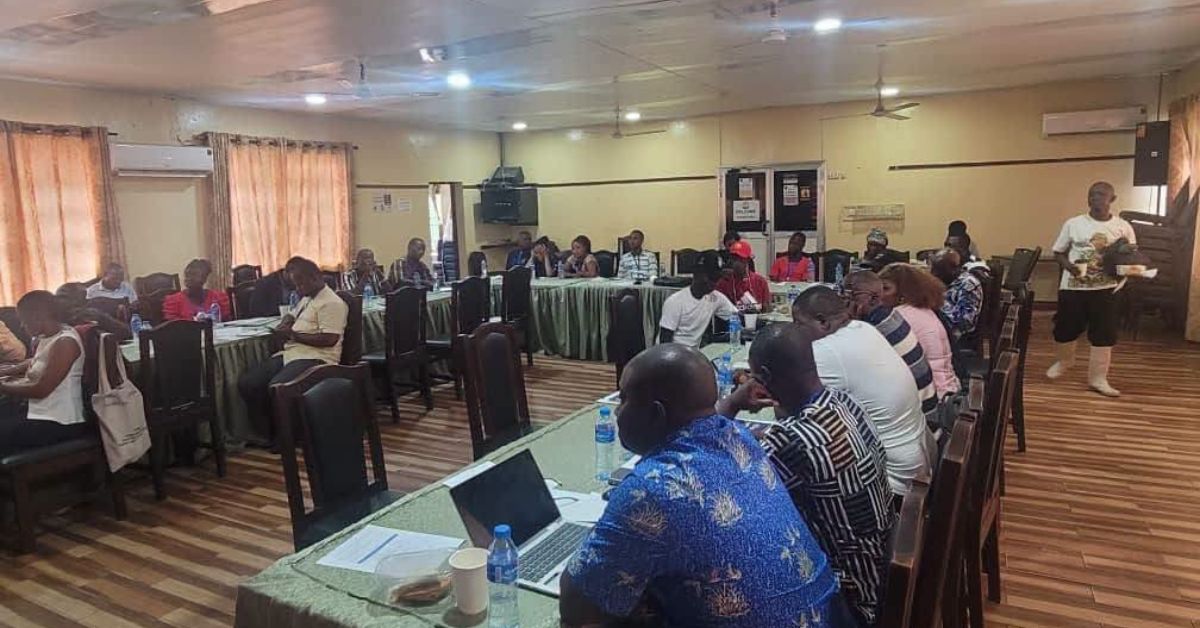
The engagement took place during a stakeholder co-design workshop organised by SLURC under its Urban Futures Project on Tuesday, July 28, 2026, at the Council of Churches Sierra Leone Hall in Freetown. The project focuses on two informal settlements, Pamoronko in the eastern part of the city and Thompson Bay in the west with the aim of promoting climate-resilient and socially inclusive land-use planning.
The workshop brought together representatives from government institutions, civil society organisations, researchers and community members to examine how existing land-use practices contribute to climate vulnerabilities and to identify practical solutions for sustainable urban development.

Speaking on behalf of the Pamoronko community, Alpha Idrissa Dumbuya said the engagement had broadened residents’ understanding of the environmental and governance challenges affecting informal settlements.



He described the workshop as an important opportunity for community members to share their experiences and contribute to discussions on policies that directly affect their livelihoods.
Dumbuya expressed confidence that the collaboration between communities, government agencies and development partners would result in concrete actions to improve living conditions and strengthen resilience against climate-related risks.
Opening the workshop, SLURC Executive Director Dr Joseph Macarthy emphasised that informal settlements remain critical to Freetown’s growth but are often overlooked in urban planning and development.
He said achieving the goals of inclusive and sustainable cities, as envisioned under the New Urban Agenda and Sustainable Development Goal 11, requires the active participation of residents of informal communities in planning and decision-making processes.
Dr McCarthy stressed that addressing climate change and land-use challenges demands collaboration among all stakeholders rather than relying solely on eviction measures.
“The solutions rest with all of us,” he said, calling for stronger partnerships between communities, government institutions and development organisations.
Providing an overview of the Urban Futures Project, Research Officer Amadu Kamara Labour said the initiative seeks to strengthen understanding of climate vulnerabilities in informal settlements while promoting socially just adaptation measures.
He explained that the project’s first phase involved community dialogue sessions, focus group discussions, asset mapping, visual research and key informant interviews to gather evidence on local challenges.
According to Labour, the findings identified weak enforcement of land-use regulations, rapid urbanisation, increasing demand for housing and limited economic opportunities as key factors driving environmental and social vulnerabilities in informal settlements.
He noted that the next phase of the project will focus on reviewing existing land-use regulations, co-designing community-based wetland protection bylaws to reduce flood risks and promoting alternative livelihood opportunities for affected residents.
During group discussions, participants examined how land governance and development practices influence livelihoods, environmental sustainability and community resilience, while proposing practical measures to strengthen sustainable land management.
Representing the National Protected Area Authority, Eshaka Lamin Sesay acknowledged that encroachment into protected areas continues to present significant challenges.
He said the workshop had provided useful perspectives that could support more inclusive and sustainable approaches to addressing illegal settlement while protecting environmentally sensitive areas.
The workshop concluded with stakeholders outlining impact pathways for the next phase of the Urban Futures Project, aimed at promoting long-term improvements in land-use governance and climate resilience in communities such as Pamoronko.