

Sierra Leone Moves Toward First Solar Waste Management Pilot After Spain Benchmarking
 Deborah Sorie
 Sierra Leone is moving toward the implementation of its first solar waste management pilot following a five-day benchmarking mission to Spain aimed at developing systems for managing end-of-life solar panels, batteries and related equipment.
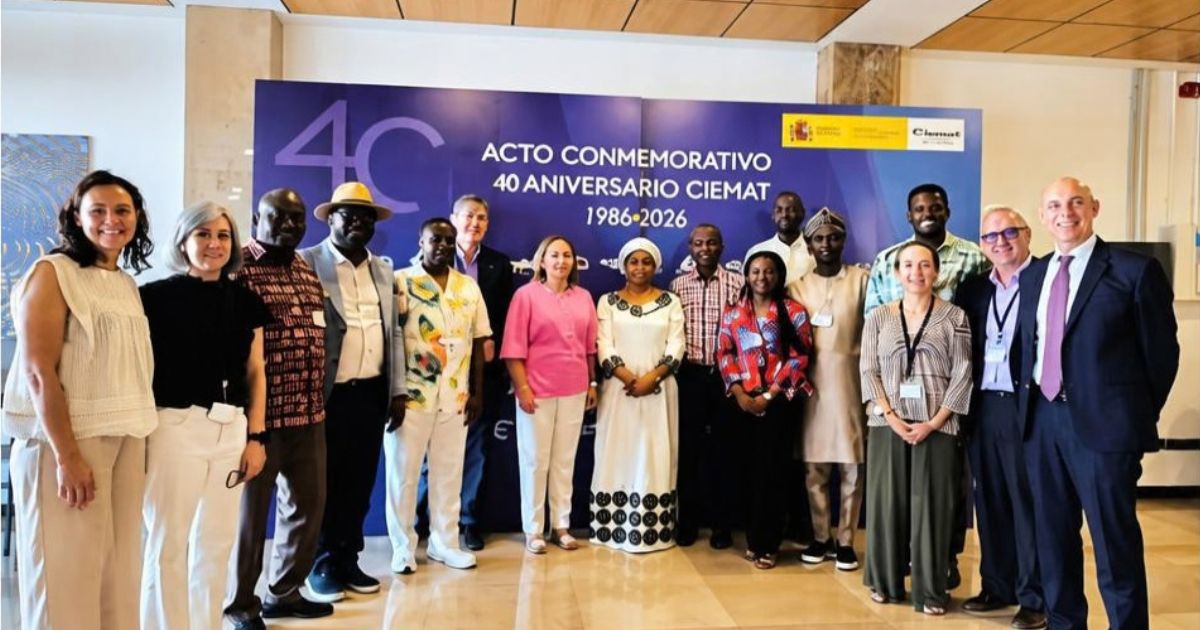
The mission, conducted from September 21 to 25, 2026, brought together representatives from key government institutions, regulatory bodies and academic institutions to examine Spain’s systems for solar photovoltaic (PV) and battery waste lifecycle management. It was facilitated by the United Nations Office for Project Services (UNOPS) under the European Union-funded Salone Off-Grid Renewable Energy Acceleration (SOGREA) project, in collaboration with the Ministry of Energy.
The benchmarking exercise is expected to provide the technical foundation for launching Sierra Leone’s first solar waste management pilot as the country continues to expand access to off-grid renewable energy.

According to the organisers, the mission was designed to move Sierra Leone’s solar waste management plans from strategic planning into operational implementation. The delegation examined international approaches to circular economy models, electronic waste regulation, producer responsibility, waste collection and recovery systems.



Spain was selected because of its established waste management framework, including systems aligned with the European Union’s Waste Electrical and Electronic Equipment (WEEE) Directive, Extended Producer Responsibility (EPR) schemes, public-private partnerships and research infrastructure for waste recovery.
During the visit, the Sierra Leone delegation held technical engagements with several Spanish institutions.
These included ECOLEC, where discussions focused on producer compliance, financing mechanisms and collection and recovery systems; Spain’s Ministry for the Ecological Transition and the Demographic Challenge (MITECO), where the delegation examined legislative oversight and institutional coordination; and FCC Medio Ambiente, where waste logistics, treatment infrastructure and operational models were reviewed.
The delegation also engaged the Unión Española Fotovoltaica (UNEF) on solar market growth, producer compliance and industry stewardship, while visits to the Centre for Energy, Environmental and Technological Research (CIEMAT) provided opportunities to examine laboratory applications and technology transfer.
The lessons from the mission are expected to directly inform Work Package 7 of the SOGREA project, which covers the pilot phase of solar waste management in Sierra Leone.
The pilot will be aligned with the Environmental Protection Agency’s strategic goal of developing an Integrated Waste Management Facility at Masiaka, according to the project.
The initiative comes as Sierra Leone seeks to increase the use of off-grid solar technology to expand access to electricity. With solar panels, batteries and other renewable-energy equipment eventually reaching the end of their operational lives, authorities are seeking systems to ensure the equipment can be collected, treated and recovered in an environmentally sound manner.
The Spain benchmarking mission is expected to produce three major outputs: a comprehensive Benchmarking Mission Report, a National Action Matrix, and specialised Policy and Technical Guidance.
The documents will set out institutional responsibilities and operational timelines while providing technical input into Sierra Leone’s national Solar Waste Management Framework, proposed business models and technical training curricula.
The SOGREA project is funded by the European Union and implemented by UNOPS in partnership with the Government of Sierra Leone. Its broader objective is to expand access to clean and reliable off-grid energy while establishing sustainable systems for managing renewable energy technologies at the end of their useful life.
The planned solar waste management pilot is expected to provide a practical basis for Sierra Leone to develop a more structured approach to renewable energy waste, linking the growth of the solar sector with environmental protection and resource recovery.