

Ex-SLPP Secretary Tejan-Sie Challenges Speaker’s Authority in Constitutional Amendment Dispute
 Sahid Bangura
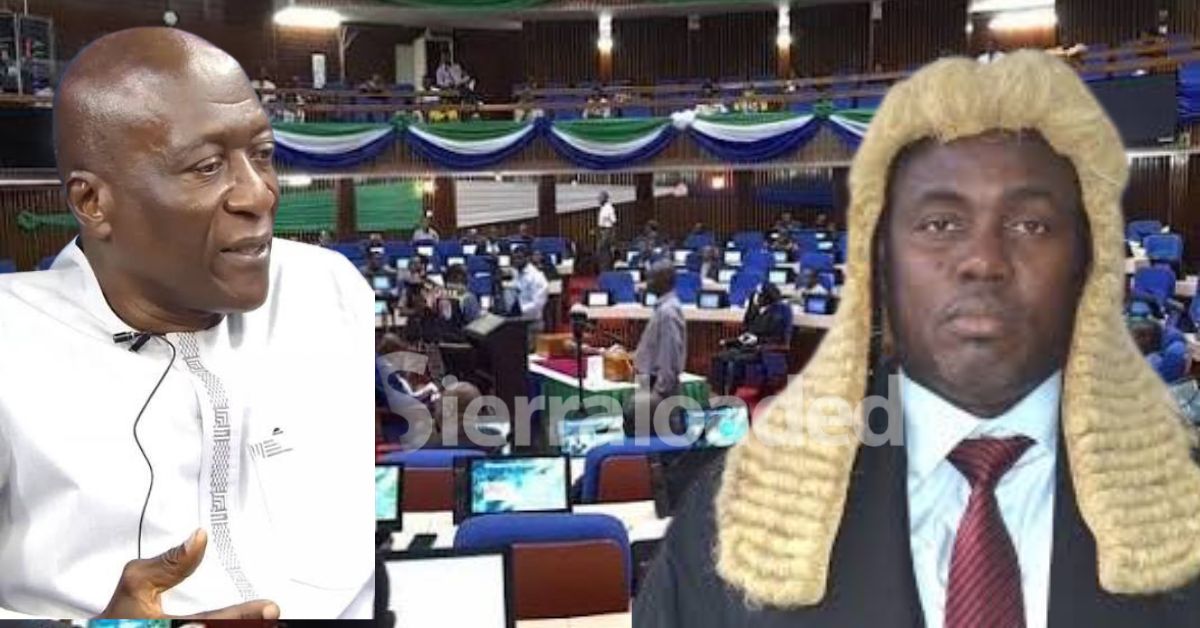
 Former SLPP Secretary General and veteran legal practitioner Sulaiman Banja Tejan-Sie has argued that Parliament Speaker Hon. Segepoh Solomon Thomas lacks constitutional authority to refer the disputed Constitutional Amendment Bill to the Supreme Court.
Speaking on the Truth Media Morning Devotion programme, Tejan-Sie said the 1991 Constitution vests the power to refer constitutional questions to the Supreme Court for guidance and interpretation in the President, rather than the Speaker of Parliament.
He maintained that the Speaker’s decision to seek the Supreme Court’s intervention in the parliamentary matter amounted to a misinterpretation of the Constitution and an encroachment on the functions of the Judiciary.

According to Tejan-Sie, Section 108 of the Constitution also requires that any alteration of the Constitution be secured by the prescribed two-thirds majority in Parliament.


He went further to suggest that the Speaker’s conduct could potentially amount to treason, while acknowledging that such a threshold had not yet been reached because President Julius Maada Bio had not assented to the Bill.
Tejan-Sie’s position has added to growing legal and political debate over the constitutionality of the parliamentary process used to consider the Constitutional Amendment Bill, particularly the voting threshold required under Section 108.
Other legal practitioners and commentators have, however, urged caution over the treason allegation.
Private legal practitioner Chukwuemeka Taylor agreed that constitutional amendments must comply with Section 108 but said it was premature to describe the Speaker’s conduct as treason because the Constitution had not yet been altered.
Taylor nevertheless argued that the Speaker acted ultra vires Section 108 and maintained that the Bill should not have been passed because, in his view, the process was constitutionally defective.
Legal practitioner Emmanuel Saffa Abdulai also described the Speaker’s conduct as a mistake and cautioned against prematurely characterising it as treason.
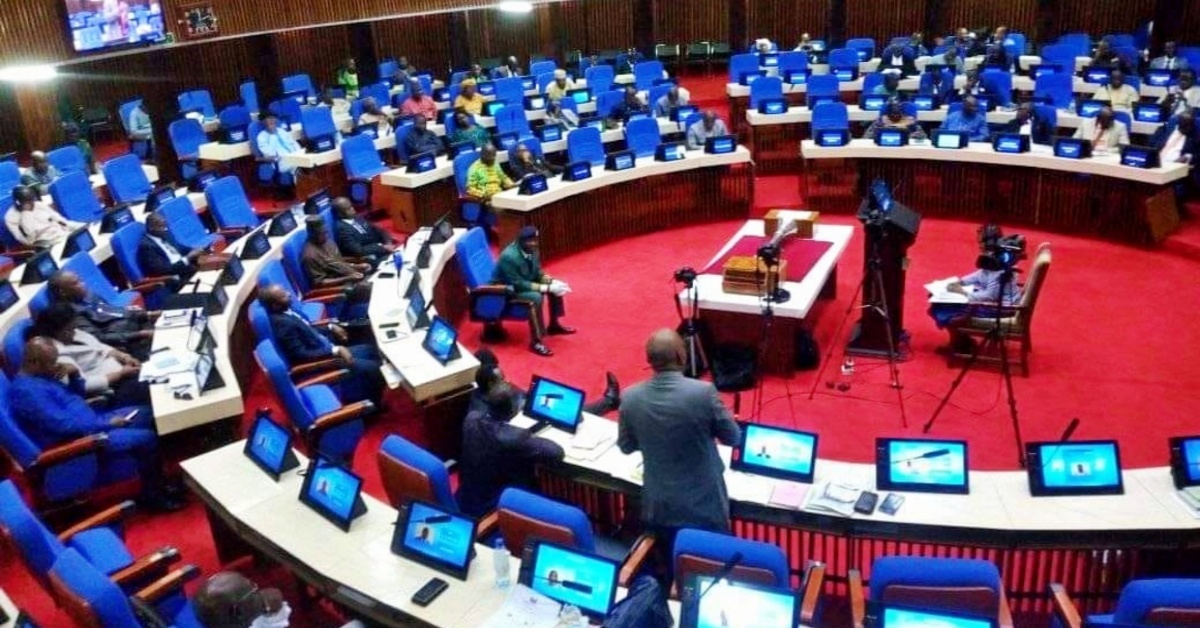
Meanwhile, other commentators have raised questions over the procedure followed during the Bill’s Second Reading, including whether a voice vote could establish the two-thirds majority required for constitutional amendments.
The competing interpretations have intensified scrutiny of the Constitutional Amendment Bill and placed renewed focus on the Speaker’s constitutional powers, the voting threshold under Section 108 and whether Parliament complied with the Constitution and its Standing Orders throughout the legislative process.
The Speaker ihn life don lef na lawyers den han. Ihn go pay for ihn big fool!!!