

WASSCE: Why Are Sierra Leonean Candidates Performing Poorly in English Language?
Introduction
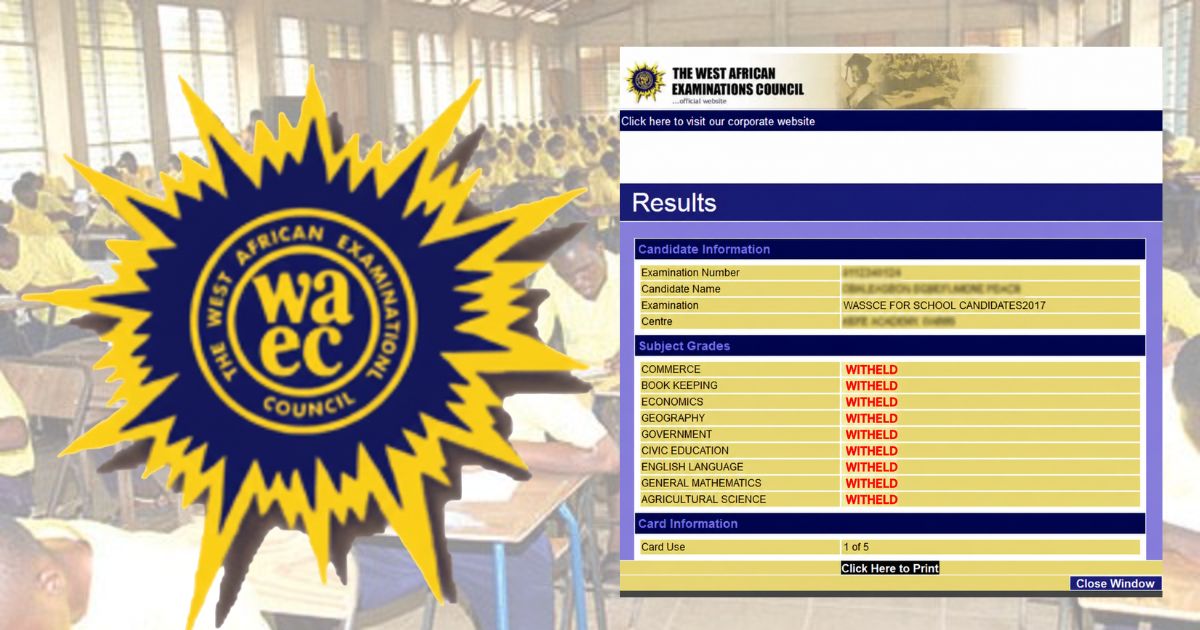
The persistent poor performance of Sierra Leonean candidates in English Language in the West African Examinations Council (WAEC) examinations has generated considerable debate across the country. While many people have been quick to blame WAEC for the situation, I believe it is time we looked beyond the examination body and examined the fundamental problems affecting the teaching and learning of English Language in our schools.
Having spent eighteen years teaching English Language in different educational institutions, I consider myself sufficiently experienced to contribute to this national conversation.

My Teaching Experience and Professional Background


My career in teacher training and English Language teaching began in Kaduna State, Nigeria, where I taught in several private schools after graduating from Gidan Waya College of Education, Kafanchan, Kaduna State, in Jema’a Local Government Area.
I continued my teaching career in Nigeria until I relocated to Sierra Leone in 2010. Upon my return, my first teaching engagement was at the Technical Secondary School, Congo Cross, Freetown, where I worked part-time before relocating to Kabala in Koinadugu District.
In Kabala, I taught English Language at Loma Secondary School, where I obtained my teaching PIN code. I also served in several other secondary schools on a part-time basis. Beyond my regular teaching responsibilities, I organised extra lessons and tutorials for students, particularly those preparing for WAEC examinations. Many of these students recorded excellent results.
At one point, I was recognised as one of the outstanding English Language teachers in the district, receiving commendations from colleagues, admirers and my immediate superiors for my commitment and performance.
My professional engagement also extended to tertiary education, where I was employed as a lecturer in Communication Skills at the College of Management and Administration (COMA), an institution with which I am still associated.
Furthermore, I gained public recognition through my contributions to educational broadcasting. I taught English Language on Radio Bintumani, the district’s only radio station at the time. Later, with the emergence of another radio station, I hosted and presented what I believe was the only programme conducted in English on the station, titled Press or Newspaper Weekly Review.
These experiences, spanning classroom teaching, private tutorials, tertiary education and radio broadcasting, have given me considerable exposure to the challenges associated with teaching and learning English Language in Sierra Leone.
Why Are Our Candidates Performing Poorly in English Language?
Teaching English as a second or foreign language to learners from different social, cultural and educational backgrounds is certainly not an easy task. Even those of us who teach the subject have had to overcome similar challenges in our own learning experiences.
However, speaking frankly from my professional experience, I believe the following factors contribute significantly to the poor performance of Sierra Leonean candidates in English Language at WAEC.
1. Weak Foundation in Early Grade Literacy
In my opinion, one of the greatest problems in our educational system is the failure to establish a solid foundation in English Language at the early grade level.
In many schools, insufficient attention is given to teaching young learners the English alphabet, letter recognition, phonics and the correct sounds of letters. Some early grade teachers also lack the specialised training required to develop these essential literacy skills.
Consequently, children progress from one grade to another without mastering the basic skills of reading, writing and pronunciation.
By the time such learners reach upper primary school and eventually secondary school, they begin to struggle with reading comprehension, sentence construction, spelling and grammar.
How can we expect a candidate to perform well in an English Language examination when that candidate struggles to read and understand a simple comprehension passage?
The truth is that a learner who cannot read effectively will find it difficult to write effectively. Reading is the foundation upon which good writing, vocabulary development and grammatical competence are built.
2. Shortage of Qualified and Properly Trained English Language Teachers
Another major contributing factor is the shortage of qualified and adequately trained English Language teachers, particularly in public schools.
The government needs to pay greater attention to the recruitment, training, retraining and professional development of English Language teachers.
Unfortunately, some schools operate with insufficient numbers of trained English teachers, while others rely on teachers who may not have the necessary professional preparation to teach the subject effectively.
English Language is a specialised subject that requires more than the ability to speak or write English. Teachers must understand the principles of grammar, phonetics, phonology, comprehension, composition and the appropriate methodologies for teaching the language.
Without adequately trained teachers, the quality of instruction will inevitably suffer.
3. Inadequate Teaching of Oral English
Another serious concern is the inadequate teaching of Oral English in many secondary schools.
Many students approach Oral English examinations with little or no preparation because they are not regularly exposed to the subject during classroom instruction.
Some candidates find the oral component unfamiliar and challenging because they have not received sufficient training in pronunciation, stress, intonation, vowel sounds, consonant sounds and other aspects of spoken English.
This situation places them at a disadvantage when they encounter Oral English questions in their examinations.
Oral English should not be treated as an optional or insignificant aspect of the subject. It should form an integral part of everyday English Language teaching.
4. Lack of Interest in Studying English Language
Another issue is the attitude of some students towards English Language.
Many students devote considerable time and attention to subjects such as Economics, Physics, Biology, History and Government, while treating English Language as a subject that requires little preparation.
Some believe that because English is widely spoken in schools and used in everyday communication, there is no need to study it seriously.
This is a misconception.
English Language requires consistent practice, just like any other academic subject. Students must read widely, practise writing, develop their vocabulary and understand grammatical structures if they are to perform well.
The ability to communicate in everyday English does not automatically translate into the ability to answer examination questions correctly.
5. The Dominance of Krio and the Declining Culture of English Communication
I also believe that our language environment has contributed to the problem.
Krio, our widely spoken lingua franca, has become dominant in almost every aspect of our daily communication. It is used extensively in homes, markets, business places, offices, schools, colleges, social gatherings, places of worship and even on radio and television programmes.
While I fully recognise the importance of Krio as a unifying language and an important part of our national identity, we must also acknowledge that excessive reliance on it can limit students’ opportunities to practise English regularly.
I once paused to ask why some educated Sierra Leoneans do not encourage the regular use of English in everyday communication. The response I received was that communicating in English instead of Krio would make communication difficult for many people because a significant proportion of the population is not proficient in English.
This raises an important question: how do we expect our children to become proficient in English if they are rarely encouraged to practise it outside the classroom?
We cannot expect students to develop fluency in a language they hardly use.
Our schools, colleges, educational programmes and other formal platforms should create more opportunities for learners to communicate in English without discouraging the use of our indigenous languages.
6. Poor Conditions of Service and Low Motivation Among Teachers
Finally, we cannot ignore the welfare and motivation of teachers.
Many English Language teachers work under difficult conditions, with inadequate remuneration, limited teaching resources and insufficient opportunities for professional development.
A teacher who is poorly remunerated and works in an unconducive environment may become demotivated, affecting commitment, productivity and teaching effectiveness.
We cannot continuously demand excellent results from teachers without giving them the necessary support and motivation to deliver.
The quality of education is closely connected to the welfare, competence and professional commitment of those responsible for delivering it.
My Recommendations: How Can We Address the Problem?
Having identified some of the major challenges, I believe the following measures could help improve students’ performance in English Language in Sierra Leone:
1. Strengthen Early Grade Literacy: The government and relevant educational authorities should ensure that children are properly taught the English alphabet, phonics, letter sounds, reading, spelling, writing and basic communication skills from the earliest stages of their education.
2. Regular Training and Capacity Building for English Teachers: There should be continuous professional development programmes, workshops, seminars and refresher courses for English Language teachers. These programmes should expose teachers to modern teaching methodologies and effective classroom practices.
3. Recruit More Qualified English Language Teachers: Government should address the shortage of qualified English teachers, particularly in public schools, by recruiting competent and professionally trained personnel.
4. Strengthen the Teaching of Oral English: Oral English should receive adequate attention in schools. Students should be regularly exposed to pronunciation drills, listening exercises, speech activities, debates, reading aloud and other practical exercises that improve spoken English.
5. Promote a Reading Culture: Schools should establish functional reading clubs, encourage library use and organise spelling competitions, debates, essay-writing competitions and public speaking activities. Students should be encouraged to read newspapers, novels, short stories and other educational materials.
6. Encourage Regular English Communication: While respecting Krio and other indigenous languages, schools and educational institutions should create environments where students are encouraged to communicate in English regularly. English-speaking activities should become part of school life.
7. Improve Teachers’ Welfare and Conditions of Service: Teachers deserve better remuneration, improved working conditions and professional recognition. Motivated teachers are more likely to demonstrate commitment and produce better learning outcomes.
Conclusion
The poor performance of Sierra Leonean candidates in English Language at WAEC should not be treated as a problem created solely by the examination body. Rather, it should be viewed as a national educational concern requiring collective responsibility from government, school administrators, teachers, parents and students.
We must stop looking for convenient people to blame and begin addressing the weaknesses in our educational system.
The foundation of English Language proficiency begins in the early grades, develops through consistent classroom instruction and is strengthened through regular reading, writing, speaking and listening.
As someone who has spent eighteen years in the teaching profession, I strongly believe that our students are capable of performing much better. However, this will only happen when we invest in qualified teachers, strengthen early grade literacy, improve teaching methodologies and create an environment that promotes effective language learning.
We cannot expect excellent results at the secondary school level when the foundation laid at the primary school level is weak.
The time has come for us to move beyond blaming WAEC and start fixing the problems within our own educational system.
English Language proficiency is not achieved overnight; it is developed through proper foundation, consistent practice, effective teaching and a supportive learning environment.
The author, Samuel Alpha Conteh is an English Language Teacher and Lecturer, College of Management and Administration (COMA) Kamasikie Branch.