

Parliament Partners with Inter Pares on Citizens Participation in the Legislative Process
 Sia Lucy Kannah
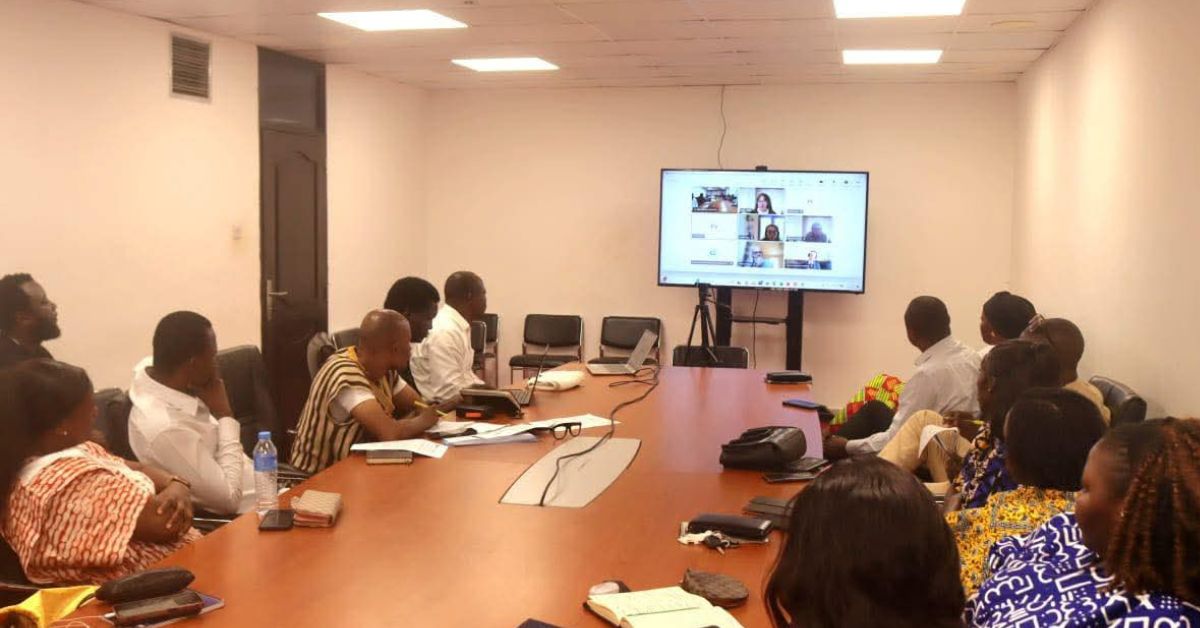
 The Parliament of Sierra Leone, in collaboration with InterPARES, has established a Peer Learning Exchange Programme with selected European Parliaments, as part of its commitment to strengthening parliamentary capacity and fostering institutional learning.
The programme brings together experts and officials from the Parliaments of Sierra Leone, Denmark, Belgium, the Czech Republic, and Ireland in a series of bi-weekly virtual exchanges. These engagements focus on sharing systems, tools, and professional insights across key areas of parliamentary work, including legislative drafting and scrutiny, financial oversight, evidence-based research and analysis, strategic planning, and the application of Artificial Intelligence in parliamentary processes.
In her welcome address, the Director General of the Parliament of Sierra Leone, Mrs. Finda Fraser, expressed appreciation to Inter Pares for organising the virtual experience-sharing programme. She noted that such engagements would enhance parliaments’ capacity by learning from one another on how to deepen citizens’ participation in the legislative process.

She also stated that the initiative would foster stronger collaboration and improve the ways in which Parliaments engage citizens in the governance processes. She also commended the Clerk of Parliament and other partners for supporting the programme.



Sharing Sierra Leone’s experience, the Director of ICT in the Parliament of Sierra Leone, Joseph Conteh, highlighted the three core functions of Parliament: law-making, representation, and oversight. Mr. Conteh also explained that citizens’ engagement was closely linked to Parliament’s representative role. He outlined several technological tools used by the Parliament of Sierra Leone to facilitate communication and transparency. According to him, Members of Parliament now receive documents electronically through the e-pigeonhole system and computers installed in the Chamber during plenary sittings.
He further noted that Parliament uses multiple platforms to engage citizens, including live television and radio broadcasts of parliamentary proceedings, online live streaming, social media platforms, and AI-supported electronic newsletters.
Providing an international perspective, Jesper Schaumburg-Müller, Senior Legal Adviser from the Parliament of Denmark, delivered a virtual presentation on citizens’ initiatives. His presentation covered the legal framework for citizens’ initiatives, procedures for launching an initiative, the review process by parliamentary administration, mechanisms for supporting initiatives, and the procedures followed when a citizen initiative successfully meets the required criteria.
The virtual session concluded with comments, questions, and clarifications from participants, further strengthening the learning experience and reinforcing the collaborative partnership between the Parliament of Sierra Leone and other participating parliaments.