


 Post a comment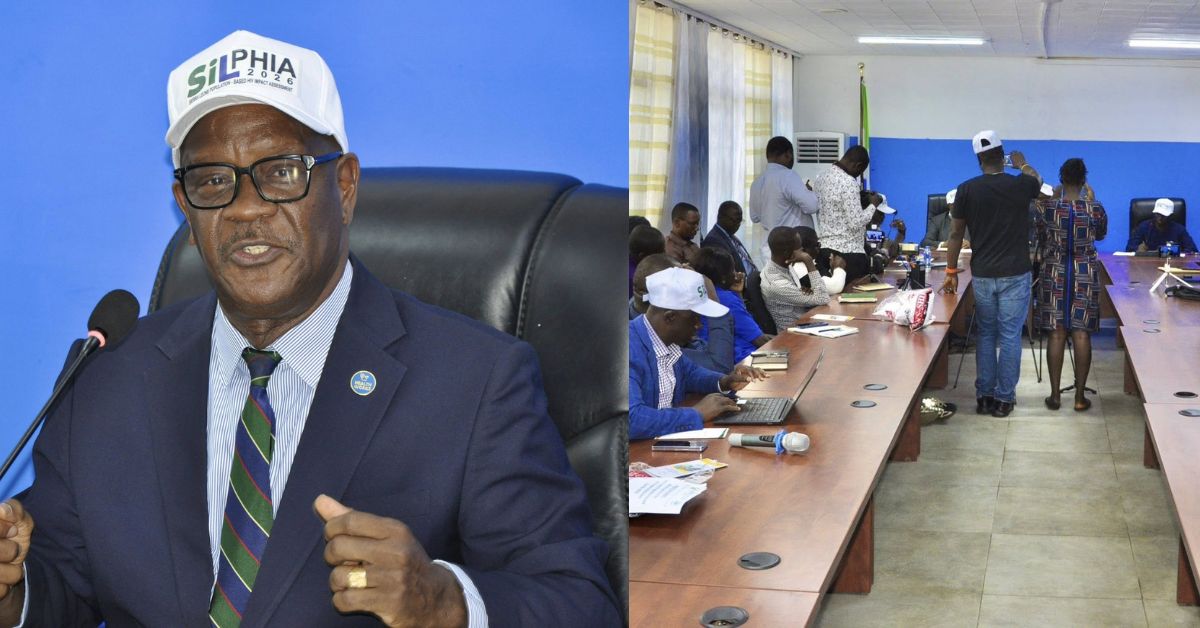
Sierra Leone’s Minister of Health, Dr. Austin Demby, recently held a constructive dialogue with media representatives and civil society organizations to address public concerns, clarify recent audit queries, and outline major transformations within the country’s healthcare system.
During the briefing, Dr. Demby welcomed public scrutiny and emphasized his commitment to accountability and fairness. He noted that he views the media and civil society as crucial partners in ensuring quality healthcare delivery for all Sierra Leoneans.
Addressing recent audit reports, Dr. Demby was clear that he welcomes the oversight. “The audit findings are not a witch hunt,” he stated. “They are a tool to help us be better at what we do. We are not a mirror to ourselves, and these reports are for the nation to discuss and seek clarifications. We must embrace it, fix what needs fixing, and learn from it as we go along.”

To “set the record straight” regarding specific public concerns and administrative actions, the Ministry provided several factual updates during the session:
Hospital Construction: 11 out of 12 government hospitals have made significant construction progress using the initial 30% funding provided by the government. The Ministry of Health is actively working with the Ministry of Finance to pay building supervisors to certify this progress so the next tranche of funding can be released for completion.
Overseas Medical Treatment: Out of 13 patients slated for overseas treatment, 10 have provided their full supporting documents, and one recently traveled for their appointment. Tragically, two of the patients have passed away.
Staff Remuneration: Addressing questions about payroll, the Ministry confirmed that all 59 workers who received salaries or other forms of remuneration are official Ministry of Health staff, with supporting correspondence available to prove it.
Ambulance Services: The National Emergency Medical Services (NEMS) has undergone a complete transformation since 2024 to address previous management issues. The country now has 108 active ambulances equipped with GPS trackers, oxygen, and medical supplies providing critical response services nationwide.
Fair Recruitment: To ensure fairness and combat unfair competition in hiring, the Ministry introduced its first-ever online application portal to manage the recruitment of 3,000 health workers.
Vehicle Fleet Management: Proper supporting documents, including life cards and licenses, are now securely on file for Ministry vehicles and motorbikes. Additionally, actions are underway to dispose of vehicles that are no longer roadworthy.
The meeting also allowed participants from the media and civil society to offer insights on leadership, staff training, and improving patient satisfaction.
“We will continue to listen, learn, and take swift actions to solidify the numerous gains made in the health system,” Dr. Demby concluded.


