
Coaches Association of Sierra Leone Demands Apology from Kei Kamara Over Negative Remarks
 Osman Tolo Sesay
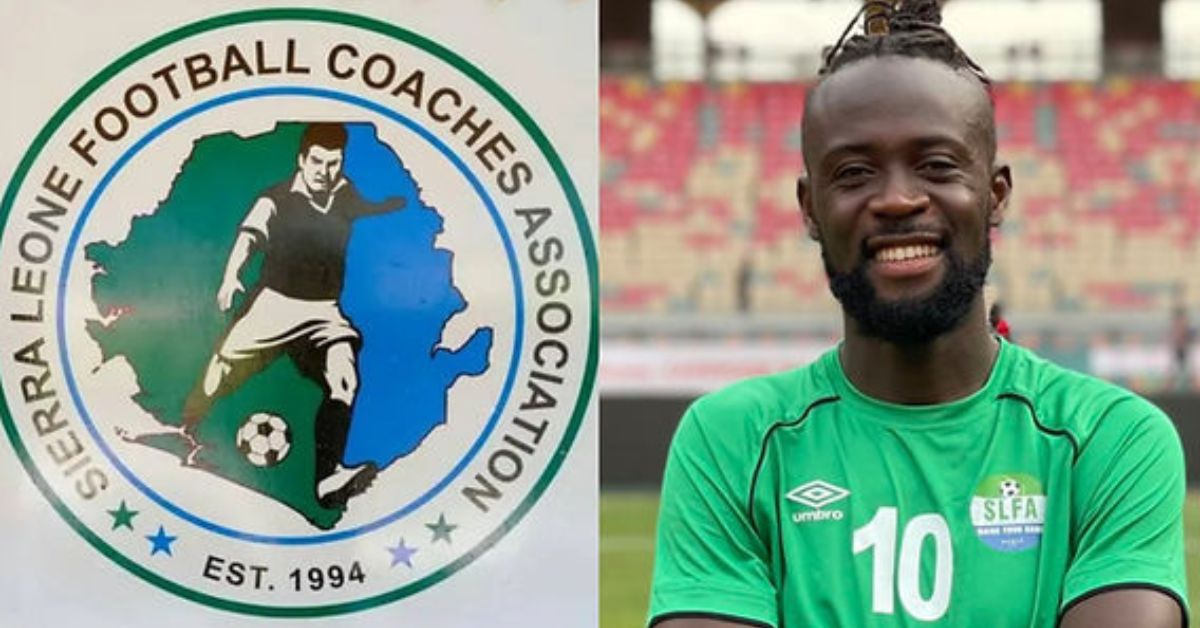
 The National Football Coaches Association of Sierra Leone has called on Sierra Leonean international striker Kei Kamara to issue an immediate public apology following comments perceived as critical of the country’s coaching standards.
Kamara, in a widely circulated social media video, questioned the capacity of domestic coaches to lead the national team effectively. He asserted that no local tactician currently possesses the required expertise to develop top-level players or guide Sierra Leone to qualification for the Africa Cup of Nations (AFCON).
In response, the association strongly criticized the remarks, describing them as unprofessional and disrespectful to the local coaching community. The NFCA-SL emphasized that such statements undermine the contributions of coaches who have played a central role in the development of football in Sierra Leone.

Highlighting historical achievements, the association noted that Sierra Leone’s previous AFCON appearances in 1994, 1996, and 2021 were all secured under the leadership of homegrown coaches, including respected figures such as Sam Obi Metzger and John Keister.
The NFCA-SL also pointed to recent successes at various levels of the game. Domestic coaches, it stated, guided the national Under-20 men’s team to the final of the 2024 WAFU tournament, while the senior women’s team and the Under-17 women’s side recorded notable victories in 2025.
Reaffirming confidence in the qualifications of its members, the association underscored that many Sierra Leonean coaches hold recognized certifications from the Confederation of African Football (CAF) and European training institutions. It maintained that local coaches remain integral to the growth and sustainability of the sport.
The association further urged the Sierra Leone Football Association to continue demonstrating trust in domestic technical staff, while dismissing Kamara’s claims as unfounded.
The development has sparked broader discussion within Sierra Leone’s football community about the role of local expertise in national team management, as well as the need for constructive dialogue among key stakeholders in the sport.
How could you certain the previous AFCON appearance of 1994, 1996 and 2021 achievements? Just failure not successful. Kei Kamara own any apology for nobody. he just raised a concern