Zainab Sheriff: Unity Party Leader Calls for Justice and Due Process in Open Letter

 Osman Tolo Sesay
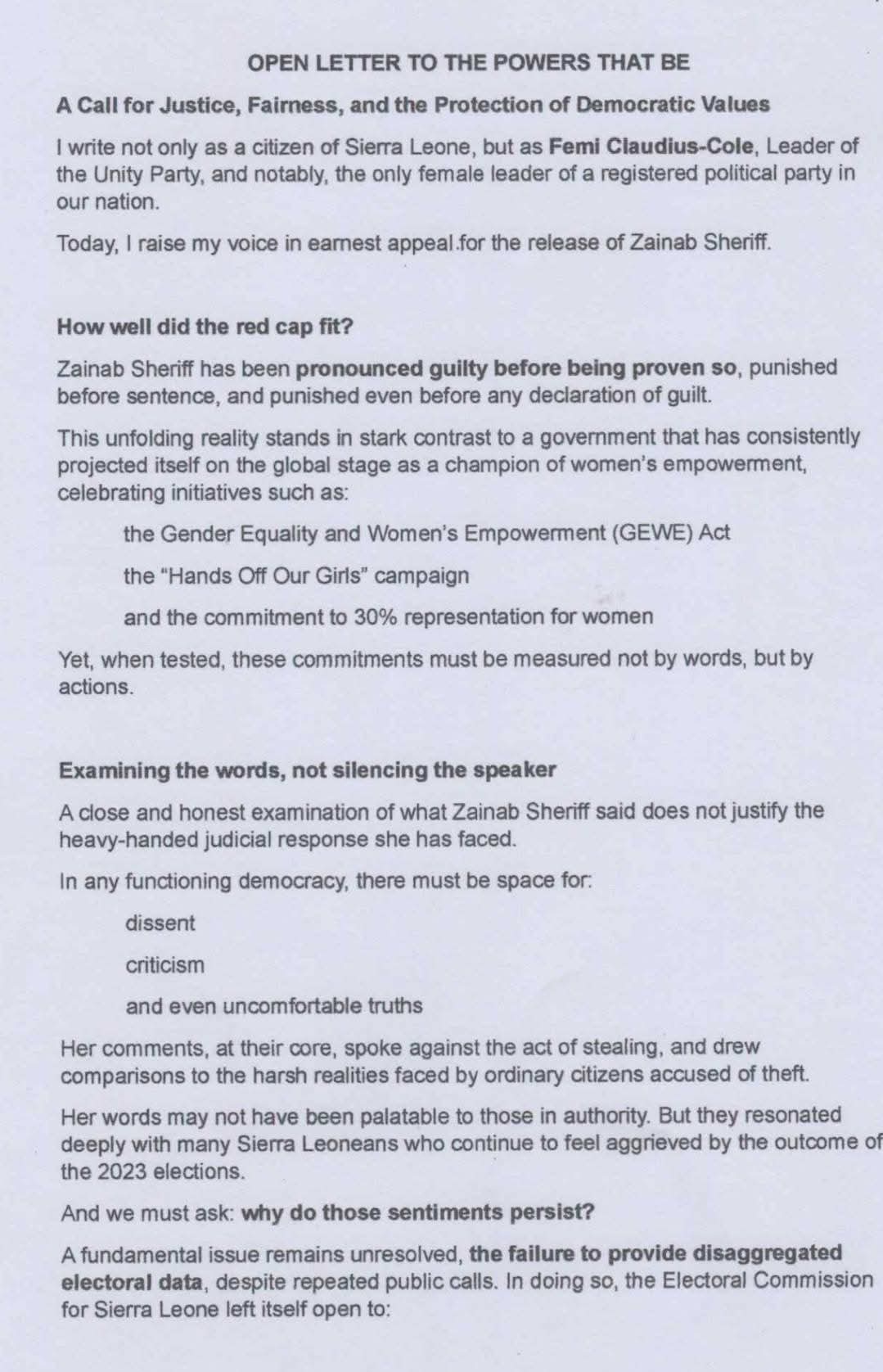
 Femi Claudius-Cole, Leader of the Unity Party, has issued a strongly worded open letter urging authorities to uphold justice, fairness, and democratic principles in the handling of the case involving Zainab Sheriff.
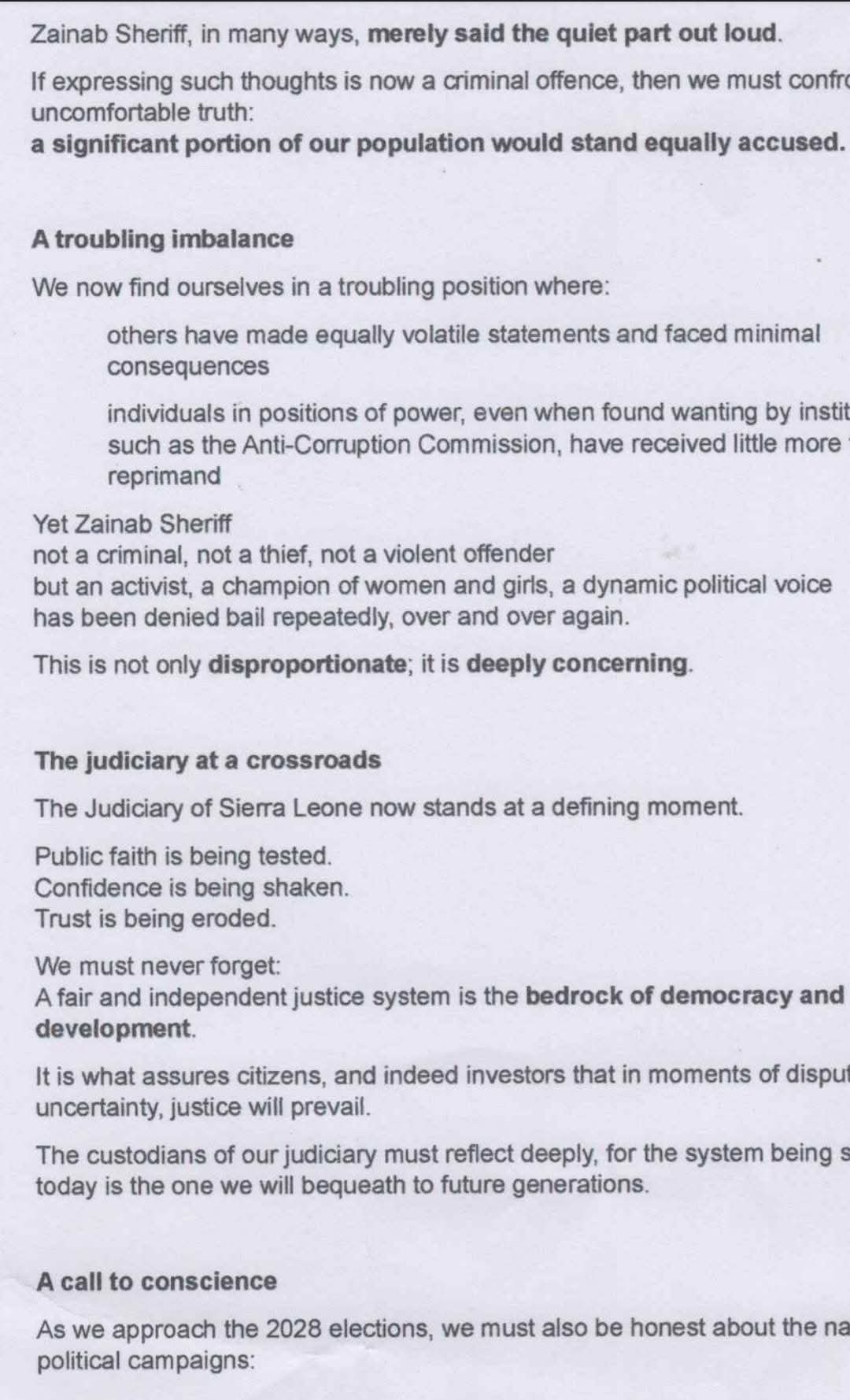
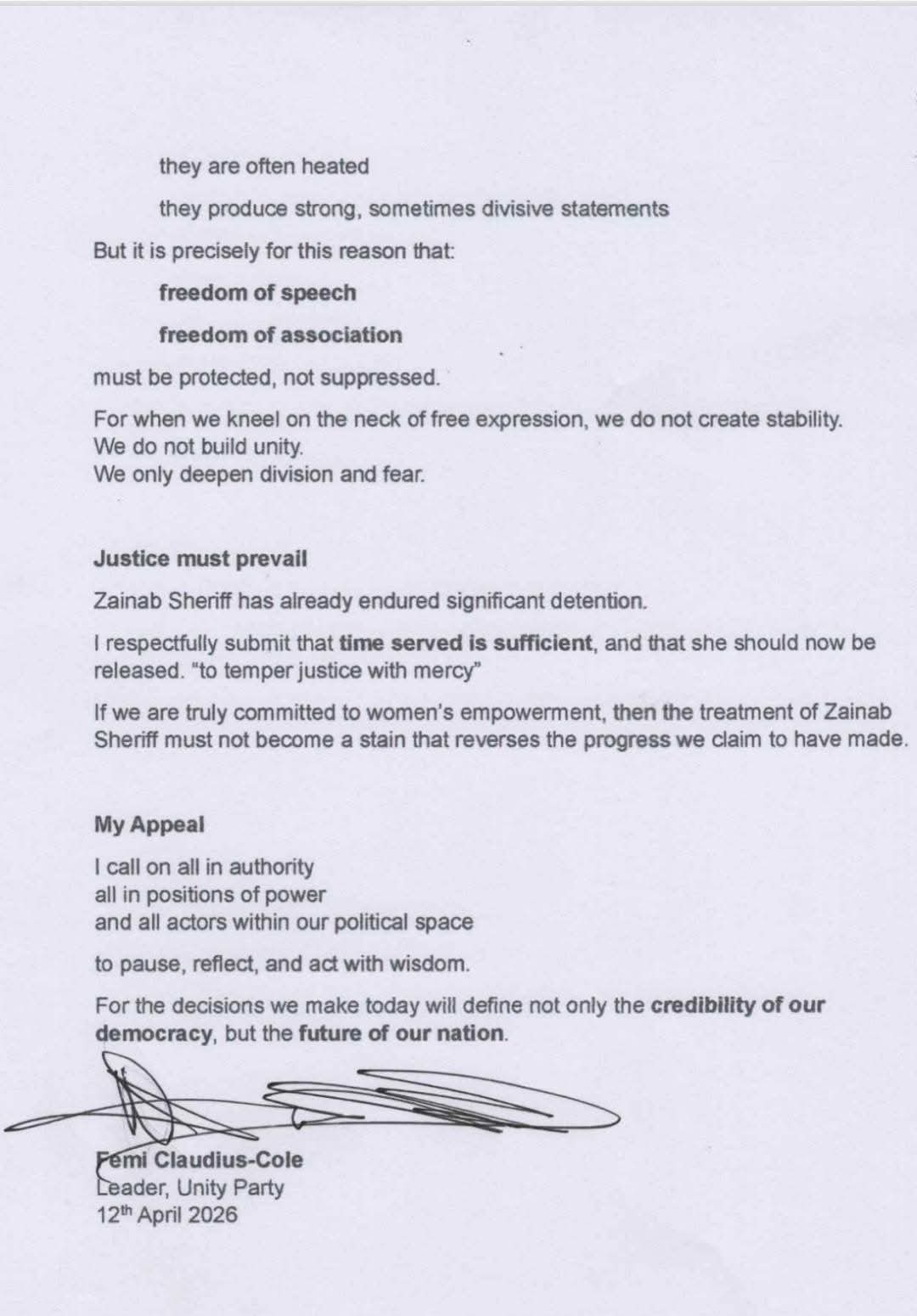
Dated April 12, 2026, the letter raises concerns about what the opposition leader describes as a “disproportionate” judicial response toward Sheriff, who she argues has been “pronounced guilty before being proven so.” Claudius-Cole calls for Sheriff’s release, stating that the activist has already endured significant detention and that “time served is sufficient.”
The statement situates the issue within broader questions about governance and accountability in Sierra Leone. It contrasts Sheriff’s treatment with government commitments to gender equality and women’s empowerment, including initiatives such as the Gender Equality and Women’s Empowerment (GEWE) Act and the “Hands Off Our Girls” campaign.

According to Claudius-Cole, the case reflects a wider tension between stated democratic values and their application in practice. She argues that dissenting voices and criticism must be accommodated in any functioning democracy, warning that restricting such freedoms risks deepening division and eroding public trust.


The letter also touches on lingering public concerns following the 2023 general elections, particularly the absence of disaggregated electoral data. It suggests that unresolved electoral issues may be contributing to ongoing public frustration and skepticism.
In addition, Claudius-Cole highlights what she describes as inconsistencies in accountability, alleging that other individuals who have made similarly controversial statements or faced scrutiny from institutions such as the Anti-Corruption Commission have not encountered comparable legal consequences.
The open letter further frames the issue as a critical moment for the judiciary. It warns that public confidence in the justice system is being tested and emphasizes the importance of maintaining judicial independence and fairness as foundational elements of democracy and national development.
Looking ahead to the 2028 elections, Claudius-Cole calls for restraint and respect for fundamental freedoms, including freedom of speech and association, particularly during politically charged periods.
The letter concludes with an appeal to authorities and political actors to act with caution and integrity, noting that decisions taken now will influence both the credibility of Sierra Leone’s democratic institutions and the country’s future trajectory.
As of now, there has been no official response from government or judicial authorities regarding the concerns raised in the letter.