


 3 Comments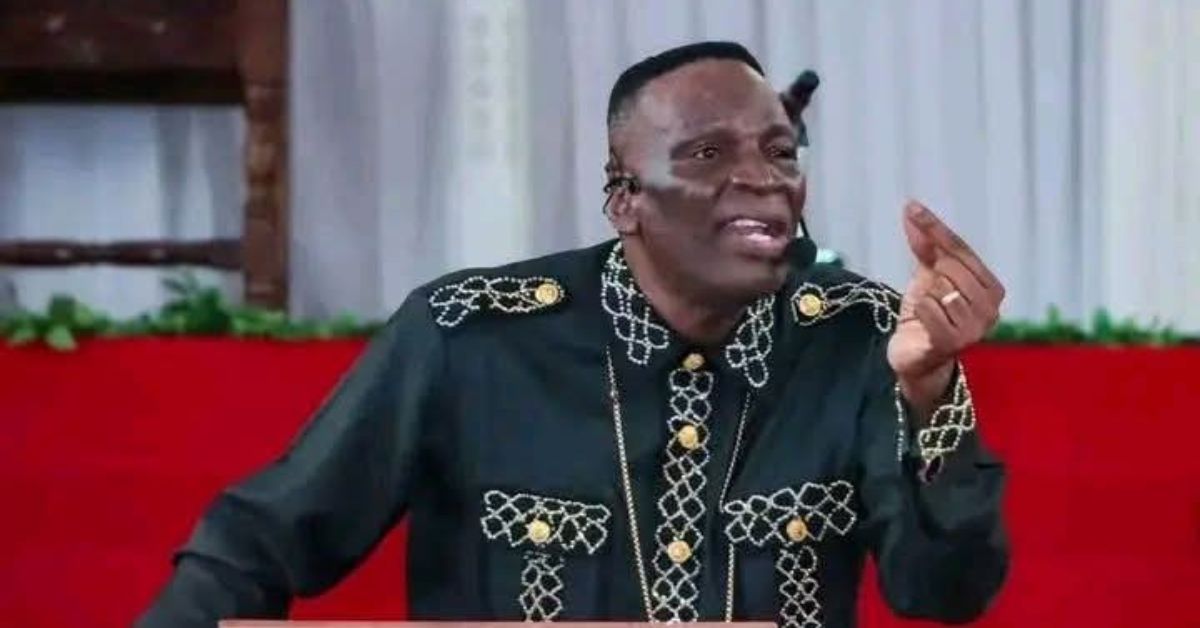
Religious leader Bishop J. Archibald Cole, General Overseer of New Life Ministries International (NLMI), has issued a strong position paper raising concerns over a proposed national policy on religious tolerance and practice currently under discussion in Sierra Leone.
The document, released in May 2026 and shared through Facebook, presents what Bishop Cole described as the position of the “Body of Christ” on the proposed policy framework.
While the paper welcomed efforts aimed at promoting peace, interfaith harmony, public order, and religious tolerance, it warned that several provisions in the draft policy could undermine constitutional freedoms if implemented in their current form.

According to the paper, the proposed policy contains “serious constitutional risks” and “may gradually weaken freedom of religion, freedom of association, freedom of expression, and the autonomy of churches and religious bodies.”
- What Does RCBank MD, Dr. Gilpin New Vice Presidency Role at WABA Means For Sierra Leone
- Discover New Horizons: Why Sierra Leonean Students Should Explore Higher Education in Algeria
- United States, Ireland and European Union Ambassadors Commend Electoral Commission of Sierra Leone for credible and Peaceful Bye-elections.
The position paper stated that while the State has the authority to regulate matters relating to public nuisance, public safety, hate speech, and criminal conduct, it “must not control doctrine, ordination, religious leadership, preaching, church registration, or the internal governance of religious institutions.”
Bishop Cole acknowledged that the draft policy contains several positive provisions. The paper recognized Sierra Leone as a multi-religious society and commended efforts aimed at promoting peaceful coexistence among Christians, Muslims, and traditional religious communities. It also acknowledged concerns relating to excessive noise, unsafe mass gatherings, religious incitement, and interfaith tension.
The document further described the promotion of interfaith dialogue, civic education, and mediation as commendable, while supporting regulations on outdoor events, traffic management, crowd safety, and environmental protection when applied equally to all religious groups.
The paper also supported the condemnation of violence and hate speech, but stressed that such definitions must remain clear and should not be used to suppress biblical preaching or moral teachings.
However, the position paper identified the proposed certification of pastors, priests, reverends, imams, and other religious leaders as “the most troubling part of the policy.”
According to the document, “the Church receives its authority from God, Scripture, and its own ecclesiastical structures, not from the State.” It warned that a government-controlled certification system could eventually become a mechanism for determining who is allowed to preach or lead religious ministries.
“The State should not determine who is qualified to be a pastor,” the paper stated, while adding that churches and religious bodies should remain responsible for establishing their own spiritual and leadership standards.
The document further criticized proposals for annual renewal of religious leadership certification, describing the measure as “especially problematic” because it could give government “continuing leverage over religious leaders.”
The paper argued that such a system could create what it described as a “chilling effect on prophetic preaching,” especially in situations where religious leaders speak against corruption or perceived government abuse.
While the paper accepted that a national registry of religious institutions may be useful for administrative purposes such as legal personality and property ownership, it strongly opposed the idea of registering individual religious leaders as a condition for ministry.
According to the document, such a move risks turning religious freedom into “a privilege granted by the State rather than a right protected by the Constitution.”
The paper also noted that many genuine Christian ministries in Sierra Leone operate as independent, Pentecostal, charismatic, evangelical, and emerging fellowships. It suggested that certification, where necessary, should be handled by recognized church councils or religious alliances rather than government authorities.
The document stated that bodies such as the Council of Churches in Sierra Leone or the Pentecostal Fellowship of Sierra Leone would be better positioned to address concerns relating to false churches or cults.
On public religious gatherings, the paper said permits based on public safety, venue management, traffic control, and noise regulation may be reasonable. However, it warned that prior approval systems should not be used to deny evangelism, crusades, open-air preaching, or public worship.
Instead, the document recommended a notification-based system supported by objective public safety conditions rather than discretionary approvals influenced by religious content.
The paper also called for a clear distinction between incitement to violence and constitutionally protected religious expression. It maintained that religious disagreement and moral teachings should not be treated as hate speech unless they involve direct threats or intentional incitement to violence.
Bishop Cole’s position paper warned that if the policy is passed without amendments, it could normalize State control over religion, weaken church independence, discourage church planting and new ministries, silence prophetic preaching, and allow future governments to target unpopular religious groups.
The document maintained that the Church supports peace, responsible worship, public order, and mutual respect among religions, but firmly opposes any arrangement that allows the State to “license, certify, suspend, or control ministers of the Gospel.”
It added that churches are prepared to cooperate with government on issues such as public safety, noise control, civic education, and interfaith peacebuilding, but stressed that “cooperation must not become subordination.”
“The State may regulate conduct. It must not regulate calling. The State may punish crime. It must not police doctrine. The State may manage public order. It must not control worship,” the paper stated.
Among its recommendations, the document called for the complete removal of the proposed certification regime and proposed voluntary self-regulation by religious bodies instead.
It also recommended limiting the National Religious Registry to institutions only, deleting annual renewal requirements for religious leaders, narrowing the definition of hate speech, protecting independent churches, and ensuring that the Inter-Religious Council functions strictly as an advisory and mediatory body rather than an enforcement institution.
The paper further proposed the establishment of a two-day National Interfaith Consultative Conference in Freetown to allow Christian, Muslim, and other religious stakeholders to discuss how the proposed policy could affect their respective faith communities.
“There are values that are exclusive to the Islamic Faith, equally so, there are values that are exclusive to the Christian faith,” the document stated, adding that stakeholders “need to sit together and articulate how any government policy may affect respective religions.”
The position paper concluded that while the proposed policy carries “a noble objective,” its current enforcement mechanisms present “dangerous” implications for religious freedom in Sierra Leone.
“Constitutional freedom must remain a right, not a renewable permit,” the document concluded.


I agree with the government on this, it is becoming out of control, these so-called men of God have infiltrated the country with their false promises and prophecies.
Hello my name is Mr ARUNA Bockarie from kailahun I am a masson I can able to do all of masson, but now I have a very big problem on my ears, please I need help in Jesus Christ name amen 🙏🔥
“All authority on earth is ultimately permitted by God and operates within His sovereign will. In the same way, God has established the church as His spiritual institution through which His values, truth, and the influence of heaven are manifested on earth. Therefore, the church is fundamentally spiritual in nature and should not be controlled by individuals or systems that seek to undermine its divine mandate.
At the same time, governments have a legitimate responsibility to ensure public safety, maintain order, and prevent violence, hate speech, or actions that threaten national peace and unity. However, beyond these lawful responsibilities, it remains clear that religious bodies—particularly the church—must be free to operate according to their convictions and divine calling.
Where governmental policies or regulations violate constitutionally guaranteed fundamental human rights, especially freedom of worship, conscience, and religious expression, the church not only has the right but also the responsibility to uphold truth and preserve its spiritual independence.”