

EPI, Partners Launch Five-Year Gender Integration Plan to Boost Immunization Uptake in Sierra Leone
 Sahid Bangura
 Sierra Leone’s Expanded Programme on Immunization (EPI), in collaboration with partners including GINGER SOFRECO and GAVI, has launched a five-year Gender and Immunization Capacity Building Plan aimed at addressing gender-related barriers affecting immunization services and vaccine uptake across the country.
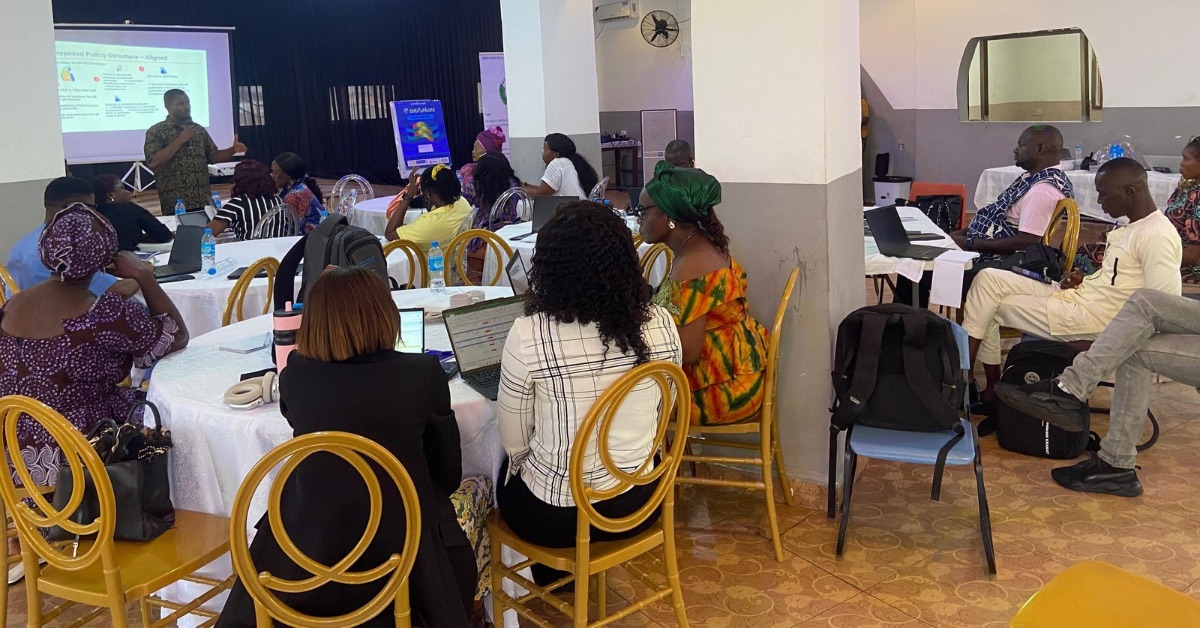
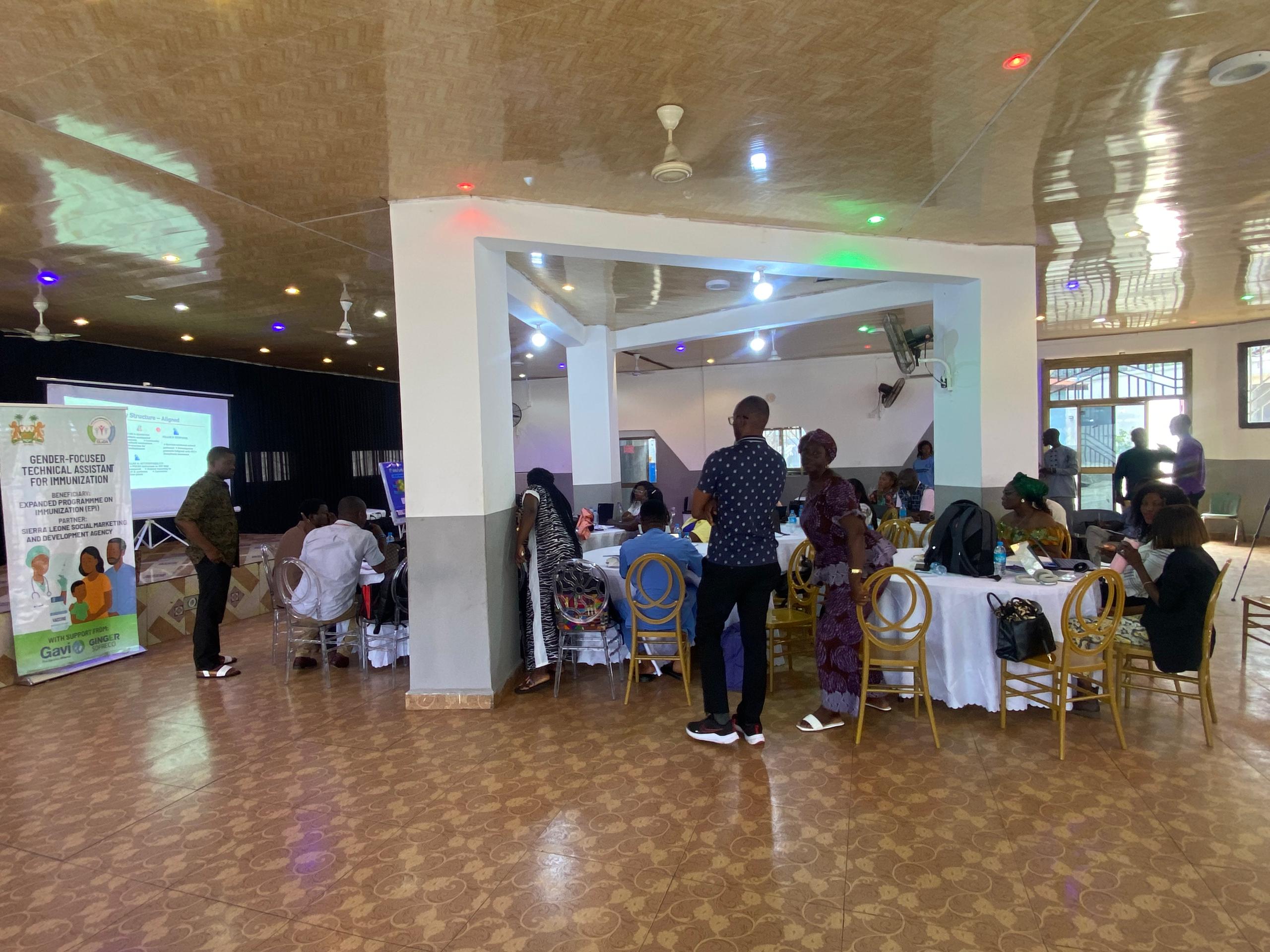
The plan was presented during an orientation workshop for EPI staff and partners held in Freetown on Friday, May 8, 2026.
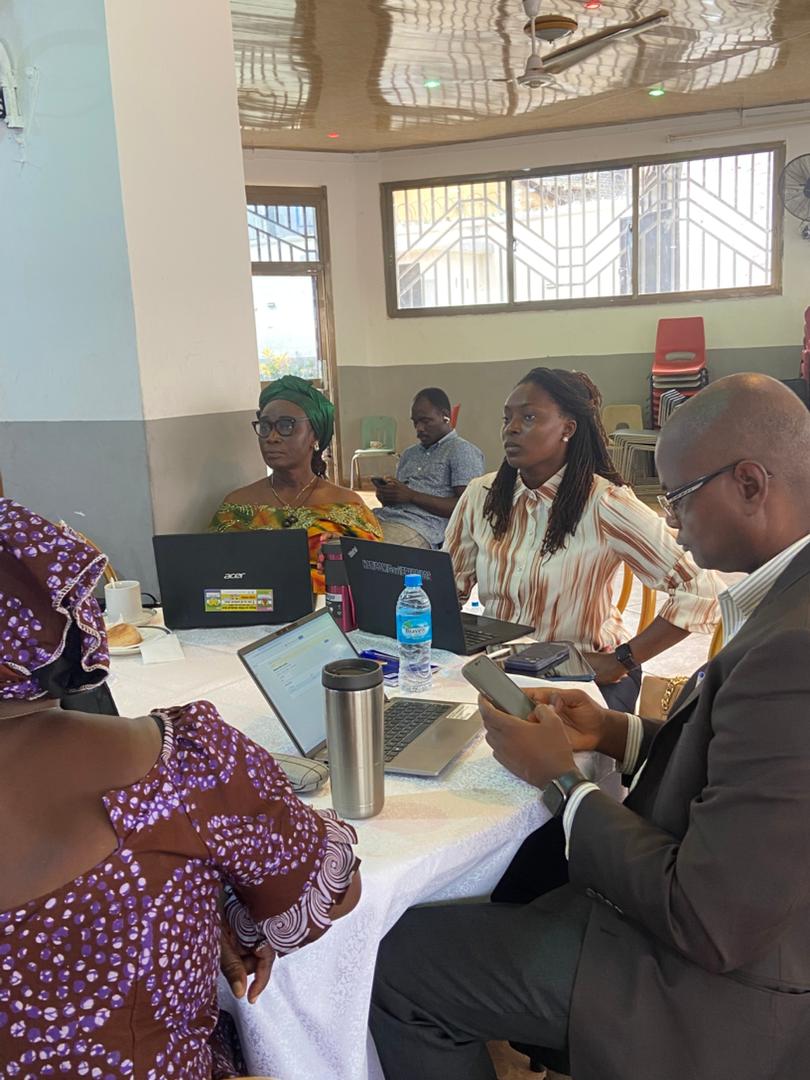
The workshop brought together health officials, civil society organizations and development partners to familiarize participants with the newly developed plan, its implementation approaches and timelines, while also gathering inputs to strengthen execution.

Speaking during the workshop, Technical Assistant on Gender Immunization at GINGER SOFRECO, Ruth Kpundeh, said the initiative is designed to strengthen gender integration within Sierra Leone’s immunization system over the next five years.


“As an agenda TA, we have been tasked to build a capacity building plan and gender integration in immunization and we have just concluded the plan,” Kpundeh said. “Our next step, where we are currently, is orienting EPI staff and partners on the capacity building plan in gender immunization.”
She explained that the plan spans from 2026 to 2030 and focuses on identifying gender barriers affecting immunization services and implementing targeted interventions to address them.
“Our focus is on gender barriers in immunization and recommended activities to address the barriers,” she said. “There are indicators we will look at in addressing the barriers, and there is an aligned budget and timeframe, including human and technical resources needed in achieving the plan.”
Kpundeh noted that the strategy is built around five thematic areas, including capacity building for EPI staff, partners and gender ambassadors. Other components include gender-responsive project and proposal writing, development of a database and framework for gender integration in immunization, communication and advocacy, as well as management, leadership and policy strengthening.
She further emphasized the importance of collaboration with institutions and organizations working in immunization and gender-related programming.
“We recommended collaboration with other like-minded organizations such as UNICEF, WHO, Plan International, Focus 1000 and other immunization organizations,” she said. “We also recommended integration of other departments and involvement of all levels of staff.”
According to her, continuous monitoring of gender-related activities and indicators will be essential to achieving the objectives of the plan.
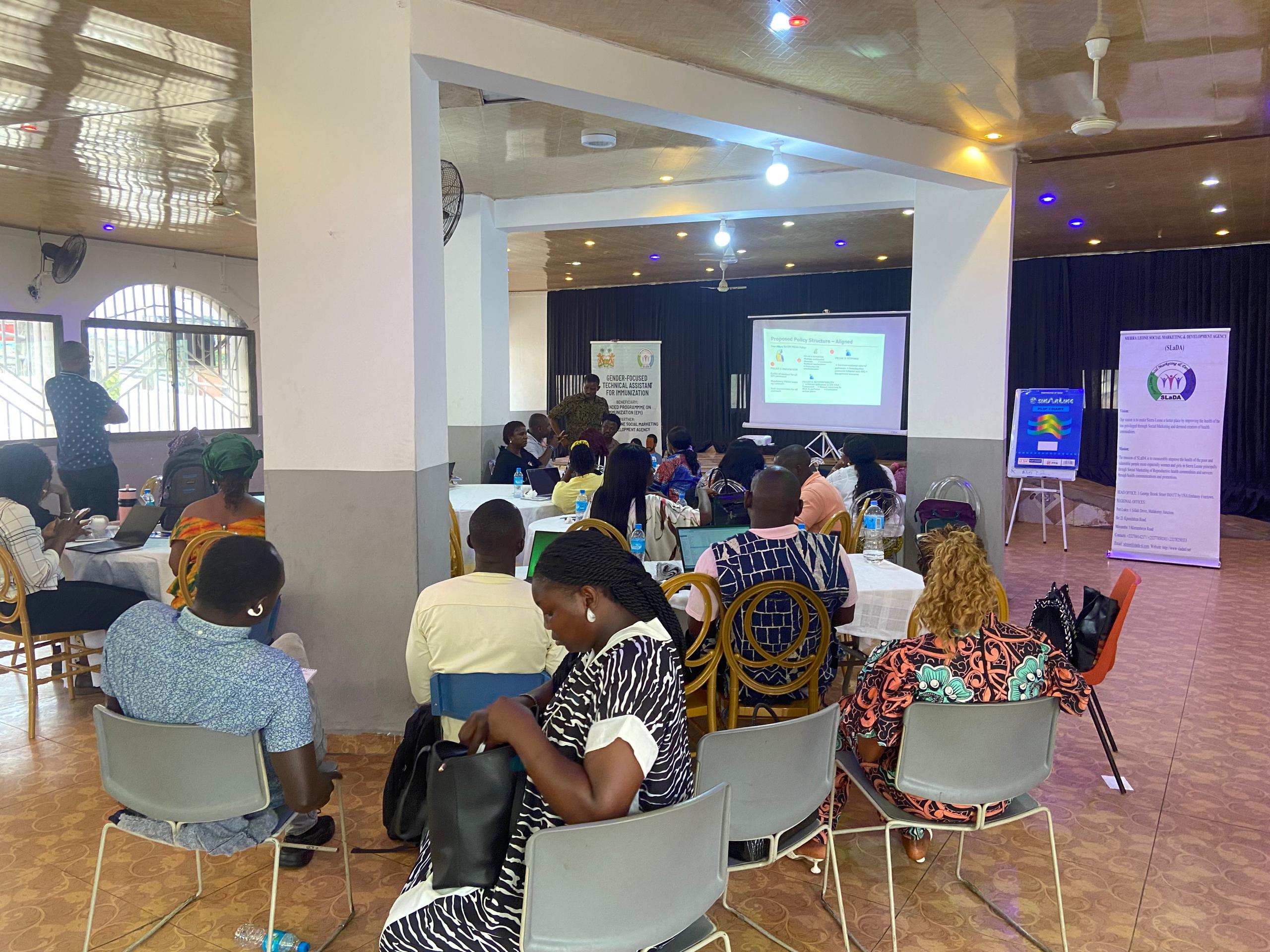
“We encouraged them to ensure that the capacity building, trainings and orientation should serve as a reminder of all what we have done, and that they should continue with it even after our engagement here in support with EPI,” she added.
Also speaking at the workshop, Margaret Mahawa Kangbai, Senior Public Health Sister attached to the Ministry of Health at the Expanded Programme on Immunization as Immunization Focal Person, described the initiative as timely, noting that gender barriers have been identified as a major factor affecting immunization coverage in Sierra Leone.
“The program is really timely because we really want to work on our gender mainstreaming,” Kangbai said. “There was a time we had a consultancy on gender barriers, so Gebiago did a study to identify some of the barriers limiting immunization services because there were times we were struggling with our immunization coverages.”
She said findings from the study showed that gender issues were among the leading barriers to immunization service delivery, prompting the engagement of GINGER SOFRECO to support EPI through technical assistance.
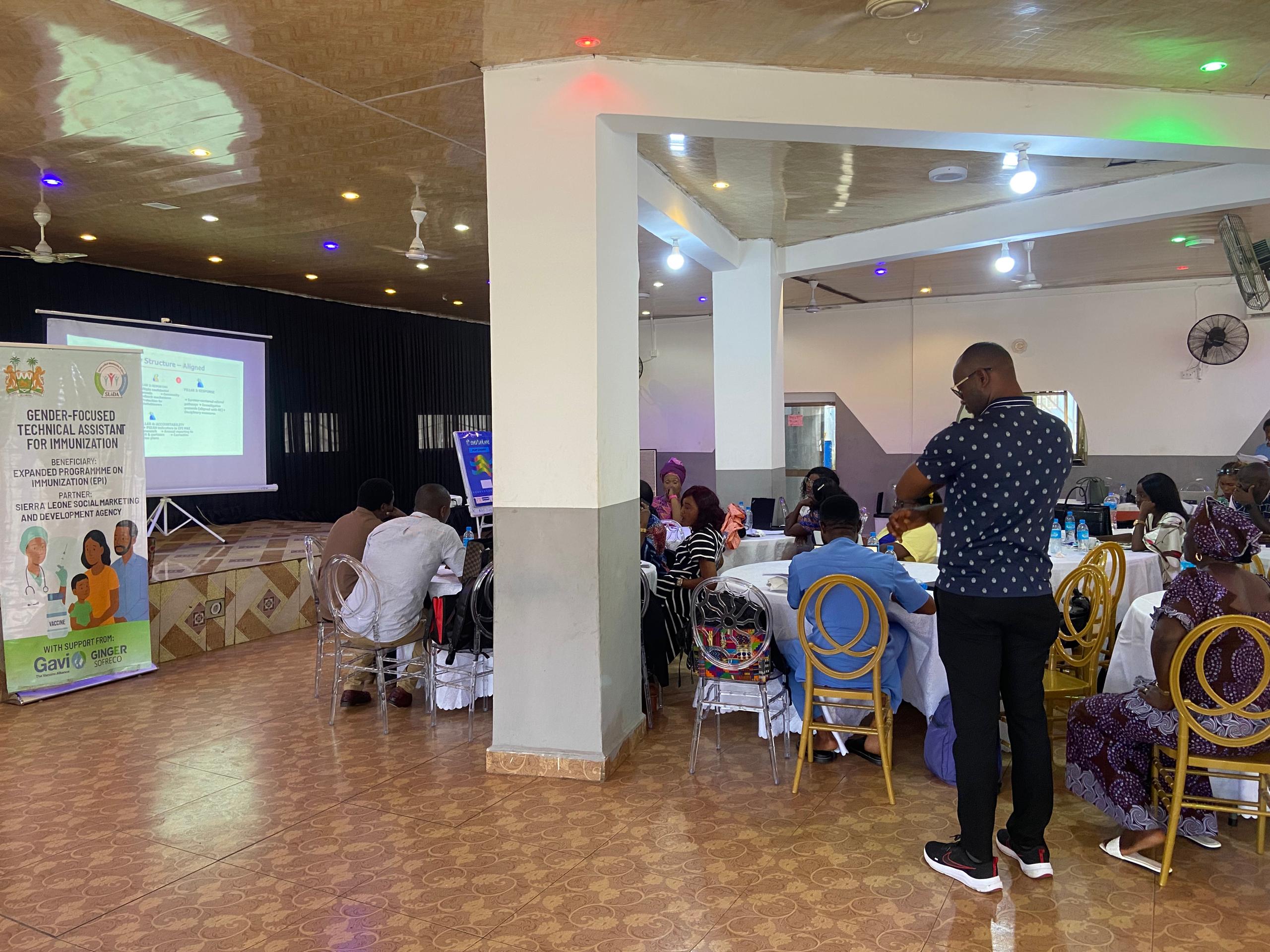
“That is why we had to consult a firm which is GINGER SOFRECO and they attached two technical assistants to support the Expanded Programme on Immunization, making sure that we address gender issues in immunization service delivery,” she stated.
Kangbai expressed hope that civil society organizations participating in the orientation would help promote gender mainstreaming within communities and health facilities across the country.
“After this program, we hope that our CSOs that interface with communities are well nurtured about gender mainstreaming,” she said. “At the end of the day, all of us will go back to the communities and service delivery points to ensure that our immunization service providers fully understand gender mainstreaming and also look at the supply-side and demand-side barriers limiting immunization service delivery.”
Meanwhile, Sahr Koadiama, Program Coordinator at Sierra Leone’s Social Marketing and Development Agency (SLaDA), stressed the need for greater male involvement in immunization activities, noting that immunization is often viewed as a female-centered responsibility.
“As an organization, we are partnering with the EPI to see how we can integrate gender into immunization because we found out that when it comes to immunization, people assume that immunization is a female-dominated exercise and most times men shy away from it,” Koadiama said.
He noted that most immunization activities at health facilities are led by women, including frontline service providers administering vaccines, and said there is a need to change public perception around the issue.
“We want to ensure by informing the public that females are not the only people that should be involved in immunization services,” he stated.
Koadiama also highlighted the health consequences associated with poor vaccine uptake, especially among children and women.
“Immunization is important because if one fails to take his or her required vaccine, it could lead to serious complications at the end of the day,” he said. “That is why some children suffer from polio, and for females, it can lead to cervical cancer when vaccination is ignored.”
The orientation workshop forms part of broader efforts by EPI and its partners to strengthen equitable access to immunization services in Sierra Leone by addressing social and gender-related barriers that continue to affect vaccine acceptance and utilization in communities across the country.