

Explainer: Why President Maada Bio Lost the ECOWAS Chairmanship by Dr. John Idriss Lahai
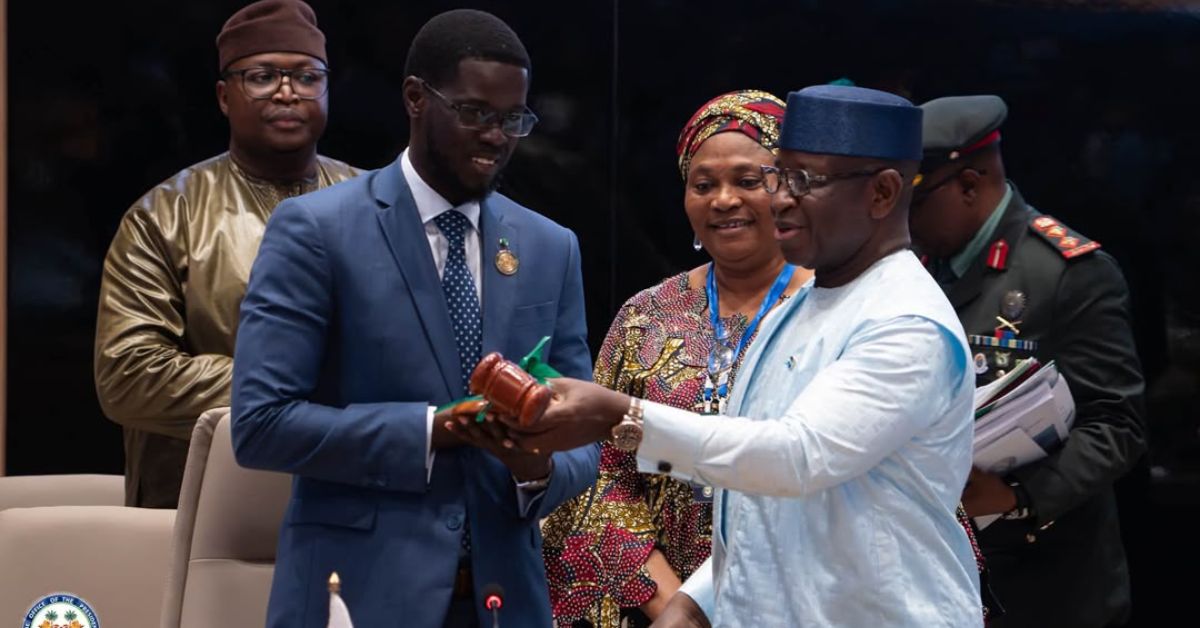
Many people are asking why President Julius Maada Bio was not re-elected as the leader of ECOWAS. Here is the full story explained step by step so everyone can understand what happened behind closed doors.
IT IS IMPORTANT TO UNDERSTAND HOW THE ECOWAS LEADERSHIP POSITION WORKS.
Although the chairmanship rotates among different member countries, there is no strict rule stating that a president can serve for only one year and can never seek back-to-back re-election. Serving a single one-year term is not a fixed or mandatory norm. Furthermore, while ECOWAS leaders aim to reach a consensus, this does not mean that presidents do not actively lobby one another behind the scenes to secure or retain the chairmanship.

THE ELECTION AND THE REJECTION
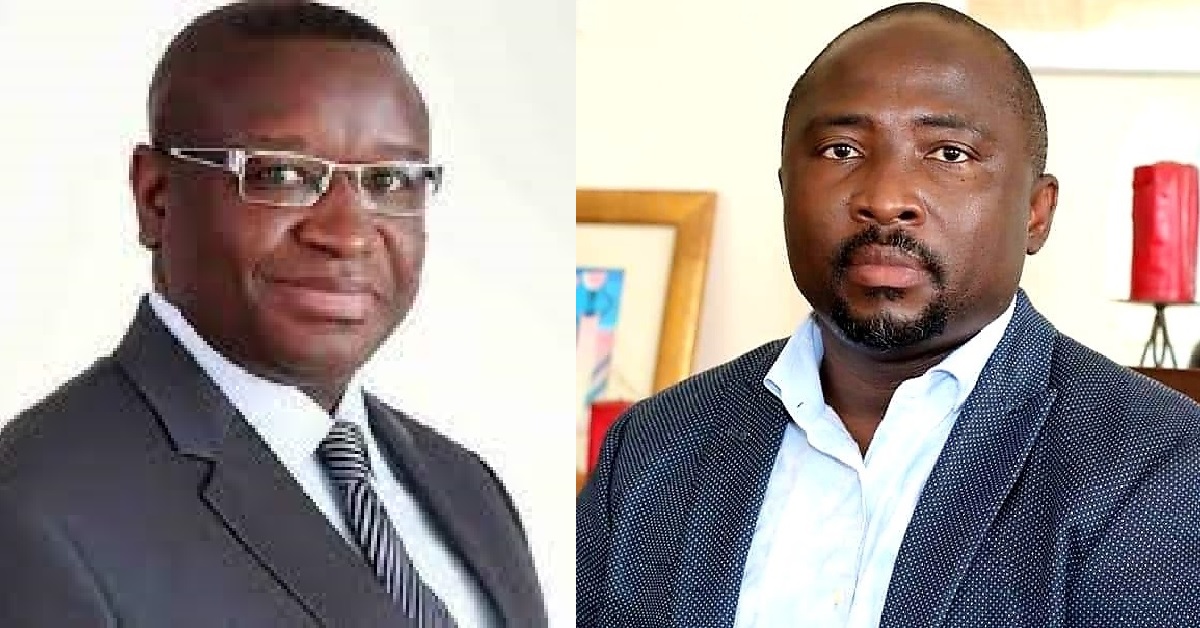

President Bio wanted to remain the Chairman of ECOWAS for another term. However, the other West African leaders said no.
In ECOWAS, decisions are usually made when all leaders agree together without a fight. But this time, they had to vote. The President of The Gambia voted for President Bio to stay. But during a secret meeting, most of the other regional leaders voted against him. When asked to explain their decision, they said they agreed with the President of Guinea, Mamadi Doumbouya, who strongly opposed President Bio’s leadership.
THE REASON BEHIND GUINEA’S FEAR
The disagreement between Guinea and Sierra Leone involves two main issues:
REASON ONE:
The Yenga Border Dispute: Guinea and Sierra Leone have had a long-standing dispute over Yenga, a small border town. The President of Guinea stated clearly that he would only discuss settling the Yenga problem if President Bio was replaced as ECOWAS Chairman.
REASON TWO:
The Request for Regional Soldiers: For the past year, President Bio has been asking ECOWAS to send peacekeepers to Sierra Leone. Other West African leaders felt this request showed that Sierra Leone was having serious security problems at home. They believed President Bio needed to step down from leading the region so he could focus entirely on fixing the security situation in his own country.
HOW THE LEADERSHIP POWER WORKS WITHIN ECOWAS?
When a country leader becomes the Chairman of ECOWAS, that president brings their own national team to control the key positions in the organisation.
If President Bio had remained Chairman, the following Sierra Leonean officials would have kept total control over West African diplomacy and security:
(1) Timothy Kabbah (Sierra Leone’s Foreign Minister) would lead all ECOWAS Foreign Ministers.
(2) Lieutenant-General Amara Idara Bangura (Head of the Sierra Leone Army) would lead all ECOWAS military chiefs.
(3) William Fayia Sellu (Head of the Sierra Leone Police) would lead all ECOWAS police chiefs.
To the President of Guinea, this setup looked dangerous. If Sierra Leone controlled the ECOWAS leadership, the army, and the police while ECOWAS peacekeepers were deployed inside Sierra Leone, President Bio would have the power to move those regional soldiers near Yenga. Guinea felt this was a direct threat to its national security.
THE MISCALCULATIONS AND THE POLITICAL FALLOUT
In the end, President Bio destroyed his own chances of staying in power at ECOWAS. His advisers, who do not understand basic geopolitics or the simple difference between their knee and elbow, guided him down a bad path. Put simply, the constant choice to avoid telling the truth and to rely on false stories to gain sympathy cost him this re-election opportunity.
This is why it is important to always tell the truth. The truth may hurt, but it is always better than lies. Truth is a currency that President Maada Bio seems unable to spend, which brings to mind a famous line by one of my favourite authors, Mark Twain: “Always tell the truth. That way you don’t have to remember what you said.” Mark Twain highlights how honesty simplifies your life and saves you from keeping track of lies.
In any case, several weeks before the ECOWAS summit at Lungi, when President Bio realised his false claims about security threats in Sierra Leone (which he claimed required the deployment of ECOWAS troops) were backfiring, he held a secret meeting at State House with his advisers, promising no one would be fired for speaking freely. With assurances that no one will be sacked for speaking their minds, Foreign Minister Timothy Kabbah advised that the only way to prove Sierra Leone was actually stable was to immediately drop all treason charges against former President Ernest Bai Koroma; this was seconded by Vice President Juldeh Jalloh.
However, Alpha Khan objected, saying an outright dismissal of the case would look bad politically. Attorney General Alpha Sesay then suggested a temporary solution: pause or discontinue the trial for now, and the decision to continue with the treasonous charges against President Koroma (or to permanently drop all charges) should only be made after President Bio secured re-election.
This trick failed completely. Other West African leaders saw right through it and realised President Bio was simply using former President Koroma’s painful exile as a political pawn for his own selfish gain. To make matters worse, as soon as the new President of Senegal, Bassirou Diomaye Faye, defeated President Bio in the closed-door election, he immediately used his very first public speech inside the conference room at Lungi to call for ECOWAS troops to deploy straight away—proving to everyone that Sierra Leone did not need to hold the leadership to address its security issues. Since Maada Bio needed his ECOWAS troops, he was going to support the deployment of the troops.
THE FINAL PEACE GIFT FOR SIERRA LEONE
To make sure Sierra Leone was not left out completely after losing the leadership seat, the West African leaders offered a compromise.
They gave Sierra Leone’s Deputy Minister of Foreign Affairs, Francess Piaget Alghali, the job of ECOWAS Commissioner for Political Affairs. This position was originally meant to go to Senegal under the new rules of ECOWAS, but it was handed to Sierra Leone as a peaceful balance.
It’s your own opinion
But ECOWAS politics is far different from Sierra leone politics.
With different constitution