
Bio Urges Parliament, Sierra Leoneans to Back 2025 Constitutional Amendment Bill
 Sorie Abubakar
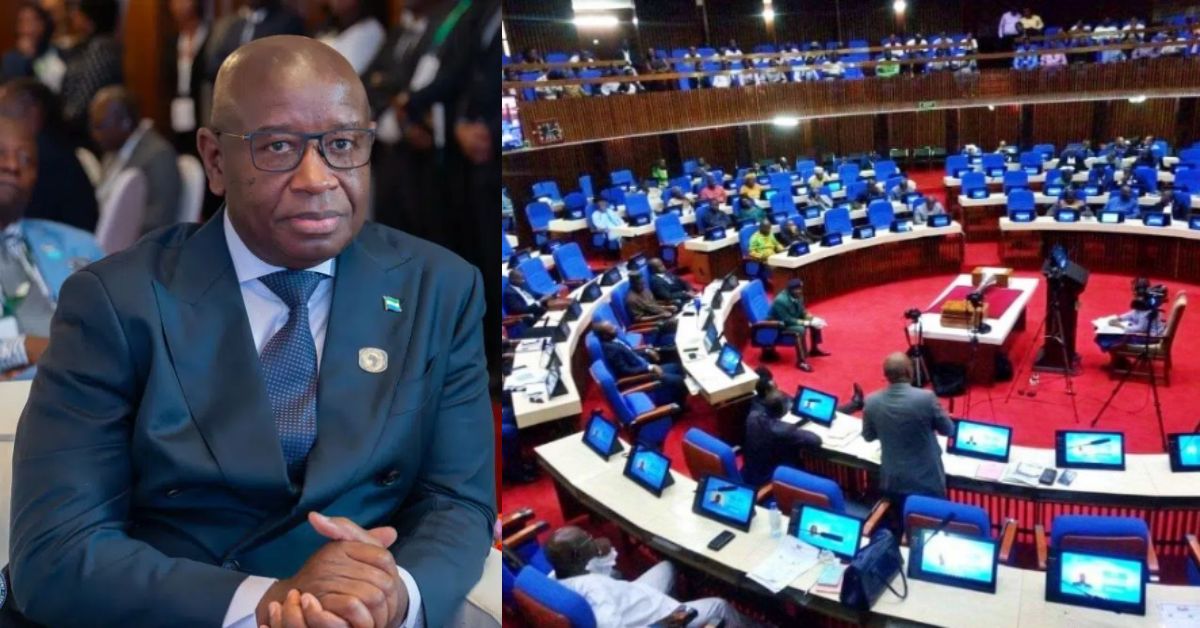
 President Julius Maada Bio has called on Members of Parliament and Sierra Leoneans to support the 2025 Constitutional Amendment Bill, urging lawmakers to put national interest above partisan considerations.
The President made the appeal in a televised address to the nation on Sunday morning, as debate continues over proposed changes to Sierra Leone’s 1991 Constitution.
Bio used the address to stress his record on democracy, recalling that he handed over power to a democratically elected government in 1996 after serving as Head of State under a military junta.

“I oversaw the conduct of the democratic elections and returned Sierra Leone to civilian rule,” he said.



According to the President, the transition was important to Sierra Leone’s peace process and contributed to the implementation of the Lomé Peace Agreement, which he said formally brought the country’s civil war to an end in 1999.
Bio said one of the recommendations arising from the peace agreement was the review of the 1991 Constitution, arguing that the document no longer fully reflects the aspirations of a country that has emerged from conflict.
“The 1991 Constitution does not fully reflect the aspirations of a nation emerging from conflict and seeking greater inclusion, justice, stability and accountability,” Bio said.
The President also cited recommendations from the Truth and Reconciliation Commission (TRC) Report calling for constitutional reforms.
He acknowledged that successive governments, commissions and civil society organisations have attempted to advance constitutional reform, but previous efforts failed to produce the desired outcome.
Bio traced the current review process to former President Ahmad Tejan Kabbah, who established the Peter Tucker Commission. He said former President Ernest Bai Koroma subsequently recognised the need for further constitutional reform and established the Justice Edward Cowan Commission.
“The Cowan Committee undertook the most extensive review in our nation’s history between 2013 and 2017,” Bio said, noting that approximately 10,000 consultations were conducted across the country.
He described the 2025 Constitutional Amendment Bill as a continuation of the work undertaken by the Cowan Committee.
Bio ended his address by urging lawmakers to vote according to what they believe is in the best interest of Sierra Leone rather than along party lines.
However, the proposed constitutional reforms have become a major point of political contention, particularly between the ruling Sierra Leone People’s Party (SLPP) and the main opposition All People’s Congress (APC).
At the centre of the disagreement are provisions relating to the Proportional Representation (PR) electoral system and the 50-plus-one threshold required to win the presidency. While the SLPP has defended the proposed reforms as necessary for greater inclusion and representation, the APC has raised concerns about aspects of the proposed electoral arrangements.
The dispute has therefore transformed the constitutional amendment debate into a broader political contest over how Sierra Leoneans will elect their representatives and president in future elections.