
President Bio Defends Timing of Proposed Electoral Reforms Ahead of 2028 Elections
 Sahid Bangura
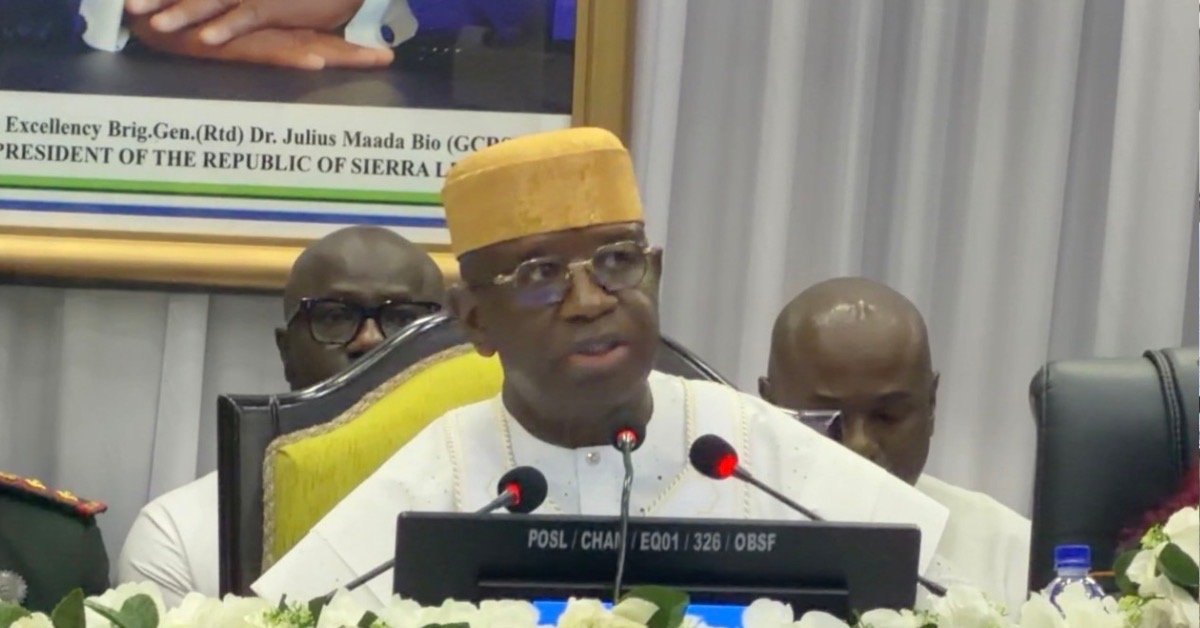
 President Julius Maada Bio has defended the timing of Sierra Leone’s proposed constitutional and electoral reforms, arguing that Parliament must act before the next general elections rather than leave the country to contest another election under rules that have been widely identified as requiring change.
Addressing the nation on Sunday, August 9, 2026, President Bio said the approaching elections make the proposed reforms particularly urgent, warning that delaying the process could create uncertainty and confusion around the country’s electoral system.
His position is likely to intensify public debate over a question that has increasingly accompanied the constitutional reform process: why are these changes being pursued now, and should major electoral rules be altered as the next election approaches?

President Bio maintained that constitutional and electoral reforms should be completed before an election rather than introduced when voters are already close to casting their ballots.
“If we delay, we risk conducting them under rules that the government, the opposition, civil society, citizens, and several election observer missions have all recognized as requiring reform,” he said.
The President argued that changing electoral rules sufficiently ahead of an election is necessary to give political parties, candidates, election administrators and voters adequate time to understand and adjust to the new framework.
He also linked the proposed reforms to broader efforts to strengthen democratic governance, saying electoral institutions must operate under rules that are fair, transparent, credible and trusted by all political actors.
President Bio said the reforms are consistent with democratic principles promoted by regional and international institutions, including the African Union, ECOWAS and the United Nations.
But his argument places Parliament and the public before a difficult balancing act: whether the urgency of electoral reform outweighs concerns that significant changes to the rules of political competition should not be rushed as an election approaches.
The President also addressed criticism surrounding the interpretation of the existing Constitution, particularly arguments that the country’s constitutional problems could be resolved through judicial interpretation rather than legislative amendment.
He said Parliament has a responsibility to provide clarity where constitutional provisions are considered inadequate or open to conflicting interpretations.
“The responsibility of Parliament is not merely to defend the text of the Constitution, but to safeguard its meaning, strengthen its application, and ensure that it continues to serve the people of Sierra Leone,” he said.
President Bio’s intervention therefore places the constitutional debate beyond the question of whether the proposed amendments are desirable. It raises a second question for citizens and political parties: is now the right time to change the rules under which the next national election will be contested?
With Parliament preparing to determine the fate of the Bill, the debate is likely to extend beyond the chamber, particularly among political parties, civil society groups, election observers and voters concerned about the credibility of the next electoral cycle.
President Bio has urged lawmakers to put national interest ahead of partisan considerations and to complete a constitutional reform process he says has lasted for more than two decades.
The final decision by Parliament could consequently shape not only the country’s constitutional framework but also the rules governing Sierra Leone’s next political contest.