

“Vote for Sierra Leone” – President Bio Addresses Nation as Constitutional Bill Nears Final Decision
 Sahid Bangura
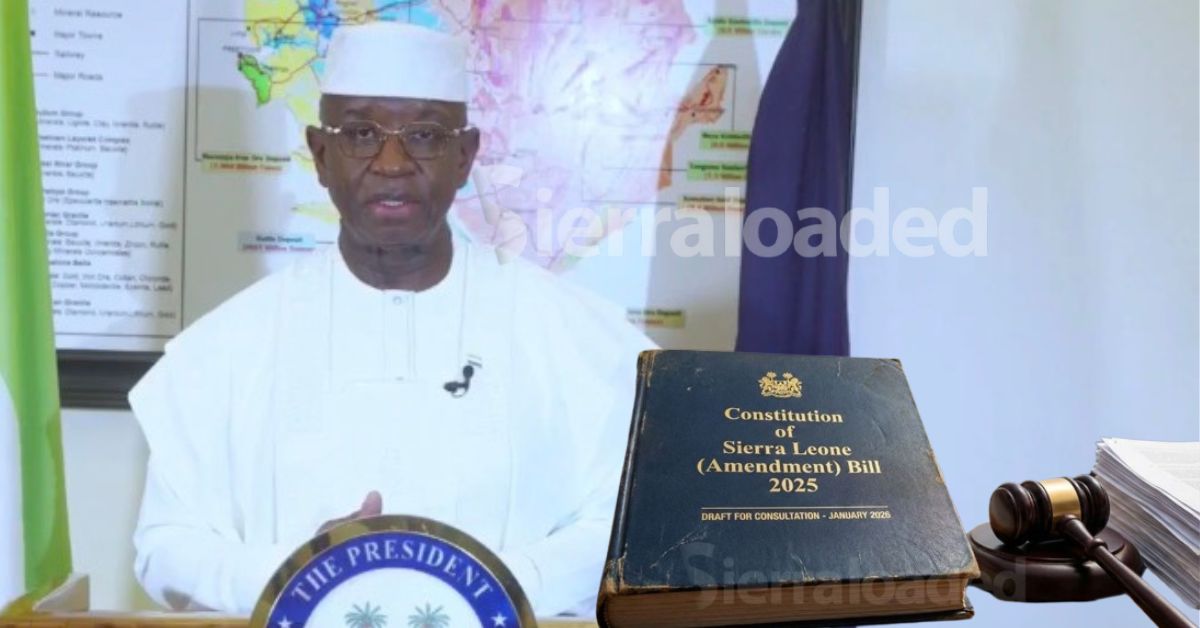
 President Julius Maada Bio has placed the weight of Sierra Leone’s constitutional future on Parliament, urging lawmakers to look beyond party politics and support the Constitutional Amendments Bill as it approaches its final legislative hurdle.
In a nationally televised address on Sunday, August 9, 2026, President Bio described the Bill as the latest chapter in a constitutional reform journey that has lasted more than two decades, involving successive governments, review committees, civil society groups and citizens across the country.
But his appeal went beyond the technical provisions of the proposed amendments. President Bio framed the parliamentary vote as a decision that could affect how women, young people, minority groups and ordinary citizens participate in the country’s political future.

“Do not vote for me. Do not vote for this government. Do not vote for any political party. Vote for Sierra Leone,” the President told lawmakers.
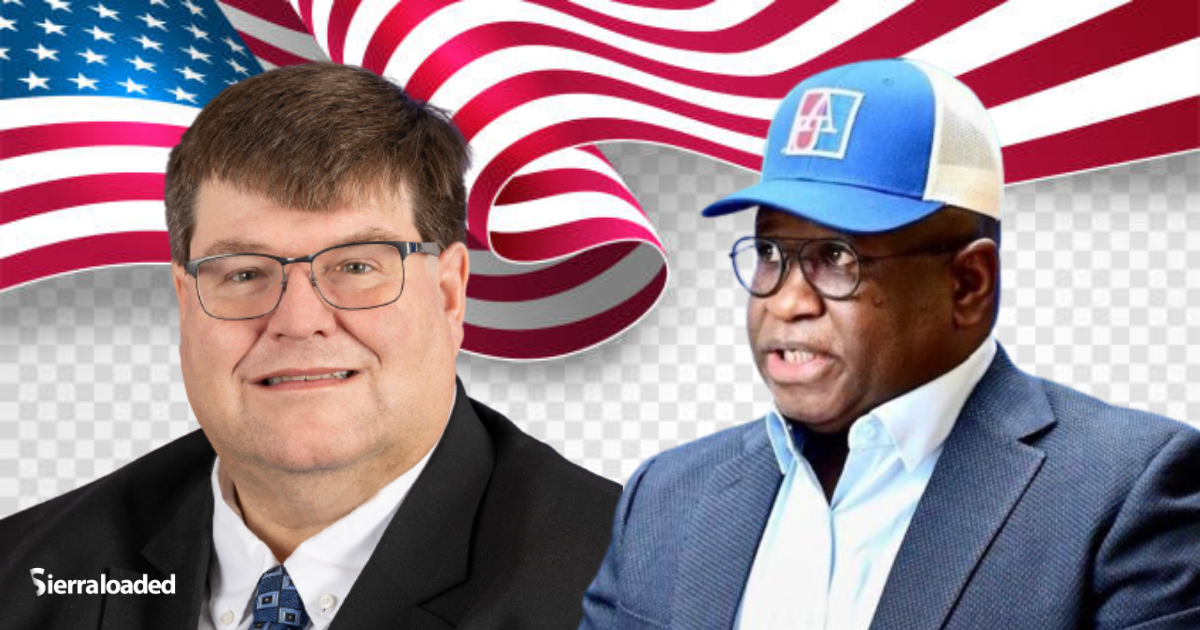
His message comes as Parliament prepares to determine the fate of the proposed constitutional changes, placing MPs under renewed public scrutiny over whether they will support the reforms or reject them.
At the centre of the proposed amendments is a plan to introduce proportional representation, which President Bio said would widen political participation and create greater opportunities for women, young people, professionals and minority groups to secure representation.
The Bill also provides for a minimum 30 percent quota for women in political nominations. President Bio said the provision could move women’s political representation from a long-standing aspiration to a constitutional obligation.
For many Sierra Leoneans, the debate therefore extends beyond Parliament’s chamber to a broader question: who gets a meaningful opportunity to participate in political decision-making?
President Bio argued that the proposed reforms are the product of a process that predates his administration.
He traced the constitutional review journey to the aftermath of Sierra Leone’s civil war, recalling his role as Head of State in 1996 and the negotiations with the Revolutionary United Front that contributed to the 1999 Lomé Peace Agreement.
He said the peace process, followed by the Truth and Reconciliation Commission, exposed the need for reforms capable of addressing questions of inclusion, justice, stability and accountability.
The President also acknowledged the constitutional review initiatives undertaken under former Presidents Ahmed Tejan Kabbah and Ernest Bai Koroma.
Particular emphasis was placed on the Justice Edmond Cowan Constitutional Review Committee, which conducted extensive consultations across the country between 2013 and 2017 before submitting its report to former President Koroma.
President Bio said his administration continued that work after taking office in 2018 rather than abandoning the process or starting again.
“We did not abandon that work, nor did we seek to begin the process anew. We built upon the foundation already laid,” he said.
He maintained that the current Bill therefore represents a national process that has crossed administrations, political parties and generations.
The President also defended the timing of the proposed reforms, particularly those relating to elections.
With the next general elections approaching, he argued that constitutional and electoral changes should be settled before voters head to the polls rather than being introduced when the electoral process is already imminent.
“If we delay, we risk conducting them under rules that the government, the opposition, civil society, citizens, and several election observer missions have all recognized as requiring reform,” he said.
President Bio further challenged those who believe the existing Constitution is sufficient and that current difficulties can be resolved solely through judicial interpretation.
He said Parliament has a duty to ensure that the Constitution remains clear, relevant and capable of protecting the rights and aspirations of all Sierra Leoneans.
“The Constitution is not designed for only one political party. It is not the property of one government, one institution, or one group,” he said.
As MPs prepare to make their decision, President Bio urged them to consider the people who have waited for greater political inclusion.
He asked lawmakers to remember women seeking greater representation, young people seeking a stronger voice in determining their future and communities that have contributed to the constitutional review process over the years.
He also appealed to MPs to consider how their decision will be judged by future generations.
“The decision before you will not end with a vote. It will be remembered by generations yet unborn,” President Bio said.
His address effectively turned the final parliamentary decision into a broader national conversation about the direction of Sierra Leone’s democracy.
For the President, the choice is clear: Parliament should complete a reform process that has remained unresolved for more than two decades.
For lawmakers, however, the coming vote will determine whether they accept the proposed constitutional changes in their current form.
And for the public, the debate now centres on a fundamental question: will the proposed amendments deliver the more inclusive and credible democracy promised by their supporters, or do they raise other concerns that Parliament must address before giving them final approval?
President Bio ended his address with a direct appeal to lawmakers to put the national interest ahead of political considerations.
“Let Honourable Members vote yes, not for a party, not for an individual, but for the people and future of democracy in Sierra Leone,” he said.
He urged Parliament to choose “country over division” and “progress over stagnation”, saying the decision could shape Sierra Leone’s democratic institutions for generations to come.
All the groups mentioned in the constitutional amendment bill are worthless groups that cannot give good decision on behalf of their people. Politicians hardly keep to their promises, once the election is over, the promises are also over. The remaining years become years of complete suffering. Some of us gave complete trust in Julius Maada Bio before coming to power, we never thought of him becoming a disappointment to the country, in the end we saw what we never expected. Who next are we going to trust, when the highly esteemed and trusted person has become the opposite? We now know that, politics is a game of illusion where all the doors are leading to the same house and choosing different doors changes nothing. We pray for divine intervention. Let God decides between leaders and their people.
I know I will be arrested for this, but I have to say.
The reason is, since when PR system brought my member of Parliament to power, I have never seen him or her, in fact I don’t even know my representative in parliament.
Do not our parliamentarians have the right to regularly visit their areas of representation for updates? They are always elected in various areas, but once the election is over, they all become parliamentarians only for freetown.