

Parliament of Sierra Leone Passes Constitutional Amendment Bill 2025 Amidst Opposition Walkout
 Tolulope Aina
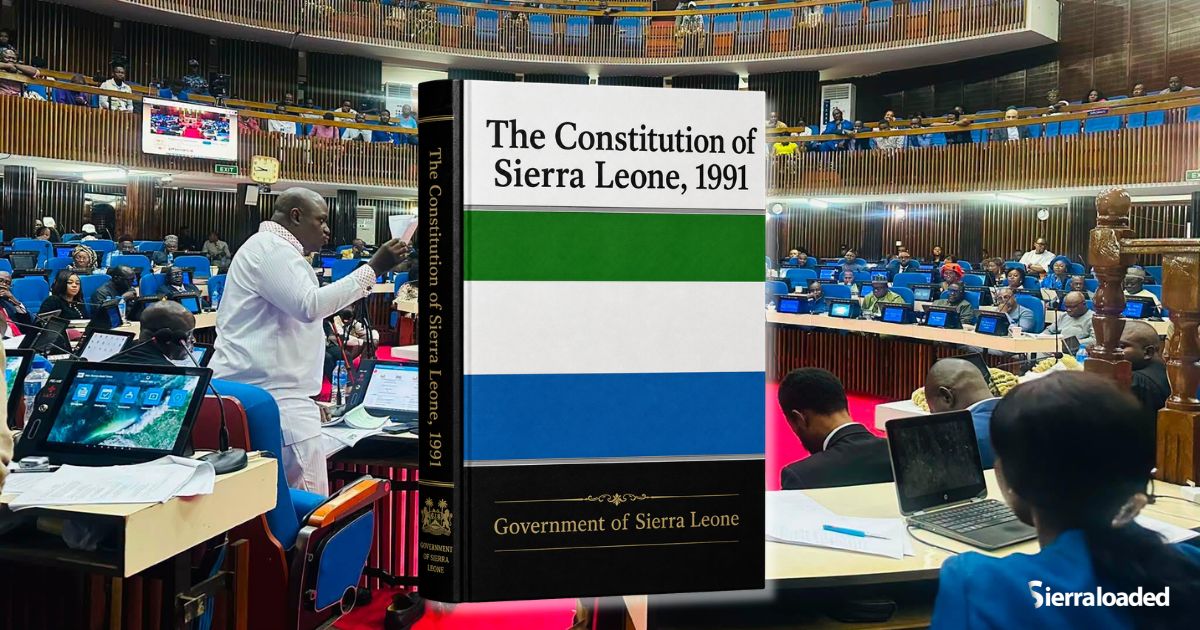
 Sierra Leone’s Parliament has passed the Constitution of Sierra Leone (Amendment) Bill, 2025, following a dramatic and highly contested sitting that saw opposition lawmakers walk out in protest over the applicable voting threshold.
The passage of the Bill comes after intense disagreement between the ruling Sierra Leone People’s Party (SLPP) and the opposition All People’s Congress (APC) over whether constitutional amendments require a two-thirds majority. The APC Parliamentary Caucus had earlier walked out of the Chamber in protest over the Speaker’s ruling on the voting threshold.
Despite the walkout and ensuing controversy, Parliament proceeded with the consideration and passage of the Bill. The legislation introduces significant reforms, including the reduction of the presidential election victory requirement from 55 per cent to 50 per cent plus one vote, with a geographic spread condition requiring a candidate to secure at least 20 per cent of votes in two-thirds of Sierra Leone’s districts.

The Bill also proposes the adoption of proportional representation as the permanent method for electing ordinary Members of Parliament and includes a constitutional requirement for a minimum 30 per cent quota for women in political nominations.


President Julius Maada Bio, in an address to Parliament ahead of the vote, urged lawmakers to approve the Bill, describing the proposed amendment as an opportunity to complete a constitutional reform process that has continued across successive administrations for more than two decades. “This is the moment to rise above politics. This is the moment to honour the sacrifices of our people,” the President said.
Attorney-General and Minister of Justice Alpha Sesay described the proposed reforms as a transition from “a constitution of survival to a constitution of prosperity”. He traced the origins of the constitutional review process to the 1999 Lomé Peace Agreement and the recommendations of the Truth and Reconciliation Commission.
The APC, while opposing key provisions such as the reduced presidential threshold and permanent proportional representation, has expressed support for other aspects of the Bill, including the constitutional guarantee of 30 per cent representation for women in political nominations and provisions expanding political inclusion for dual citizens .
Following the Bill’s passage, Parliament has been adjourned to 29 October 2026. The constitutional review process has spanned more than two decades, with the call for reform first articulated in the 1999 Lomé Peace Agreement and the Truth and Reconciliation Commission Report.