

Farmers to Get Direct Access to Agriculture Officials Under New IVR System

 Sia Lucy Kannah
 The Ministry of Agriculture and Food Security (MAFS) is putting the final touches to an upgraded Agricultural Interactive Voice Response (IVR) platform designed to provide a direct and cost-effective communication channel between the ministry and farmers across Sierra Leone.
During high-level technical discussions held on Wednesday, ministry leadership and senior staff reviewed progress ahead of the platform’s rollout, which forms part of the government’s broader technology-driven approach to agricultural development under the Feed Salone Agenda.
Speaking on behalf of the Minister of Agriculture and Food Security, Deputy Minister 1 Dr Isata Kamanda described the upgraded system as a vital link between farmers and ministry officials. She said the IVR platform would enable the ministry to quickly identify challenges affecting farmers at the grassroots level while reducing communication costs for rural farming communities.

Providing an update on the project, Assistant Director of ICT Dominic Bao said the consultant had completed 98% of the development work.


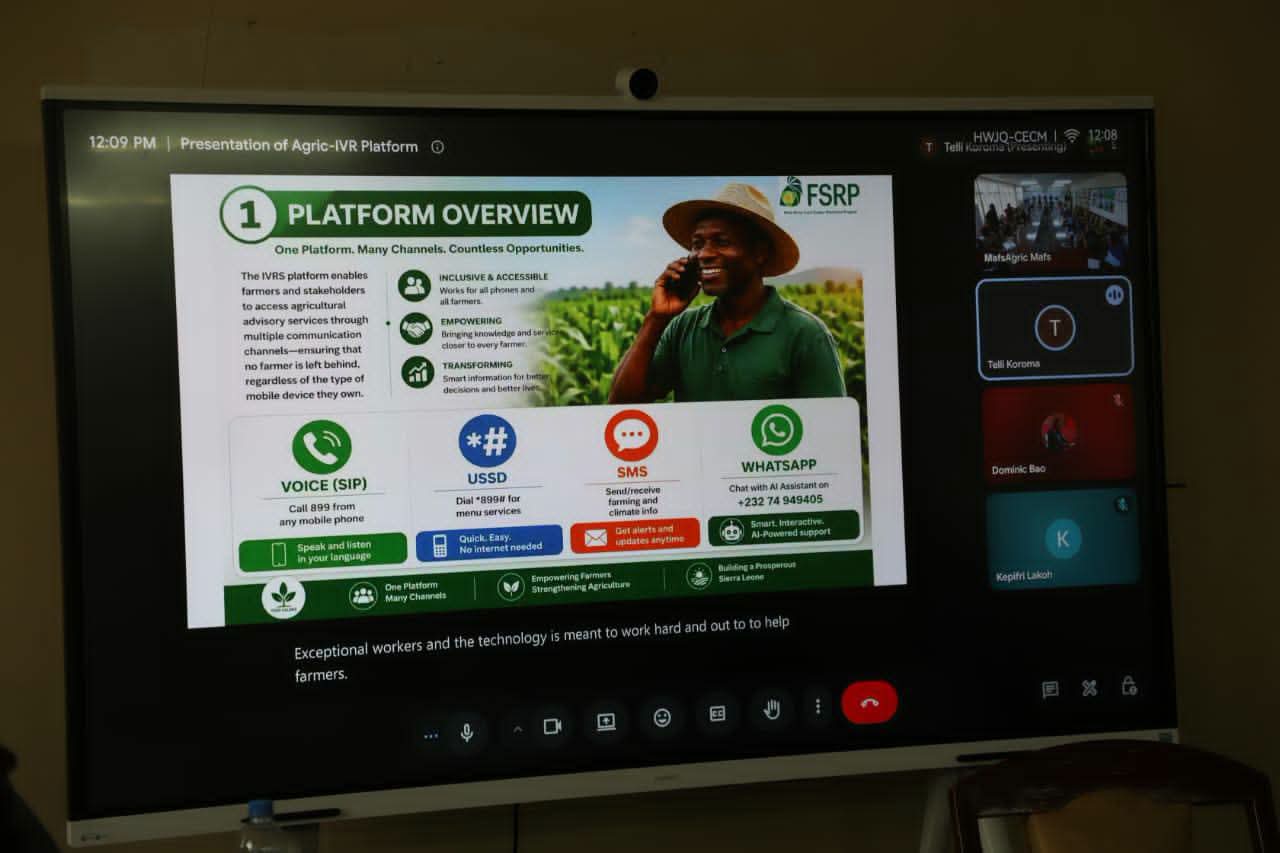
According to Bao, the initiative builds on the ministry’s e-extension framework introduced in 2022, under which IVR technology was identified as a key tool for reaching smallholder farmers.
The project gained further momentum following the submission of a concept note to the Food Systems Resilience Programme (FSRP) and the World Bank, with sector stakeholders subsequently supporting efforts to upgrade the system.
Deputy Chief Agriculture Officer Prof. Aiah Joseph Thorlie welcomed the progress, saying the enhanced communication platform would support faster and more responsive field operations.
Prof. Thorlie also commended Minister Kpaka for mobilising key international and local partners and praised the Director of Extension for steering the project towards completion.
Once fully operational, the upgraded platform is expected to strengthen technical assistance, facilitate real-time feedback and improve access to agricultural advisory services for thousands of farming households across the country.
The initiative is expected to contribute to Sierra Leone’s broader efforts to strengthen food security, improve agricultural productivity and build resilience within the farming sector.