
UNGA81: Chief Medical Officer Kabba Urges Global Shift From Data Systems to Life-Saving Decisions
 Alusine Ahmed Kargbo
 Sierra Leone’s Chief Medical Officer, Dr Mustapha Kabba, has told global health leaders that emerging technologies should be judged by a simple standard: whether they enable health workers to act quickly enough to save lives.
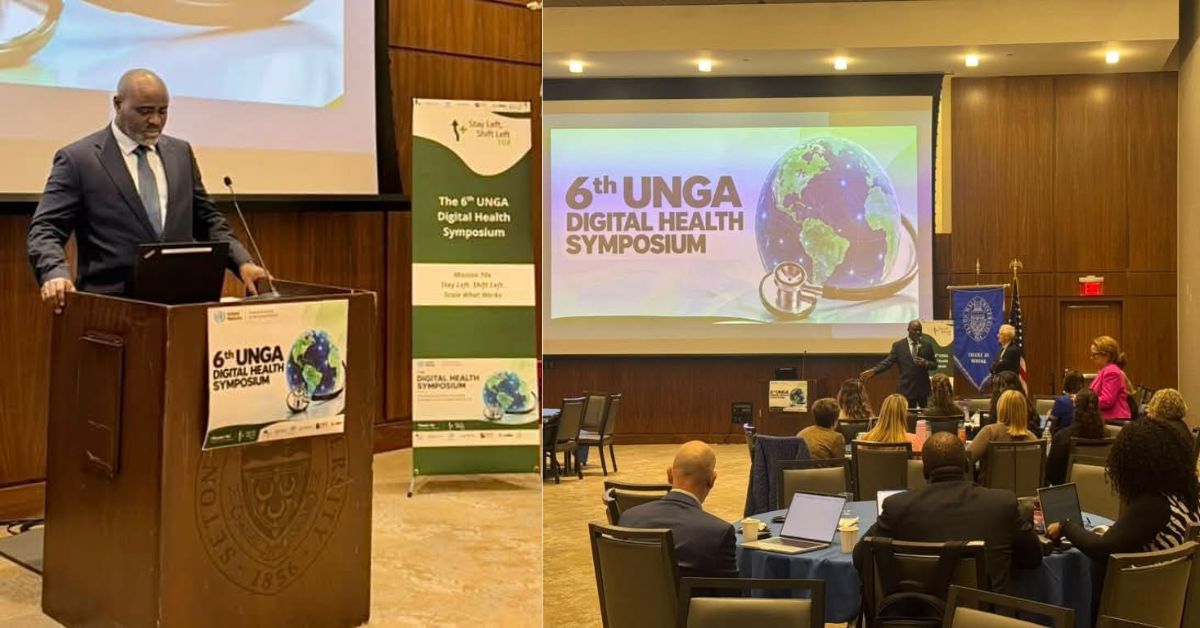
Kabba made the remarks while speaking at the 6th UNGA Digital Health Symposium during a featured international plenary session on healthcare innovation in low-resource settings.
He emphasised that the effectiveness of digital health systems and artificial intelligence should be measured by their ability to support timely clinical decision-making at the point of care.

According to Kabba, timing is critical in healthcare delivery, as the usefulness of test results, referrals and alerts often depends on how quickly they reach frontline health workers. He said technology becomes valuable when it enables health workers to respond within the required time window.



He urged developers, investors and policymakers to prioritise digital tools that strengthen decision-making at the point of care rather than creating additional layers of disconnected data.
Kabba also highlighted Sierra Leone’s efforts to improve health data integration, including the National Health Information Hub launched earlier this year by Minister of Health Austin Demby.
The platform brings together data from health facilities, laboratories, surveillance systems and supply chains into a unified system designed to improve visibility across the health sector.
He said the integration of health data would enable national and district health teams to better monitor health trends and allocate resources, while addressing longstanding fragmentation in reporting systems.
The Chief Medical Officer further called on global partners to ensure that new digital health tools are compatible with existing national systems, cautioning against the creation of parallel platforms that do not strengthen local capacity.
He concluded his remarks with a question directed at developers and funders: “Whose work will improve, and how will we know?”