

 1 Comment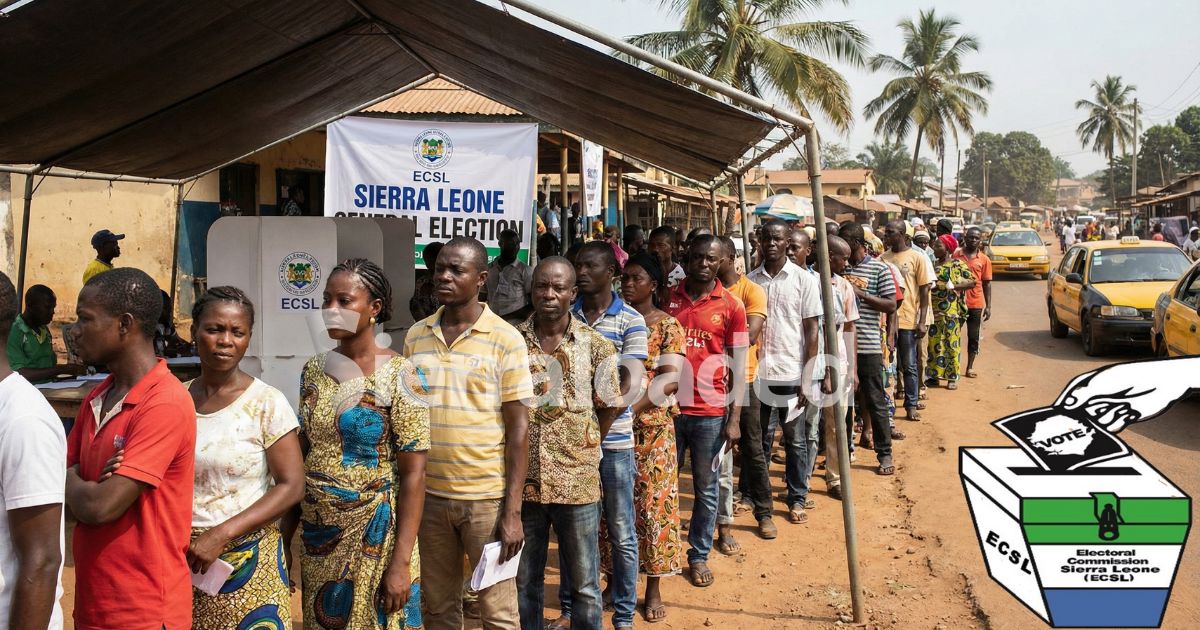
The Inter-Religious Council of Sierra Leone (IRCSL) has officially thrown its support behind the first-past-the-post (FPTP) electoral system, endorsing it as the most suitable model for the nation’s democratic landscape as discussions on electoral reforms intensify ahead of the 2028 elections.
In a position paper released on Thursday, 12 March 2026, the council affirmed its preference for FPTP, citing its ability to ensure clearer accountability and political stability. The paper was submitted as part of the ongoing national dialogue on electoral reforms, which includes consideration of alternatives such as proportional representation (PR).
“After prayerful reflection, analysis, and engagement, the Inter-Religious Council affirms its support for the first-past-the-post electoral system as the most suitable for Sierra Leone’s current democratic, social, and political context,” the council stated.
The IRCSL noted that its position was shaped by consultations with civil society organizations, religious leaders, and discussions facilitated by the Tripartite Committee and the International Institute for Democracy and Electoral Assistance (International IDEA).
Under the FPTP system, the candidate with the highest number of votes in a constituency wins a parliamentary seat. The council argued that this method strengthens democracy by allowing voters to elect individual representatives who remain directly accountable to their communities. It also emphasized that FPTP is simple, transparent, and familiar to voters, which encourages greater participation, particularly in a context where many citizens have limited formal education.
The religious body also pointed to the system’s track record of producing stable governments capable of decisive action, which it described as essential for maintaining peace and sustaining national development.
However, the council acknowledged the merits of proportional representation, including its potential to enhance political inclusion and ensure that seats in Parliament more accurately reflect the share of votes received. But it cautioned that PR could weaken the constituency-level bond between voters and their representatives, increase the influence of party elites over candidate selection, and confuse voters due to its complexity.
While endorsing FPTP, the IRCSL called for targeted reforms to address its shortcomings, particularly the risk of under-representation for smaller parties and minority groups. Recommendations include the introduction of reserved seats or quotas to boost representation for women, youth, and persons with disabilities, as well as stronger internal democracy within political parties.
The council also urged civic education campaigns, inter-party dialogue, and peace messaging during elections, underscoring the role of religious leaders in fostering national unity.
“We remain committed to working with electoral bodies, political parties, civil society, and international partners to uphold democracy, peace, and justice in Sierra Leone,” the council said.
The debate over Sierra Leone’s electoral system has gained momentum in recent months, with the Tripartite Report (Recommendation 78) calling for a review. According to recent findings, 57.9 percent of civil society organizations support retaining FPTP due to its transparency and direct representation. Meanwhile, the government has faced criticism for reportedly pushing for the adoption of proportional representation, a move opponents argue lacks transparency and could favor the ruling party following the disputed 2023 elections.2028


Why is the inter-religious council meddling in politics, to the extentWhy is the council leaning on one side of a political argument? Whose interest is the council serving?