

President Bio Urges Investors to Give Young African Entrepreneurs Their First Business Contracts
 Tolulope Aina
President Julius Maada Bio has called on investors and business leaders to give young African entrepreneurs opportunities to secure their first commercial contracts, saying practical support and access to capital are essential to turning their ideas into successful businesses.
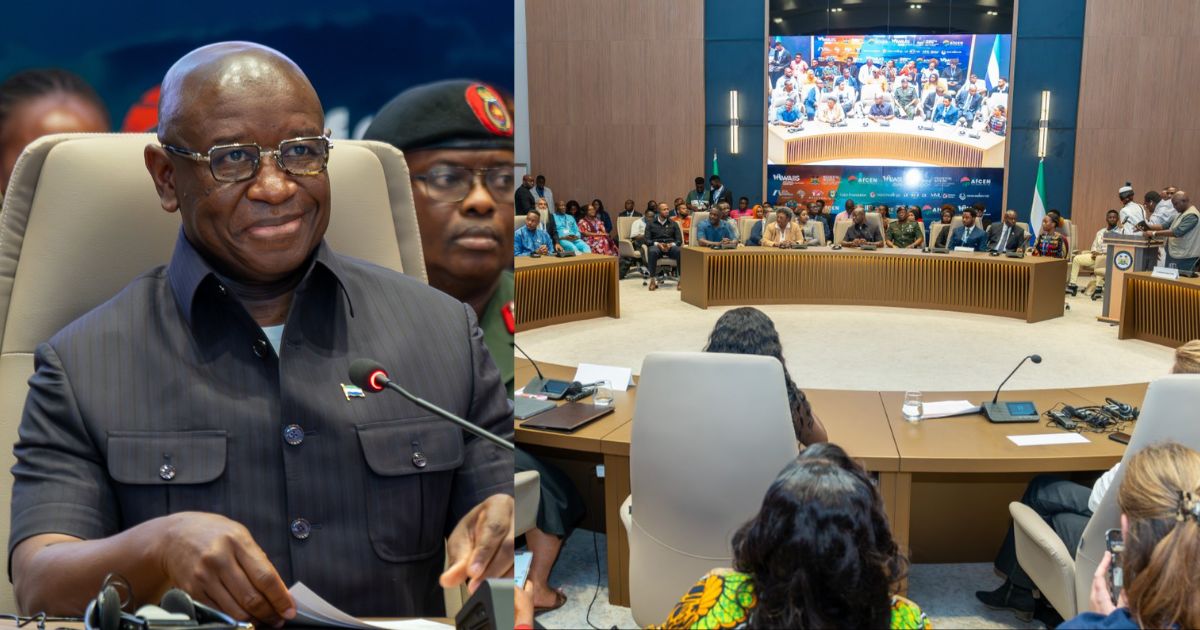
Speaking during the youth engagement session of the West Africa Integration and Investment Summit (WAIIS) 2026 in Lungi, President Bio urged investors, development finance institutions and business leaders to take the ideas presented by young entrepreneurs seriously and help them move to the next stage.
He argued that a first commercial contract could provide a young business with the track record needed to secure further opportunities.

“For a young business, a first commercial contract can provide the track record it needs to win the next one. So let’s trust them and give them the first contract,” Bio said.



The President said young people should not merely be invited to participate in discussions but should have a meaningful role in shaping policies and decisions that affect their future.
“If they are going to lead tomorrow, they should be on the table now,” he told participants.
Bio described human capital development as central to his administration’s development agenda, arguing that investing in people was the most important investment a country could make.
He said young people account for approximately 75 per cent of Sierra Leone’s population, making their education, training and economic participation critical to the country’s future.
Reflecting on the introduction of the Free Quality Education programme in 2018, the President asked what opportunities would be available to a child who entered school that year and was now beginning to consider a career, learn a trade, become an engineer or establish a business.
He said the responsibility of government and society was to help young people transform what they had learnt into practical skills, decent employment and businesses of their own.
Bio also urged young entrepreneurs to look beyond national borders and build partnerships with other young innovators across West Africa.
He argued that geographical boundaries should not prevent entrepreneurs from collaborating, citing the potential for a software developer in Dakar, Senegal, to work with a young business founder in Sierra Leone to develop solutions to shared challenges.
With West Africa’s population exceeding 400 million, he said the region had significant opportunities that required stronger cooperation, investment and practical implementation.
The President also encouraged policymakers to work with ECOWAS to make it easier for businesses and young people to access training opportunities across the region.
On technology and innovation, Bio said young Africans must be supported to develop their own technologies, protect their creations and have a say in how their data is used as artificial intelligence continues to advance.
He maintained that the region should move beyond years of declarations and communiqués towards practical outcomes that improve the lives of its people.
Bio also challenged investors and business leaders to engage directly with young founders, understand what they need and connect them with the capital and partnerships required to grow their enterprises.
He said Africa had numerous business opportunities but often lacked the matching funds and support systems needed to take promising ideas to the next level.
The President further highlighted the importance of trust in business, advising young entrepreneurs to test their ideas and keep their promises as they build relationships with partners and customers.
The youth session featured presentations from young innovators and entrepreneurs participating in the summit’s youth programme.
During the session, the summit’s Chief Operating Officer, Joseph Gander, reported that more than 482 young people had registered for a regional innovation initiative, with 358 verified accounts from 36 countries and 122 complete submissions.
The initiative was organised around three tracks: BUILD, FEED and GREEN. Three selected winners were announced, representing Senegal, Nigeria and Sierra Leone respectively.
Gander said the selected participants would receive financial support, computing resources, mentorship and other assistance to help develop their ideas. Other participants were also expected to receive feedback, access to expert webinars and opportunities for business matchmaking.
President Bio thanked the young people for their participation and urged them to bring their ideas and recommendations into the main summit discussions.
He also called for the establishment of a follow-up mechanism to ensure that commitments made during the inaugural summit translate into measurable progress.
The President said young people should hold leaders accountable when they meet again at a future edition of the summit, stressing that the engagement must lead to tangible results.
The youth programme forms part of WAIIS 2026, which is focused on strengthening regional investment and cooperation in energy, strategic minerals, agribusiness and digital transformation.