

 Post a comment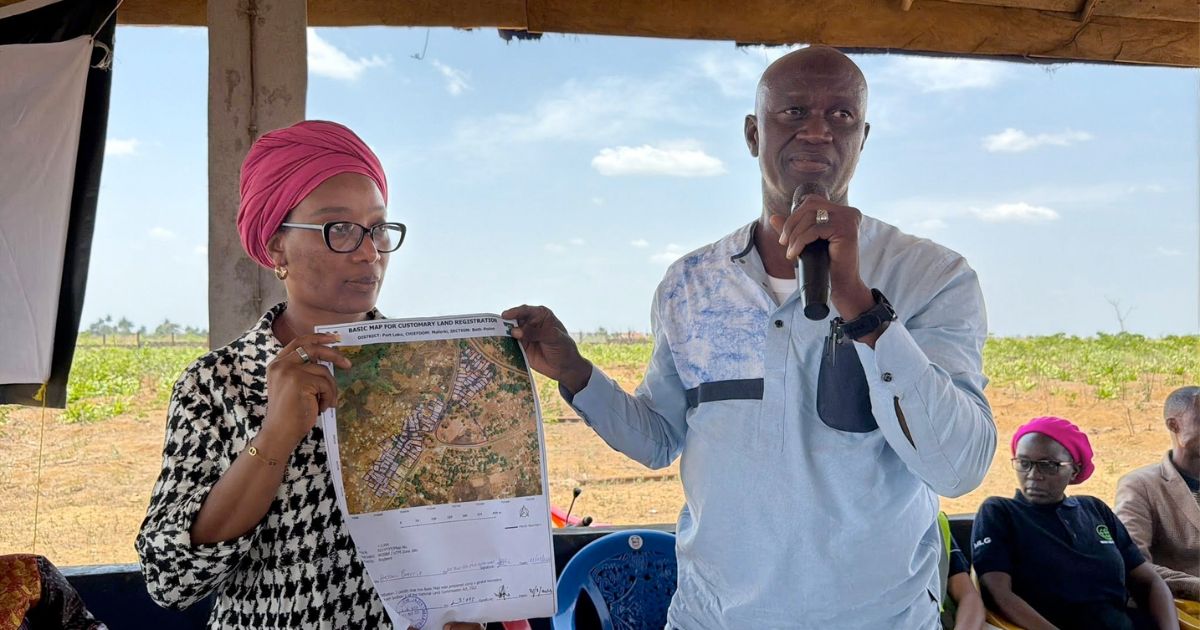
The Government of Sierra Leone, through the National Land Commission and with support from the Sierra Leone Land Administration Project (SLLAP), has successfully concluded the pilot phase of field works and boundary harmonization in Mapaki, Bombali District, and Rogbere, Port Loko District.
The landmark initiative culminated in signing ceremonies held on Saturday, 21st March 2026, marking a critical step toward the upcoming national land title registration exercise.
The events, which took place simultaneously in the two communities, brought together a wide cross-section of stakeholders, including paramount chiefs, section chiefs, land owners, land users, and representatives from civil society and local government.
The signing ceremonies were described by officials as “historic,” representing the first time that community-level land boundaries have been formally agreed upon and documented by all parties involved in preparation for formal title registration.
Rationale for Boundary Harmonization
According to officials from the National Land Commission, the boundary harmonization exercise serves as a prerequisite to the issuance of land titles. In Sierra Leone, where customary land tenure governs the vast majority of rural land, overlapping claims and undefined boundaries have historically been a primary source of local conflict and a barrier to investment.
The harmonization process involved rigorous field data collection, community consultations, and the use of modern geospatial technology to map and demarcate the precise limits of family, section, and chiefdom lands.
The initiative seeks to:
* Prevent Land Disputes: By clearly defining boundaries with the consent of all stakeholders, the exercise aims to permanently resolve ambiguities that often lead to protracted litigation and communal violence. And the land committees have taken the lead in intervening and addressing such disputes as the process intensifies.
* Establish a Clear Cadastre: Harmonized boundaries create a reliable land registry, enabling the government to issue secure land titles that can be used as collateral for credit, thereby stimulating economic activity.
* Secure Tenure for Women and Vulnerable Groups: The documentation process ensures that the rights of customary land users—including women and marginalized groups—are recognized before formal titles are issued.
* Facilitate Development: Clear land ownership records are essential for infrastructure development, agricultural expansion, and private sector investment, as they reduce the risk associated with land acquisition.
Success of the Pilot Phase
At the ceremony in Mapaki, stakeholders lauded the transparent approach taken by the SLLAP and the Commission. Local leaders signed off on the boundary agreements, symbolizing a collective commitment to the new system.
“The success we witnessed in Mapaki and Rogbere demonstrates that when communities are at the center of the process, land reform can move forward smoothly,” said Saiku Bah, the Monitoring and Evaluation Specialist of the Sierra Leone Land Administration Project.
“We are now equipped with the lessons learned to scale this exercise nationwide.”
With the pilot phase now complete, the government is expected to begin the rollout of the broader land title registration exercise in subsequent communities, utilizing the framework established in these two districts.


