

GIZ, EU and Government Launch SURE Programme to Promote Renewable Energy
 Aaron Parker
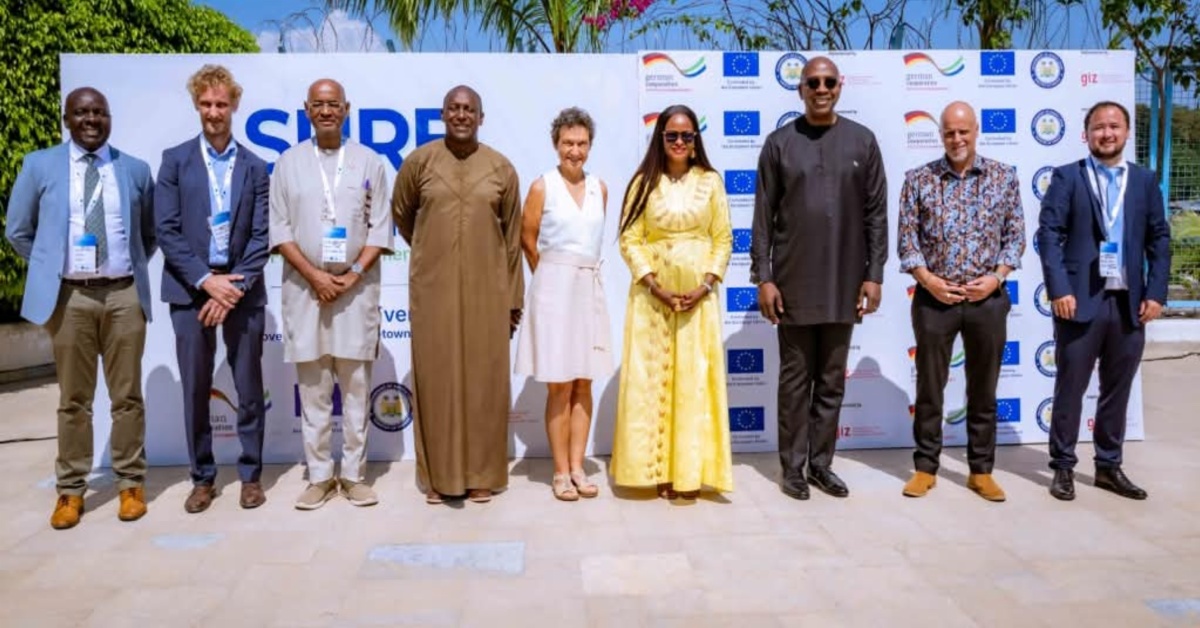
The Government of Sierra Leone, in partnership with the Deutsche Gesellschaft für Internationale Zusammenarbeit (GIZ) GmbH, has officially launched the Sustainable Rural Development through Renewable Energy with Special Focus on Women-Led Enterprises in Sierra Leone (SURE) programme, an initiative aimed at expanding renewable energy access, strengthening rural businesses and creating economic opportunities, particularly for women.
The programme, co-funded by the German Federal Ministry for Economic Cooperation and Development (BMZ) and the European Union (EU), was launched on Thursday, November 5, 2026, at the Lead Hotel in Aberdeen, Freetown. The ceremony brought together government officials, development partners, private-sector representatives and other stakeholders in the energy sector.
Speaking at the ceremony, GIZ Country Director Raphael Frerking emphasised that access to electricity must go beyond lighting homes and translate into productive economic activities that improve livelihoods and drive development.

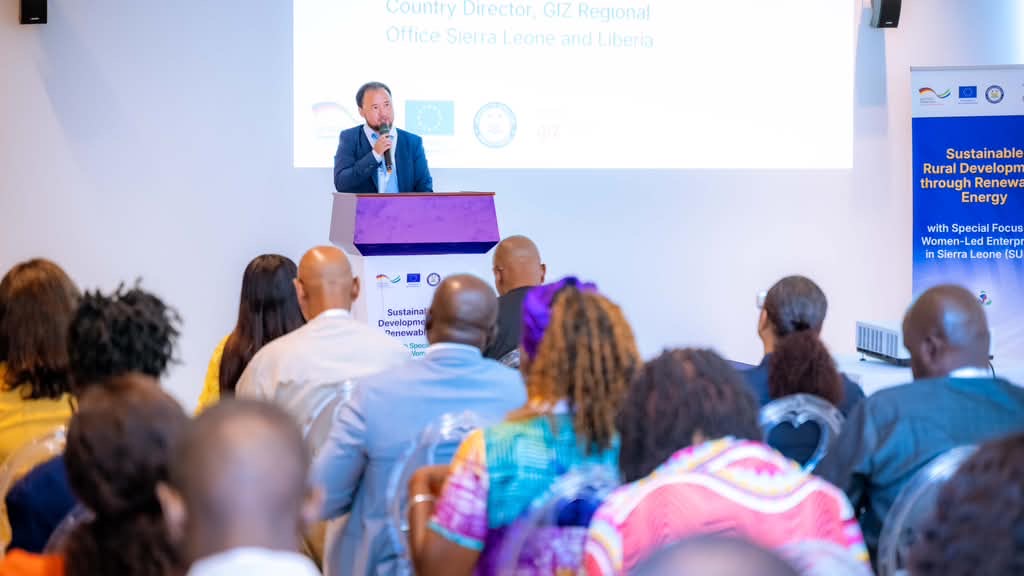


He explained that reliable electricity could help farmers process and preserve agricultural produce, enable small businesses to expand and create employment, while providing women entrepreneurs with opportunities to grow their businesses and increase their incomes.
Frerking said the SURE programme builds on nine years of collaboration with national and international partners through the Energising Development (EnDev) Programme and the TEUSL-1 initiative, which have focused on expanding renewable energy access and promoting its productive use.
He stressed that sustainable rural development requires more than access to electricity, highlighting the need for strong institutions, skilled professionals, improved access to finance and viable business models. He also called for greater efforts to address barriers preventing women from accessing finance, business skills and economic opportunities.
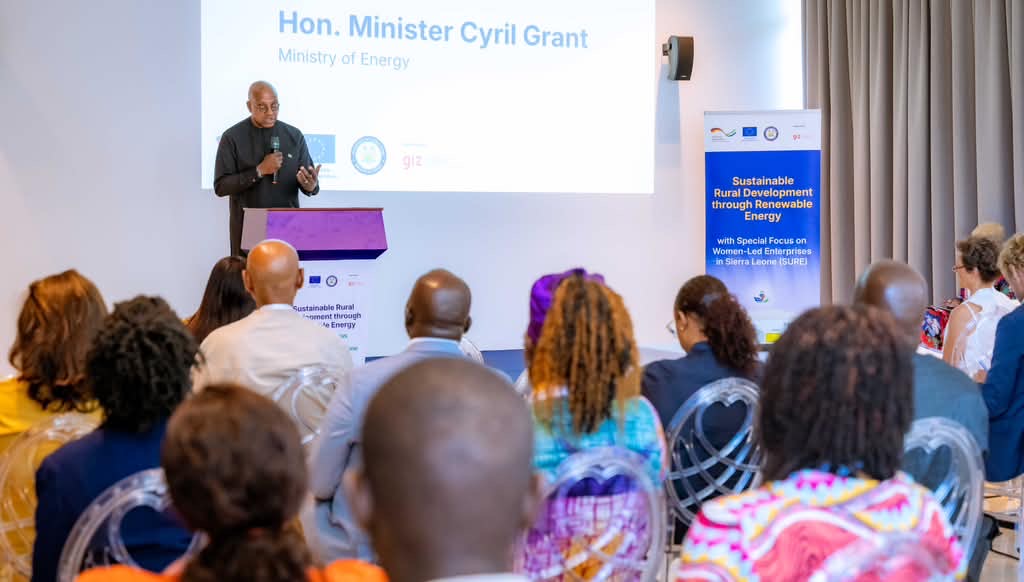
Delivering the keynote address, Minister of Energy, Cyril Grant, highlighted the importance of renewable energy in promoting sustainable development and improving access to reliable energy services, particularly in rural communities.
He said the SURE programme seeks to provide affordable, reliable and climate-friendly energy services to rural households, social institutions and micro, small and medium-sized enterprises (MSMEs), with particular attention to businesses owned and managed by women.
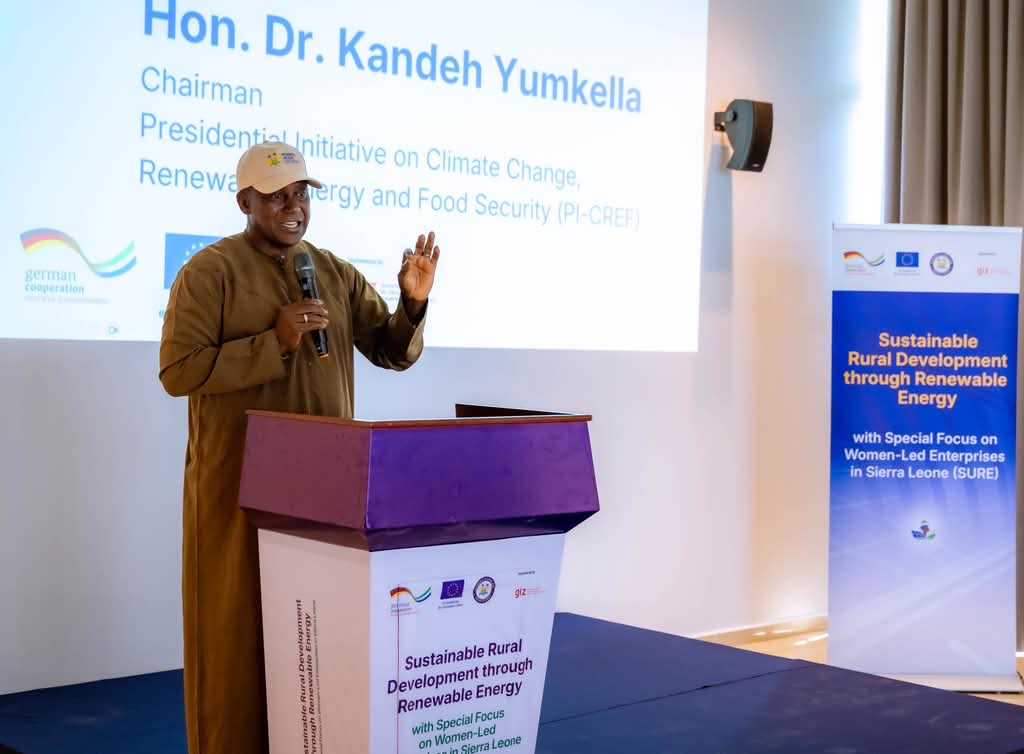
Chairman of the Presidential Initiative on Climate Change, Renewable Energy and Food Security (PI-CREF), Dr Kandeh Yumkella, welcomed the initiative and commended the German Government for its support to Sierra Leone.
Yumkella emphasised that access to energy must translate into increased productivity and tangible economic benefits for ordinary people. Citing developments in India and other parts of the world, he expressed optimism that the programme would deliver meaningful results in the coming years.
Representing the European Union, Philippe Rousseau, Programme Manager at the EU Delegation to Sierra Leone, said the programme reflects the EU’s commitment to sustainable development, stronger rural businesses and expanded economic opportunities, particularly for women-led enterprises.
He noted that linking renewable energy access with productive economic activities would be essential to achieving lasting development results, adding that cooperation among government, development partners and the private sector would play a critical role in the programme’s success.
Speaking on behalf of the German Embassy, Deputy Head of Mission Irene Toeller described development cooperation as a working partnership focused on creating opportunities for lasting change.
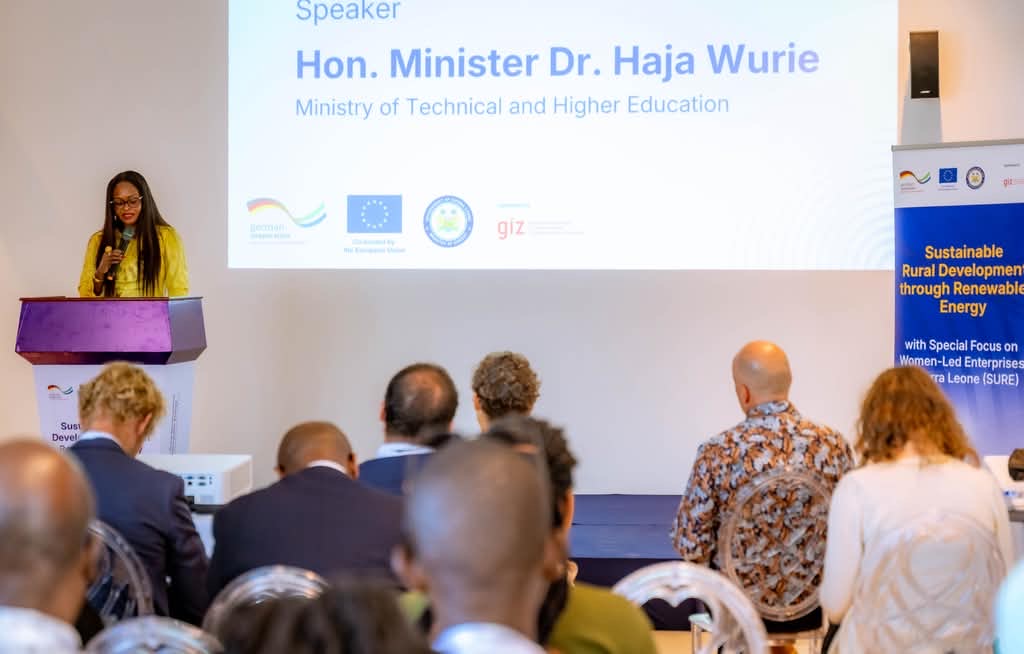
Meanwhile, Minister of Technical and Higher Education, Dr Haja Ramatulai Wurie, said the SURE programme would contribute to strengthening skills development, innovation and entrepreneurship in Sierra Leone.
She explained that the initiative supports the Government’s human capital development agenda by creating opportunities for academic researchers, technologists and other professionals to contribute to innovation in the renewable energy sector.
Dr Wurie added that the programme would support curriculum development, institutional capacity-building, workplace learning, apprenticeships and internships, while encouraging businesses to become more actively involved in technical skills development.
She stressed that the programme’s success should not be measured only by the number of people trained, but also by how many secure employment, establish viable businesses and contribute to the growth of the renewable energy sector.
GIZ Sierra Leone SURE Head of Programme, David Otieno, said the initiative would focus on promoting the productive use of renewable energy, strengthening institutional capacity, supporting technical and vocational education and training, and improving the business environment for sustainable energy markets.
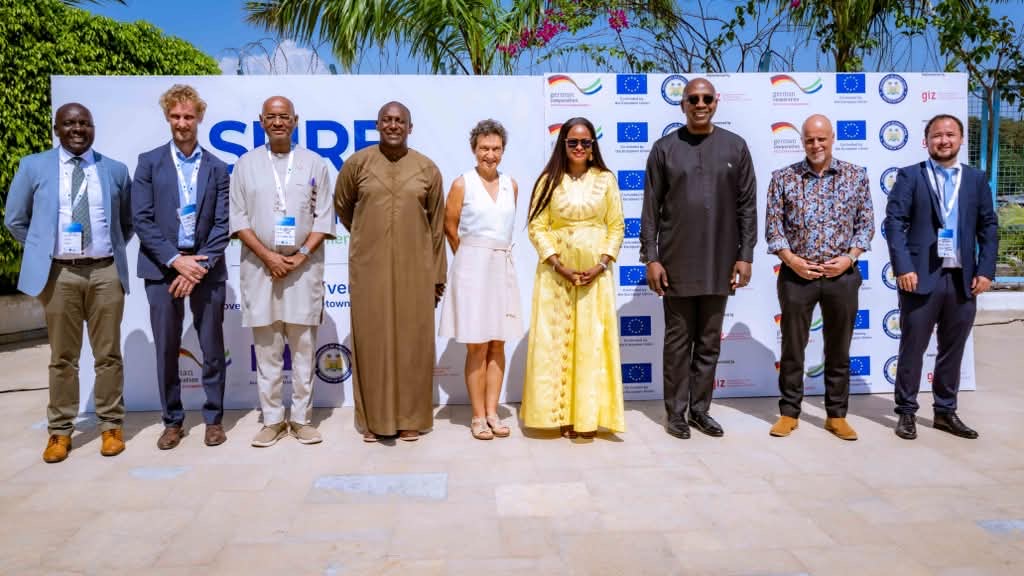
He explained that the programme would be implemented in close collaboration with the Ministry of Energy, the Ministry of Technical and Higher Education and other public- and private-sector partners, with co-financing from the European Union.
Scheduled to run from 2026 to 2029, the SURE programme will promote renewable energy technologies, digitalisation and the productive use of electricity to improve rural value chains, support small businesses, create employment and increase women’s participation in economic activities.
Among its planned interventions are the establishment of a Centre of Excellence for renewable energy training, the introduction of digital tools to improve energy-sector planning, and the expansion of solar home systems and selected agricultural value chains to strengthen the viability of mini-grids.
The programme will also seek to improve access to financing for renewable energy investments, strengthen financial services and support Village Savings and Loan Associations to expand sustainable financing opportunities, particularly in underserved communities.
By 2029, SURE aims to improve the value chains of 680 MSMEs, with women-led businesses accounting for 50 per cent of the target. It also plans to provide 250 stakeholders with scholarships related to the productive use of energy, extend renewable energy solutions to more than 80,000 people in hard-to-reach communities and establish a fully equipped Centre of Excellence.
The programme is expected to build on previous renewable energy interventions in Sierra Leone by creating more opportunities for rural communities, strengthening local businesses and ensuring that women play a greater role in the country’s transition towards sustainable energy.
Through the partnership between the Government, GIZ, the German Government and the European Union, the initiative represents a renewed effort to make renewable energy a driver of rural development, economic growth and improved livelihoods across Sierra Leone.