

 Post a comment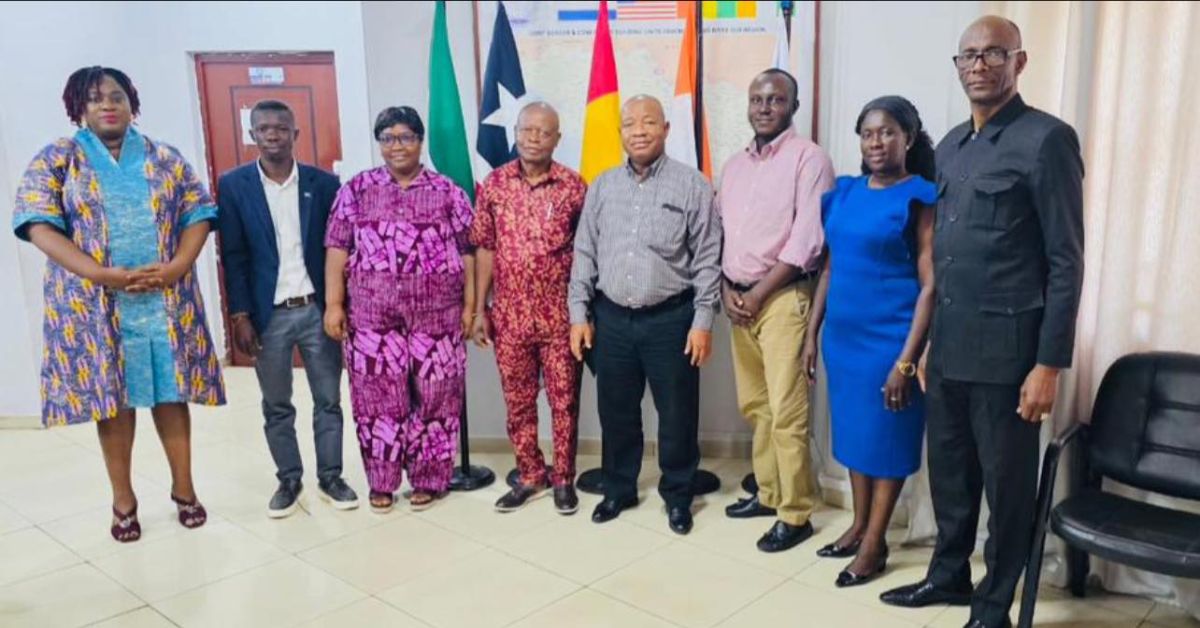
The Human Rights Commission of Sierra Leone (HRCSL) and the Mano River Union (MRU) Secretariat held a strategic engagement in Freetown on Wednesday, April 8, 2026, to deepen cooperation on migration, human trafficking, and regional human rights protection.
The meeting, led by HRCSL Executive Secretary Mr. Joseph Kamara, brought together senior officials from both institutions to explore a formal partnership and coordinated regional action.
Officials from the MRU Secretariat including Ambassador Simeon M B. Moribah, MRU Secretary General; Madam Ama Gborie, Sierra Leone’s Representative and Deputy Secretary General; and Mr. Mamady Dioumessy, Deputy Secretary General for Administration and Finance joined HRCSL staff, notably the Commission’s Directorate of Migration and Human Trafficking, for discussions focused on the transnational nature of migration and trafficking in the Mano River basin.
In opening remarks, Mr. Kamara thanked the MRU for the engagement and outlined the Commission’s history and mandate, stressing that effective regional partnerships are essential to fulfilling its human rights protection role. Madam Sidratu Kargbo, Director of Migration and Human Trafficking at HRCSL, highlighted the Commission’s frequent handling of cross border complaints and argued that many cases require responses that extend beyond national jurisdictions.
Madam Kargbo cited the recent deportation of more than 900 Sierra Leonean nationals from Guinea as a pressing example of how migration incidents can have serious human rights implications and test regional cooperation mechanisms. She described the episode as a case that demonstrates the need for structured, humane, and coordinated responses that align with regional commitments.
Ambassador Moribah welcomed the prospect of a formal partnership, while requesting that HRCSL provide detailed documentation of its mandate and functions. He said such documentation would help the MRU Secretariat identify specific areas of mutual interest and avoid duplication of effort.
Ambassador Moribah also proposed developing a formal cooperation framework to guide joint action, enhance coordination, and facilitate engagement with other National Human Rights Institutions (NHRIs) across the MRU region.
He emphasized the MRU’s convening power as a key asset, noting that the Secretariat could organize regional meetings, promote dialogue among member states, and help harmonize policies on migration governance and anti trafficking efforts.
Both institutions signalled a shared commitment to deepen institutional collaboration and to design mechanisms that reflect the transnational character of migration and trafficking. The meeting concluded with an agreement in principle to pursue a formalized partnership, with the next steps to include the submission of HRCSL’s mandate documentation and the drafting of a cooperation framework to be considered by the MRU Secretariat.
If implemented, the proposed framework would aim to strengthen joint investigations, streamline cross border complaint handling, and leverage MRU platforms to align member states around common standards for protecting the rights of migrants and trafficking survivors.
A structured HRCSL–MRU partnership could improve regional responsiveness to migration crises and trafficking networks by creating predictable channels for information sharing, joint capacity building, and coordinated advocacy.
For affected individuals, such cooperation promises more consistent protection of rights across borders and a clearer regional mechanism for addressing abuses that national institutions alone may struggle to resolve.


