

 1 Comment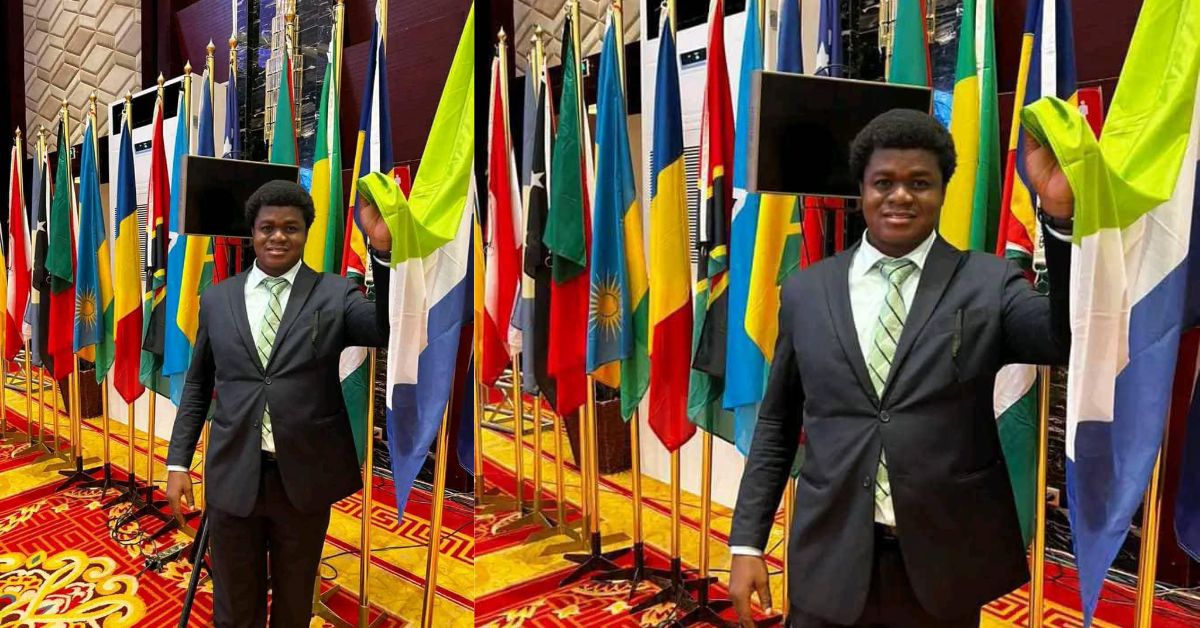
Sierra Leonean Member of Parliament has raised grave concerns at the Economic Community of West African States (ECOWAS) Parliament over an alleged territorial incursion by Guinean forces that resulted in the detention of 13 Sierra Leonean security personnel.
Hon. Saa Emerson Lamina, Leader of Government Business 2 in Sierra Leone’s Parliament, addressed an Extraordinary Session of the ECOWAS Parliament in Abuja on Tuesday, February 24, 2026, drawing attention to what he described as a breach of Sierra Leone’s territorial integrity in Kaliyereh Village, Sulima Chiefdom, Falaba District, Northern Sierra Leone.
Citing Article 4(d) of the ECOWAS Parliament’s mandate—which enjoins members to promote peace, security, and stability across the West African sub-region—Hon. Lamina informed the House that Guinean forces reportedly crossed into Kaliyereh Village and apprehended 13 personnel of the Republic of Sierra Leone Armed Forces (RSLAF), including a Captain, and transported them to Conakry, the Guinean capital.
According to Sierra Leone’s government, the security personnel were working on “making bricks for the construction of a border post and accommodation facility” within recognized Sierra Leonean territory when the incident occurred on Monday, February 23 . The government confirmed that the weapons and ammunition of the detained personnel were also taken.
In a measured yet firm submission, Hon. Lamina emphasized that while the ECOWAS principle of free movement of persons and labour mobility remains central to regional integration and must be respected by all Member States, such integration must not come at the expense of sovereignty and security .
He asserted that geographical and GPS evidence confirms that the disputed axis falls within the jurisdiction of a sitting Member of Parliament of Sierra Leone, underscoring the country’s sovereign claim over the area.
The Sierra Leonean legislator referenced previous border-related tensions, including long-standing disputes at Yenga, Kailahun District, which date back to Sierra Leone’s civil war (1991–2002) when Guinean troops entered to support Sierra Leonean forces against rebels but never fully withdrew . He also noted incidents at Gbane-Kandor, Kono District earlier this year .
He emphasized that as recently as February 23, Kaliyereh in Falaba District was allegedly subjected to a similar incursion, during which serving Sierra Leonean soldiers were reportedly apprehended and assaulted within Sierra Leone’s territorial boundaries.
Rather than advocating for militarization, Hon. Lamina recommended strengthened military diplomacy and capacity-building mechanisms among ECOWAS Member States to address sensitive cross-border security issues through dialogue and structured cooperation.
In underscoring the dangers of silence in the face of perceived injustice, he quoted the famous words of German theologian Martin Niemöller:
“First, they came for the Socialists, and I did not speak out—because I was not a Socialist.
Then they came for the Trade Unionists, and I did not speak out—because I was not a Trade Unionist.
Then they came for the Jews, and I did not speak out—because I was not a Jew.
Then they came for me—and there was no one left to speak for me”
Hon. Lamina warned that while Sierra Leone may be at the center of a border dispute today, any Member State could face similar circumstances if regional solidarity and lawful engagement are not upheld.
The incident has generated conflicting narratives from both sides. Guinea’s General Staff of the Armed Forces confirmed the arrest of 16 Sierra Leonean soldiers on Sunday, stating they entered Guinean territory in the district of Koudaya, Faranah Prefecture, approximately 1.4 kilometers inside Guinean territory without prior authorization . According to Guinean Defense Ministry spokesperson Ansoumane Toumany Camara, the personnel “set up their tents and raised their national flag” before being apprehended and handed over to judicial police for investigation.
Sierra Leone maintains that its personnel were operating within recognized Sierra Leonean territory where the national flag had been hoisted . The government has dispatched a fact-finding mission to the area and is engaging through diplomatic and security channels to secure the “safe and unconditional release” of its personnel.
In response to the serious allegations, the Rt. Hon. Speaker of the ECOWAS Parliament, Memounatou Ibrahima, called for the establishment of a fact-finding committee to obtain detailed information regarding the situation in Sierra Leone’s disputed border area and to guide the Parliament’s next course of action.
The border dispute between Sierra Leone and Guinea dates back to unclear boundaries drawn by Britain and France during the colonial period, with tensions persisting since Sierra Leone’s civil war when Guinean troops entered to help defend eastern borders but never fully withdrew.


Guinea government have no respect for us that why they are always bridging the gap … .We need to improve budget spending on military might and stop any future insult