

MV Acronian Left Sierra Leone With Palm Oil And Water, Not Cocaine – Government Investigation Clarifies
 Deborah Sorie
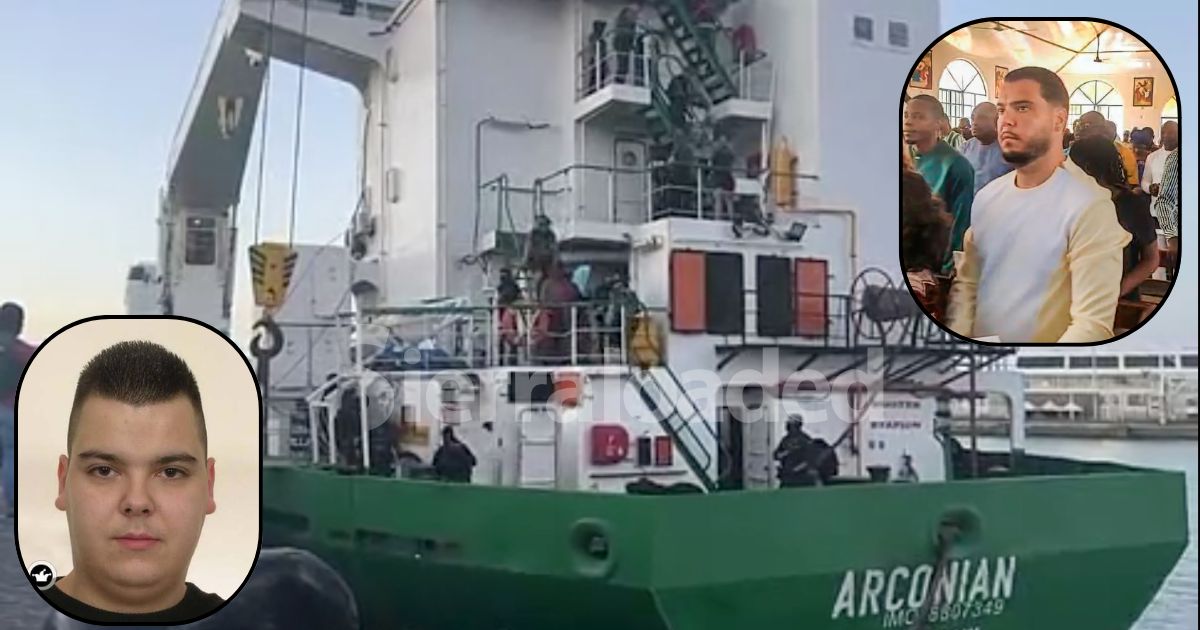
 A preliminary investigation by Sierra Leonean authorities has concluded that the cargo vessel MV Acronian departed the Port of Freetown carrying palm kernel, diesel, and fresh water—not the record-breaking 30-ton haul of cocaine later discovered by Spanish authorities.
The findings were presented on Wednesday, May 20, 2026, by the head of the Transnational Organized Crime Unit (TOCU), CSP Rev. Michael Laggah, during a joint security sector press conference addressing the country’s alleged link to one of Europe’s largest drug busts.
According to CSP Laggah, the MV Acronian berthed at the Port of Freetown in April 2026 and remained docked for five days—directly contradicting social media rumors that it had lingered in Sierra Leonean waters for over two weeks.

TOCU investigators stated that the vessel underwent all mandatory port clearance, security, and operational procedures prior to its departure. Crucially, authorities confirmed that no narcotics or prohibited substances were detected on board during its stay.
Official cargo manifests, terminal records, and port documentation indicate the vessel was loaded only with the following items in Freetown:
1,151 metric tons of palm kernel tanks
315 metric tons of fresh water
250 metric tons of marine diesel fuel
However, investigators noted significant discrepancies in crew figures. While the vessel departed Freetown with 17 crew members, Spanish authorities later intercepted the vessel with 23 individuals onboard. This discrepancy of six additional persons who were not accounted for in Sierra Leone’s departure records remains under investigation.
Officials further disclosed that Serenity Shipping Company, identified as the vessel’s registered owner, is not based in Sierra Leone and has no official operational presence or registration in the country.
CSP Laggah confirmed that Sierra Leonean authorities are now directly engaging Spanish counterparts to support further inquiries. He emphasized that while findings remain preliminary, the investigation suggests possible exploitation of maritime surveillance gaps beyond 200 nautical miles from Sierra Leone’s coastline.
The TOCU boss pointed out that the vessel’s nine-day voyage exceeded normal transit duration for the route, suggesting possible irregular activity outside Sierra Leone’s territorial waters.
The MV Acronian, a Comoros-flagged cargo vessel, departed Freetown on 22nd April 2026. On 1st May 2026, Spanish authorities intercepted the ship approximately 430 nautical miles south of the Canary Islands, off the coast of Western Sahara.
Spanish officials subsequently announced the seizure of 30,215 kilograms of cocaine—more than 30 metric tons—packed into 1,279 bales, with an estimated street value of €812.2 million (approximately US$953 million). Authorities described it as the largest single cocaine interception in Spanish and European history.
All 23 crew members aboard at the time of interception—17 Filipino nationals, five Dutch nationals, and one Surinamese national—were arrested and placed in pre-trial detention without bail
Spanish Interior Minister Fernando Grande-Marlaska later linked the shipment to the “Mocro Maffia,” a Dutch-Moroccan organized crime network. Investigators have identified fugitive Dutch trafficker Jos Leijdekkers, alias “Bolle Jos,” as the suspected mastermind. Leijdekkers, sentenced in absentia to 24 years in prison by a Dutch court, is believed by authorities to be hiding in Sierra Leone.
The Sierra Leone Ports and Harbours Authority (SLPHA) Director General reiterated that the Port of Freetown continues to operate strictly within established international maritime procedures and security frameworks.