

NCPD Seeks NASSIT Partnership to Expand Opportunities for Persons with Disabilities

 Sia Lucy Kannah
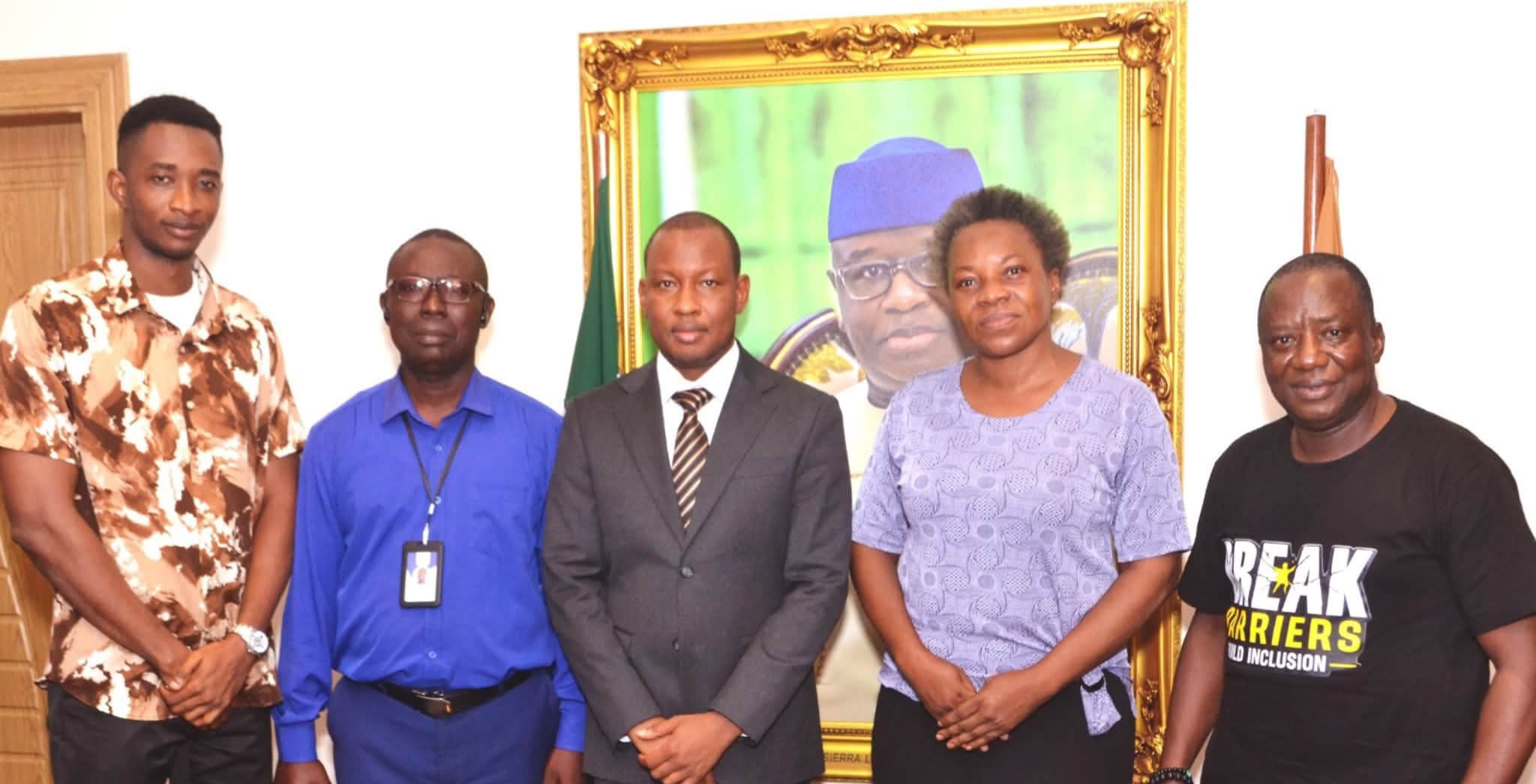
The Chairman of the National Commission for Persons with Disabilities (NCPD), Brima Sheriff, paid a courtesy call on the newly appointed Director General of the National Social Security and Insurance Trust (NASSIT), Chernor Mamoud Jalloh, calling for a stronger institutional partnership to advance the welfare and inclusion of persons with disabilities.
During the meeting at NASSIT House on Walpole Street, Sheriff congratulated Jalloh on his appointment before addressing persistent misconceptions surrounding the capabilities of persons with disabilities. He pushed back against assumptions that physical impairments limit an individual’s productivity or ability to contribute to national development, noting that the community continues to face widespread marginalization in employment, education, and social life.
“These barriers usually stem from societal designs and attitudes rather than the disabilities themselves,” Sheriff said.



He pointed out that poor infrastructure, such as the lack of wheelchair ramps and adequately wide doorways across both public and private buildings, continues to restrict access to workplaces and essential services. To address these gaps, Sheriff urged NASSIT to partner with the NCPD in creating employment opportunities, improving physical accessibility in public spaces, providing training facilities, and supporting students with disabilities through targeted donations.
In response, Jalloh thanked the NCPD delegation for the visit and commended the Commission’s ongoing advocacy to improve living standards for persons with disabilities across Sierra Leone.
Outlining NASSIT’s core operations, the Director General noted that the Trust administers the country’s contributory National Pension Scheme, which provides partial income replacement to members and their dependents in the event of old age, invalidity, or death.
“Members contribute to the Scheme and, upon the occurrence of contingencies such as old age, death, and invalidity, they rely on NASSIT for partial income replacement,” Jalloh explained.
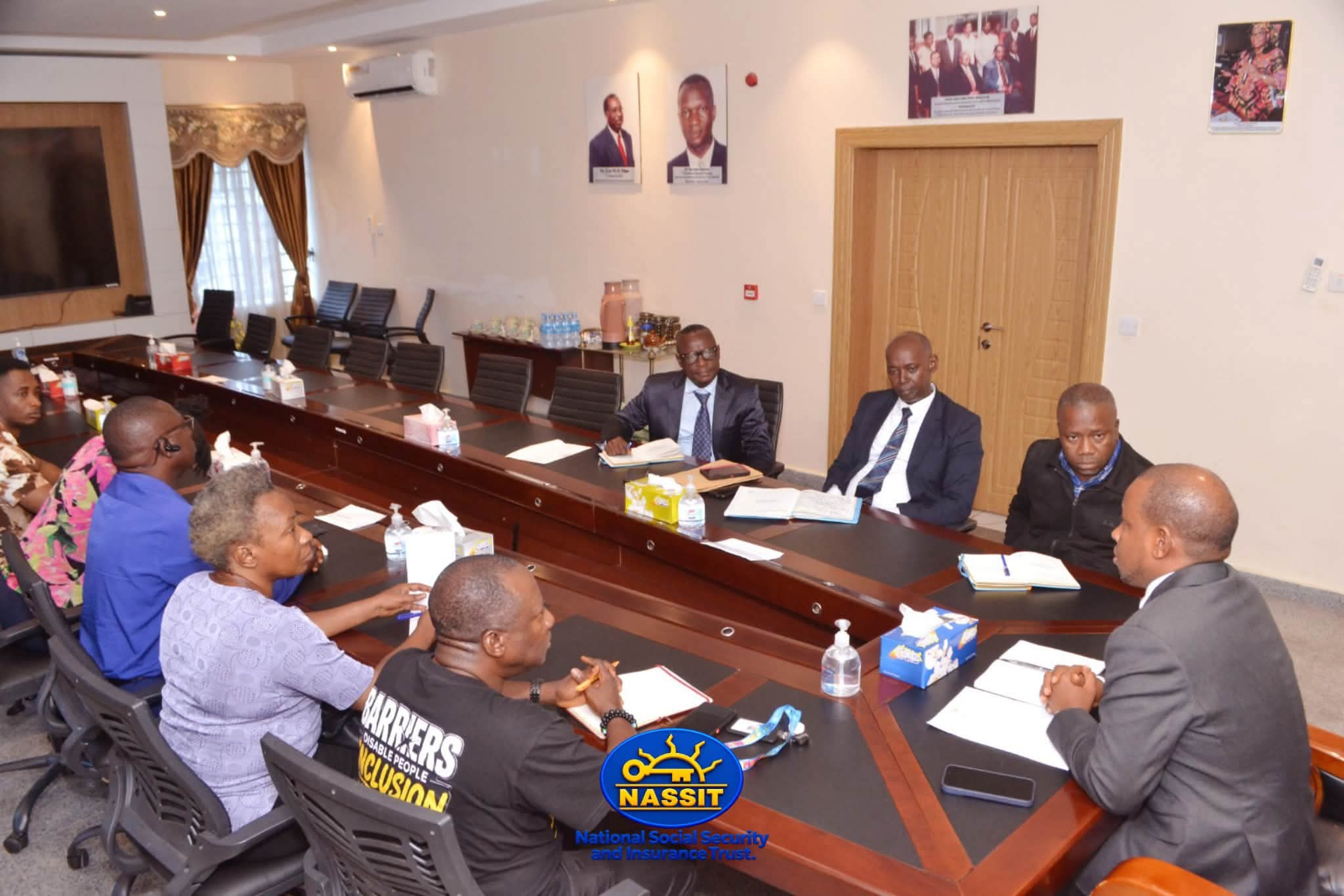
Regarding the NCPD’s proposals, specifically around staff disability-awareness training, student donations, and broader support initiatives, Jalloh assured the delegation that NASSIT is willing to explore viable avenues of cooperation, provided all interventions align with the provisions of the NASSIT Act of July 20, 2001, and the institution’s legal mandate.