
NPHA Issues Mental Health Advisory After Earth Tremors in Freetown
 Sia Lucy Kannah
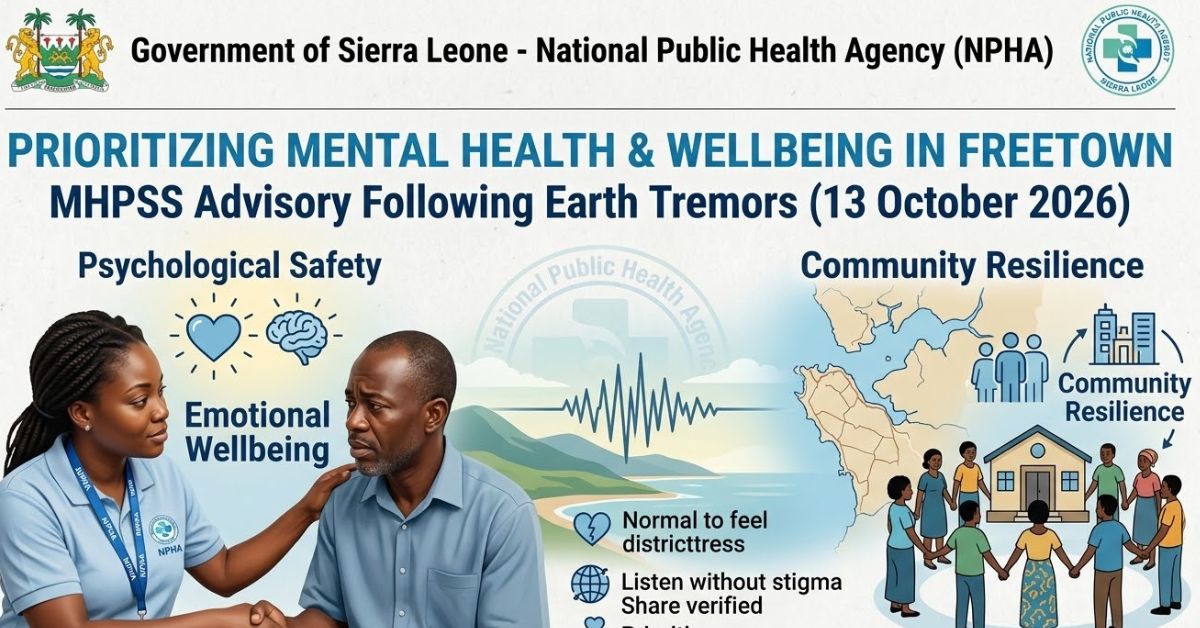
 The National Public Health Agency (NPHA) of Sierra Leone, in collaboration with the Mental Health Secretariat and the National Multisectoral Mental Health and Psychosocial Support (MHPSS) Technical Working Group, has issued a public health advisory following reports of mild earth tremors in parts of Freetown.
The advisory urges government institutions, workplaces, families and communities to prioritise psychological safety, emotional well-being and disaster preparedness in response to the reported tremors.
According to the health authorities, unexpected environmental events can trigger fear, anxiety and uncertainty, particularly in communities with a history of traumatic emergencies, including the civil war, the Ebola outbreak, flooding and mudslides.

The authorities stressed that temporary distress or fear following an unexpected event is a normal human reaction and does not automatically indicate a mental health disorder. They also clarified that the precautionary guidance should not be interpreted as evidence of an impending disaster.


The MHPSS Technical Working Group has encouraged ministries, departments and agencies, as well as public and private organisations, to share only verified information from official sources, including the National Disaster Management Agency (NDMA).
Employers have also been urged to conduct supportive, stigma-free well-being check-ins with staff, provide reasonable assistance to employees experiencing significant distress, and review workplace emergency preparedness plans, evacuation routes and staff safety protocols. The advisory further recommends establishing psychosocial support and referral pathways for those who may need additional assistance.
NPHA reaffirmed the health sector’s commitment to supporting the mental health of citizens before, during and after emergencies, emphasising that effective disaster preparedness must protect psychological well-being alongside physical infrastructure.
The Agency also called on stakeholders across healthcare, education, development partnerships, non-governmental organisations and the private sector to integrate mental health and psychosocial support into broader disaster risk reduction and community resilience initiatives.