
APC’s Osman Timbo Reflects on Father’s Judicial Legacy Amid Constitutional Fight

 Sahid Bangura
 All People’s Congress (APC) Member of Parliament Hon. Osman Timbo has taken his long-running objection to the recent constitutional amendment process to the Supreme Court, drawing on a personal connection to the Judiciary shaped by his late father’s leadership of the institution.
Timbo said he filed an action at the Supreme Court on Monday, August 31, 2026, exactly 21 days after what he described as the “purported” passage of the Constitution of Sierra Leone (Amendment) Act 2025 into law by Parliament.
According to the APC lawmaker, the case seeks the Supreme Court’s interpretation of certain provisions of the 1991 Constitution and clarification on how those provisions apply to the constitutional amendment process.

For Timbo, however, the legal challenge carries a deeply personal significance.
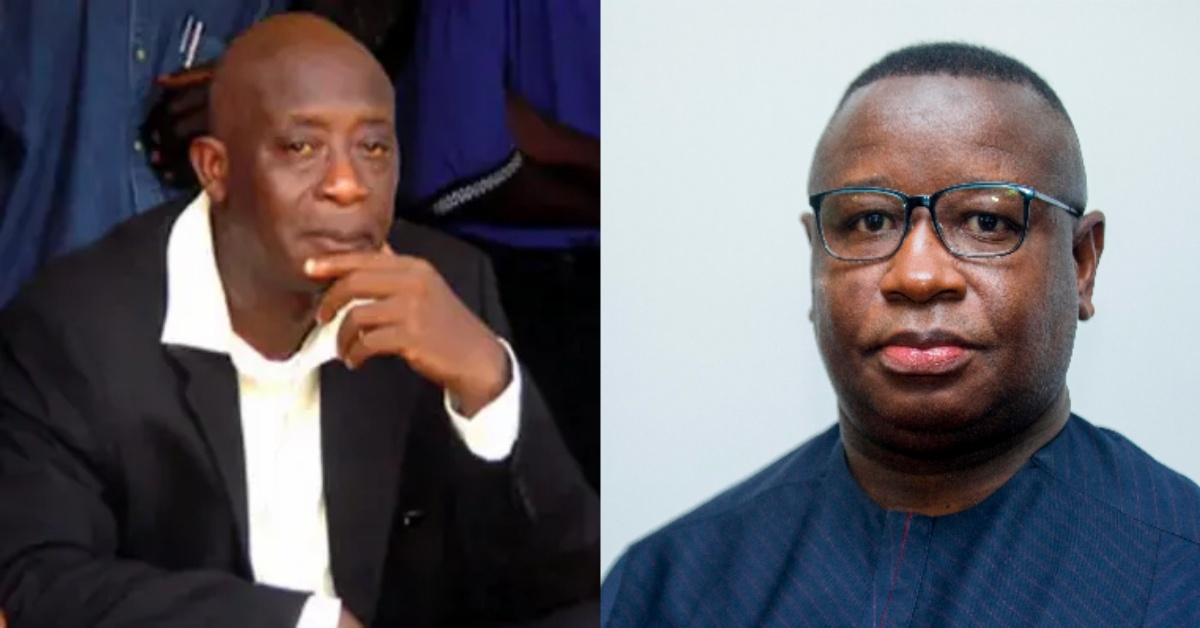


In announcing the filing, he recalled his childhood years spent around Sierra Leone’s courts, where his father once served as a leader of the Judiciary. He said the institution not only shaped his early life but also contributed to his education and continues to be connected to his livelihood.
“I have placed my hope, one more time, in the Supreme Court; in the Judiciary; an institution that my father once led,” Timbo said, reflecting on his childhood memories of running up and down the stairs of the Law Courts Building and the sixth floor of Guma Building.
He described his early experience of using a lift at the Guma Building as one of the memories that remained with him from those years.
The MP said his personal connection to the Judiciary has strengthened his confidence in seeking judicial interpretation of what he considers fundamental constitutional questions.
Timbo said he had publicly promised on radio to take the matter to the Supreme Court and had raised concerns about the amendment process long before filing the action. He specifically referenced his earlier challenge over what he described as the proper publication of the Bill in two issues of the Gazette.
He maintained that his decision to pursue the matter is not driven by partisan politics or personal political ambition.
“ For me, this has never been about partisan politics or my personal political ambition to lead this nation,” he said.
Timbo further framed the case as a generational responsibility, noting that he now occupies a position in Parliament similar to that held by those who participated in the making of the 1991 Constitution.
He said he considers it a “sacred duty” to represent citizens whose voices may otherwise go unheard and to protect the Constitution for future generations.
The APC lawmaker strongly questioned the constitutional process followed in the amendment, arguing that the Constitution cannot be amended through a simple majority vote.
“No way can we amend the constitution by a simple majority votes,” Timbo stated.
He also sought to distinguish his legal action from any personal confrontation with key government officials, saying his challenge was not directed personally at the Attorney-General and Minister of Justice or the Speaker of Parliament, whom he described as friends.
“This is not a personal fight against the Attorney General and the Speaker, both of whom are friends of mine,” he said.
Instead, Timbo said the case is about safeguarding the country’s constitutional order and preventing what he described as political interests from overriding constitutional requirements.
Reflecting on the significance of the current political moment, he warned that future generations would ultimately assess the decisions being made today.
“Soon, posterity will judge our actions and inaction,” Timbo said, describing the disputed process as “constitutional slaughter” carried out in the interest of political convenience.
He concluded by expressing special appreciation to his solicitor, Joseph Fitzgerald Kamara Esq. (JFK), and the wider legal team handling the matter.
With the filing of the action, Timbo has formally placed the constitutional questions he has been raising before the Supreme Court, leaving the interpretation of the relevant constitutional provisions to the Judiciary.
Bravo to the young lawyer