

Sierra Leone Now Grows 72% of the Rice It Consumes – Government
 Fatmata Grace Bangura
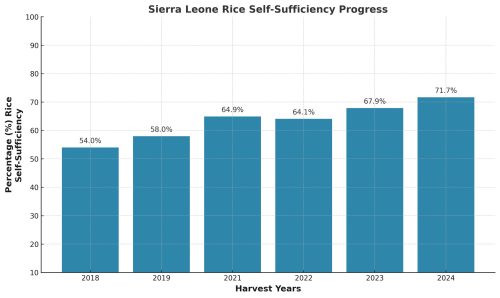
 Sierra Leone is now producing about 72 percent of the rice it consumes, according to updates from the Ministry of Agriculture and Food Security.
The increase in local rice production is linked to steady efforts over the past six years in areas such as farming equipment, better seeds, and a digital system that helps farmers get seeds and other supplies more easily.
The Ministry says better seed systems have helped improve harvests, while the use of more machines has supported farmers in rice-growing areas. The digital platform for distributing supplies has also helped ensure farmers receive what they need on time.

These efforts are part of the Feed Salone programme, which is aimed at growing more food locally and reducing the need for imported rice.


Even with the progress made, challenges remain. Many parts of the country still lack proper rice processing facilities, and some rice is still brought in from outside to meet demand. The government says it is working to improve roads, electricity, water systems for farming, and build processing zones to support the entire rice sector.
There are also long-term plans to make Sierra Leone not just self-sufficient, but a country that can export rice to other places in the region.
The Ministry says the goal is to help farmers grow more, earn more, and reduce how much the country spends on food imports.
Oh!! my God!! This is ridiculous.
This is a complete scam!
You guys don’t want to see good things happen in Sierra Leone
Minister Kpaka, since you did not write this article so maybe clarify a few things for us the gullible public – a) is Sierra Leone now 72% self sufficient in rice production as the article claims, b) does rice importation now stand at 36%, c) what % of the population relies on local rice production for their rice needs, d) how much has the country ‘saved’ on its rice import bill?
God get patience. But ar blame Sierraloaded. You guys should be fact checking some of these things before you allow your medium to be used to peddle incorrect information. This is how media outlets loses credibility. You can do better
Exactly sierraloaded is a complete mess
What kind of lie is this
The graph itself – %age rice sufficiency vs harvest years – is meaningless and meant to deceive; indeed a scam. What’s meaningful is how much rice (in metric tons) was harvested vs. how much rice was imported (in metric tons)?
But this is Salone. In the blink of an eye, the GDP doubled (from $4B to $8B), and inflation dropped (from 50% to 8%)
This is a massive lie. If we ask the rice importers, will they tell us rice imports and their revenues have dropped. If we go to the market, are we seeing majority local rice?
Freetown alone consumes more than %50 of the rice in Sierra Leone of which %95 is imported rice,so this calculation should be for projections in the next five years at up country.
May God forgive us all
Sierra loaded, I couldn’t imagine this is coming from your media
May Allah strike the writer of this piece dead Ameen Ameen Ameen.
Ooo Salone, another scam
God why?
Big lie