
HRCSL Engages 50 Participants from 11 Moyamba Fishing Communities in Rights Advocacy
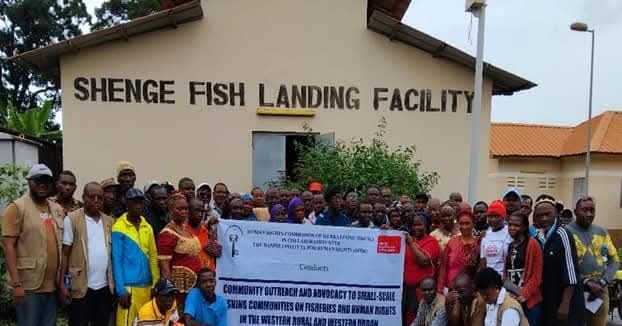
The Human Rights Commission of Sierra Leone (HRCSL) has concluded a community outreach and advocacy exercise targeting 50 participants drawn from eleven (11) fishing communities within Kargboro Chiefdom, Moyamba District, to empower small-scale fishers with knowledge on human rights and fisheries.
The engagement at the Shenge Fish Landing Facility Complex was to raise awareness about key human rights issues impacting small-scale fishing communities and facilitate the establishment of the Human Rights Committee for small-scale fishers.
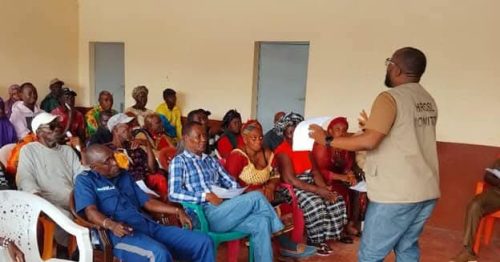

This activity falls under the Sustainable Oceans project, a collaborative effort between the Commission and the Danish Institute for Human Rights with support from the Swedish International Development Cooperation Agency.
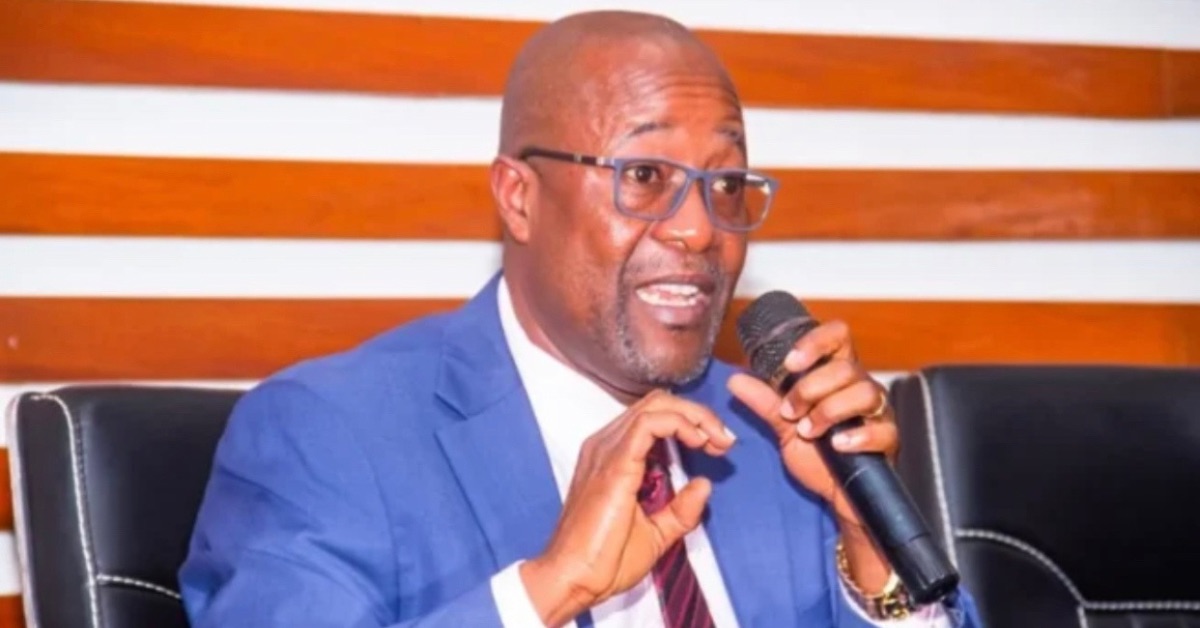
Director of Climate Change and Information Services, Abu Bakarr Kamara, highlighted the importance of fishing and how small-scale fishers are contributing to the country’s economy.
“Fishing is a very big business in Sierra Leone, and according to research, over 25% of the country’s population is engaged in fishing directly, with over 90% depending on fish for protein,” he said.
According to him, most of the industrial fishing catch is being exported out of the country, and Sierra Leoneans are left with what small-scale fishers can catch for survival. During the session, stakeholders from the various fishing communities shared their experiences on the challenges they face in carrying out fishing activities.
Chairman of the Community Management Association in Shenge, Issa Mansaray, registered his frustration with the biased decision made by the government for the one-month ban on fishing. “While we were observing the ban as a result of bad fishing, other communities were busy fishing without being checked. We felt betrayed by the authorities. A ban should cut across and not be limited to just one community,” he said.
Boima Luke, a mother of five children, explained to the Commission about the devastating condition of the main road leading to Shenge and called on the government to rescue the community by constructing the road. “In 2009, we lost over one hundred lives, mostly youths who were trying to travel by sea to Freetown because of the deplorable condition of the road. We cannot continue to lose our children,” she stated.
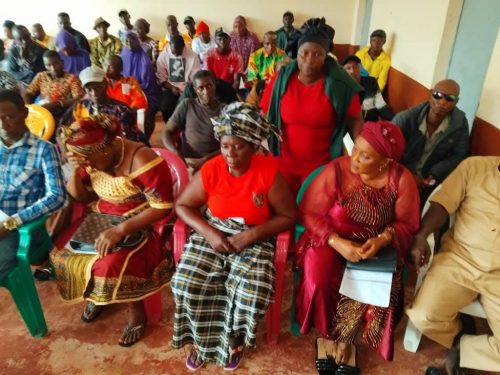
A Fish Processor, Madam Isatu Kamara, said, “We are seeing a lot of child labour and child neglect. Children are left to take care of the home while their parents are in the high seas or the marketplace. Parents have little or no time with their children, and this create a room for teenage pregnancy and drug abuse.”
President of the Sierra Leone Artisanal Fishermen Union, Thomas O. Turay, expressed hope that with the knowledge gained, there would be an improvement in the monitoring of children’s rights issues across fishing communities.