

Developer of Opportunity for Leave-No-One-Behind: China and Africa Cooperation
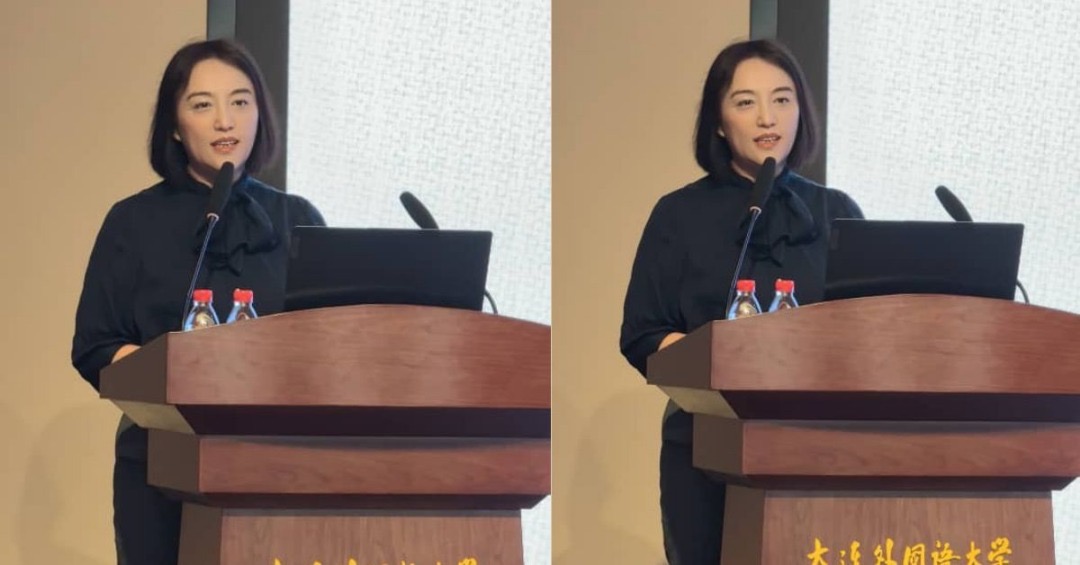
Beijing Foreign Studies University, Shanxi University
The right to subsistence and development is the primary basic human rights. This recognition followed the Universal Declaration of Human Rights which the UN issued in 1948.
Since then, the nearly 80 years of persistent exploration on the basis of common understanding and align cooperation, China and Africa have contributed remarkably to the protection and promotion of human rights for all. From the international development outlook, the global significance of China and Africa’s cooperation can be crystalized through three key dimensions in the new era when the world is confronting unprecedented uncertainty: achieve leapfrog growth, improve people’s livelihood, and offer more choices for international cooperation.

With regard to efficiency, China and Africa’s cooperation in artificial intelligence (AI) is set to create significant opportunities across sectors, and equally important, the beneficiaries are the people’s access to economic growth. Xi Jinping, president of China, emphasized that AI can serve as a global public good that benefits humanity.


It is important to widely carry out international cooperation in AI, help Global South countries strengthen their technological capacity building, and to make contributions to bridging the global AI divide.
The rapid rise of AI has captured the world’s imagination and accelerated the integration of AI into the global economy and the lives of people across the world. McKinsey estimates that gen AI could add $2.6 trillion to $4.4 trillion to the global economy annually. China has attached great importance to AI development in recent years.
This momentum is spilling over into more opportunities for everyone to have access to China’s economic growth. For examples, by 2024, the number of generative AI product users in China reached 249 million, the number of AI companies in China has surpassed 4,500, with the value of the core sector reaching nearly 600 billion yuan ($83 billion), according to the Ministry of Industry and Information Technology of China. Nowhere is this truer than in Africa, this continent that has already demonstrated its ability to use AI to surpass traditional development pathways.
McKinsey’s analysis (2025) suggests that gen AI could unlock $61 billion to $103 billion of economic value across sectors in Africa.
In terms of effectiveness, the UN’s 2030 Sustainable Development Goals (SDGs) sheds light on the pivotal role of China and Africa in navigating the global challenges. Nothing cooks without some heat. In 2024, China-Africa trade volume reached US$295.6 billion, setting a new record high. The Chinese side has provided loans worth of RMB2.08 billion yuan to about 350 SMEs from 19 industries, creating around 4,500 jobs.
There are four main dimensions highlighting how China and Africa can work together on shared goals. Capital deepening investment is made in more or better equipment, technology and structures to facilitate African workers to produce more in less hours. Efficiency gains. Africa achieved a faster productivity growth. Within the context of global economic recession, the continuity of productivity growth is extremely impressive. Cheaper products and services. This is a common demand. Washington Post reported that the wholesale price of a T-shirt made in China is $1 while the cost of a T-shirt is $3.5 if it is made in the United States. On this issue, the Reuters and Ipsos’s online survey indicated that 69% interviewees claim that good price is more important. Evidently, China and Africa’s cooperation can strike a balance between effectiveness and equity to ensure that both China and Africa, and in particular, the people can share in the benefits with fairness and dignity.
In light of value, the 2024 Forum on China-Africa Cooperation (FOCAC) sends a strong message that for the people in China and Africa, China and Africa’s cooperation gives the truest pursuit of human heart. Faced with the goals of advancing modernization, spearheading cooperation of the Global South, and making greater contributions to a community with a shared future for mankind, China and Africa’s cooperation introduces unprecedented development opportunities. In the meantime, the world at the cross-roads brings unprecedented risks.
The challenges are already transforming our life but their impacts ahead have posed global concerns. The UN Summit of the Future 2024 sounded the alarm on the core risks such as growing digital divides and technology adoption, a fractured future, youth in an age of lost opportunity, middle power morass, and imperfect markets. Without action, building a just world and a sustainable planet will lag behind.
Essentially, a business-as-usual trajectory will fundamentally result in an uncertain future. Gini coefficient – a measure of inequality in which 0 is perfect equality and 100 would mean perfect inequality, or one person owning all the wealth— found that wealth inequality remains unchanged, and the most concentration of overall wealth is in the hands of the proportionately fewest people. People in the developing world are frustrated. The alternative path, which deploys global guardrails to align efforts around the world, reinforce the interoperability and coordination in compliance with countries frameworks and international policy standards, prevent division and exclusion, and model on best practices.
The benefits seen in this alternate pathway could result in the future of our world for the greater good——transparency, diversity, openness, inclusivity, democratic accessibility, and equally important is the protection and promotion of human rights, in particular, the leave-no-one-behind principle.
Put it simply, the key development issues confronting the world and mankind call for great questions and great answers from every one of us. In September 2024, FOCAC was successfully held, opening a new chapter of China and Africa building an all-weather community with a shared future for the new era.
The principle which China and Africa behold, and thus the opportunities can be developed will help the world, faced with uncertainty and turbulence, reconsider the cost of ignoring the philosophy that in the realm of perfect virtue, people did not exalt the virtuous nor appoint the capable. Inasmuch as, shared benefits bring joy, and collective endeavors secure peace (Zhuangzi, Chinese philosopher, 369-286 B.C.).
Liu Chen is the professor of International Development and International Understanding. Harvard Kennedy School Mason Fellow, Postdoctoral Fellow, Department of Economics, Harvard. Her research focuses on policy, practice, leadership, and culture and international cooperation.