


 Post a comment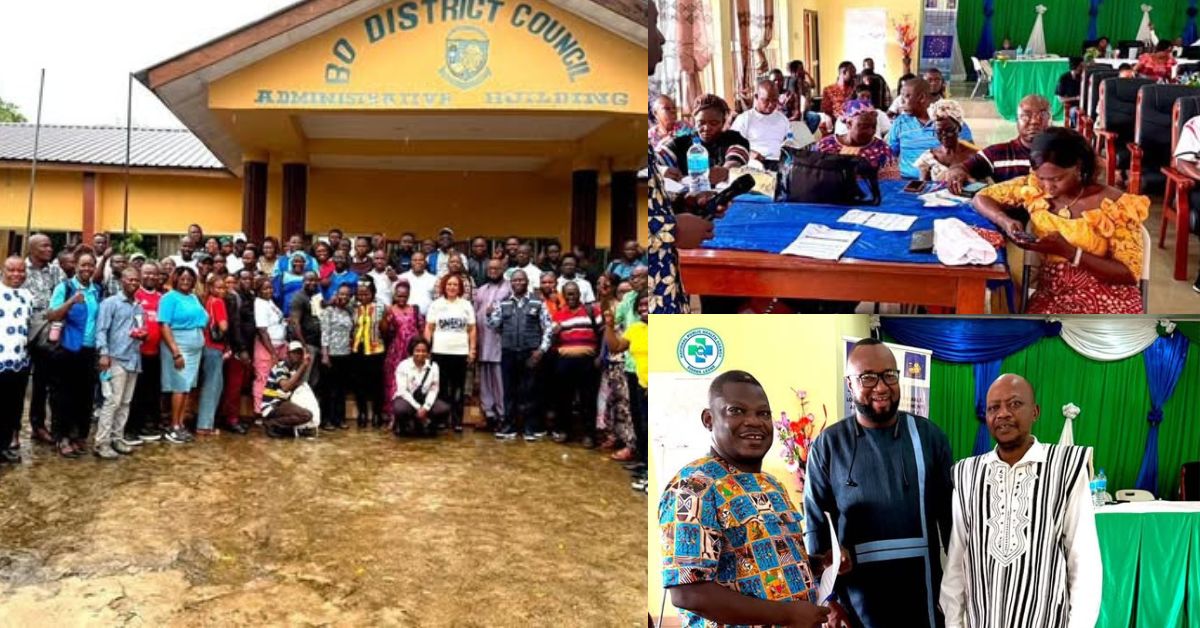
The Government, with support from GIZ’s Health Systems Strengthening and Epidemic Prevention Programme and the One Health Project, hosted a two-day training in Bo City to strengthen district-level implementation of Standard Operating Procedures (SOPs) for surveillance and data sharing of Priority Zoonotic Diseases (PZDs).
The training focused on applying the National Human, Animal, and Environmental Guidelines, a framework designed to integrate human, animal, and environmental health systems. Facilitators emphasized the need for harmonized surveillance to tackle threats such as Mpox, Rabies, Anthrax, and Antimicrobial Resistance (AMR).
Opening the session, GIZ Technical Health Advisor Miss Aminata Saccoh highlighted the One Health approach as a tool for collaboration and accountability. Dr. Joseph Kanu, Surveillance Manager at the National Public Health Agency (NPHA), stressed the urgency of adopting unified SOPs to improve early detection and outbreak control.

Representing the NPHA Executive Director, Professor Foday Sahr, Public Relations Coordinator Miss Rachael Kuyembeh reaffirmed the training as a milestone for multisectoral health resilience. Participants included staff from the Ministries of Health, Agriculture, and Environment, the Environmental Protection Agency, WHO, civil society organizations such as HEADA, and other stakeholders.
Sessions covered practical topics such as case-based simulations, use of Integrated Disease Surveillance and Response (IDSR/IDSAR) tools, roles during joint investigations, and community engagement strategies for risk communication. Presenters also discussed the integration of climate and environmental data into surveillance planning and the ethical dimensions of outbreak response.
The training closed with a shared commitment to strengthening district-level coordination, improving data systems, and advancing Sierra Leone’s One Health strategy.


