

Gender Ministry and UNFPA Strengthen National Efforts to Eliminate FGM
 Aminata Koroma
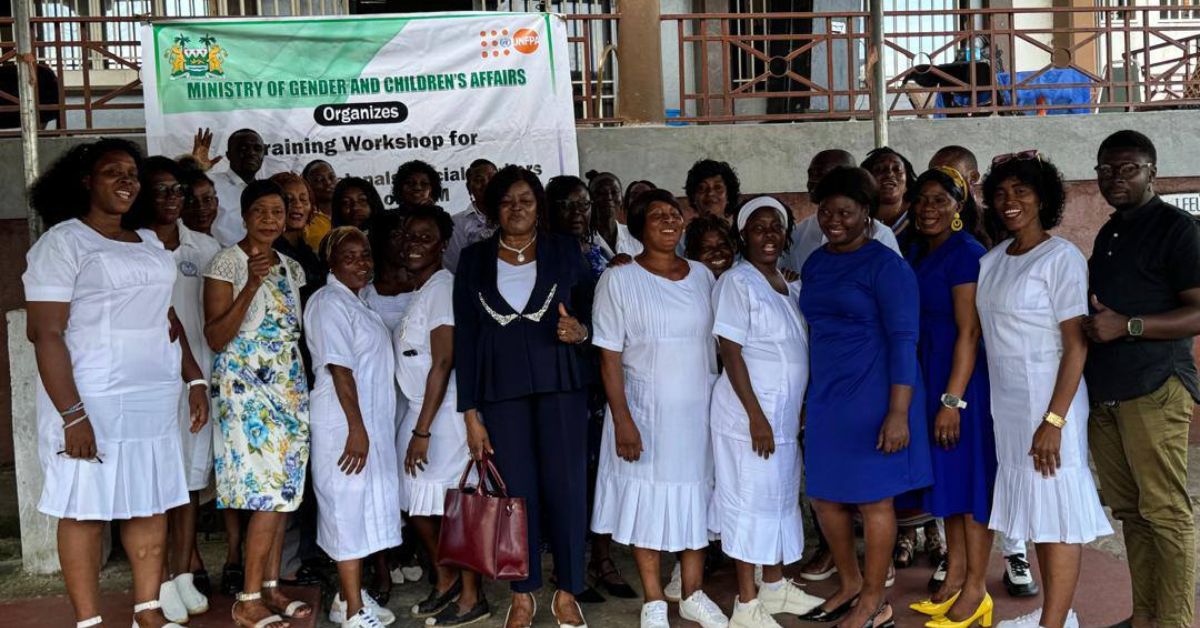
 The Ministry of Gender and Children’s Affairs (MoGCA), in collaboration with the United Nations Population Fund (UNFPA), has concluded a three-day competency and development workshop on Female Genital Mutilation (FGM) aimed at strengthening national efforts to end the harmful practice.
The training, held from October 1st to 3rd, brought together health professionals, social workers, and representatives from the Family Support Unit (FSU). The key participants included the Director of Planning and Policy, Ibrahim Kamara; Director of Gender, Marian Goodie Sowonie; President of the Midwifery Department at COMAHS and lead facilitator, Dr. Joan H. Shepherd; and FSU Information Officer, Ibrahim Sorie Conteh.
In his welcome address, Dennis Koroma, Assistant Director at MoGCA, highlighted the significance of the workshop in advancing national efforts to end FGM. He described the initiative as a vital platform for dialogue and collaboration among stakeholders.

Lead facilitator Dr. Joan H. Shepherd shared her expertise on the ideology, prevalence, and devastating health effects of FGM, linking it to increased maternal mortality. She called on participants to use the training as a stepping stone towards meaningful community engagement.
Director of Gender, Marian Goodie Sowonie, recounted real-life experiences of survivors, emphasizing the psychological trauma and social consequences of FGM. She encouraged participants to share their perspectives to deepen understanding and foster empathy.
Director Ibrahim Kamara presented on regional legal frameworks, including the Maputo Protocol and the African Charter on the Rights and Welfare of the Child, which call for the prohibition of all forms of harmful traditional practices.
During breakout discussions, FSU representatives Grace Mansaray and Susan M. Morsay proposed preventive strategies such as intensified community sensitization, partnership with local NGOs, and collaboration with child protection and legal institutions.
Health professionals, led by Halimatu Kamara, emphasized advocacy, stakeholder engagement, and enforcement of gender protection laws. Social workers also pledged support through media campaigns, partnership initiatives, and psychosocial assistance for survivors.
The second day focused on group analysis of strategies, successes, and challenges, with participants recommending strengthened legal frameworks, education for girls, and mentorship programs to empower women.
Closing the workshop, Bamie J. Sesay, Deputy Director of MoGCA, underscored the importance of coordination and collective responsibility in the fight against FGM. “Sharing key roles and responsibilities is essential to ending FGM,” he said, reaffirming the Ministry’s commitment to work with partners in health, law enforcement, and civil society.
The three-day session ended with a joint resolution declaring zero tolerance for FGM, marking a renewed national commitment to protecting women and girls and promoting their right to live in safety, dignity, and empowerment.