
Mines Minister Calls for New Global Definition of Conflict Diamonds at KP Plenary in Dubai
 Aaron Parker
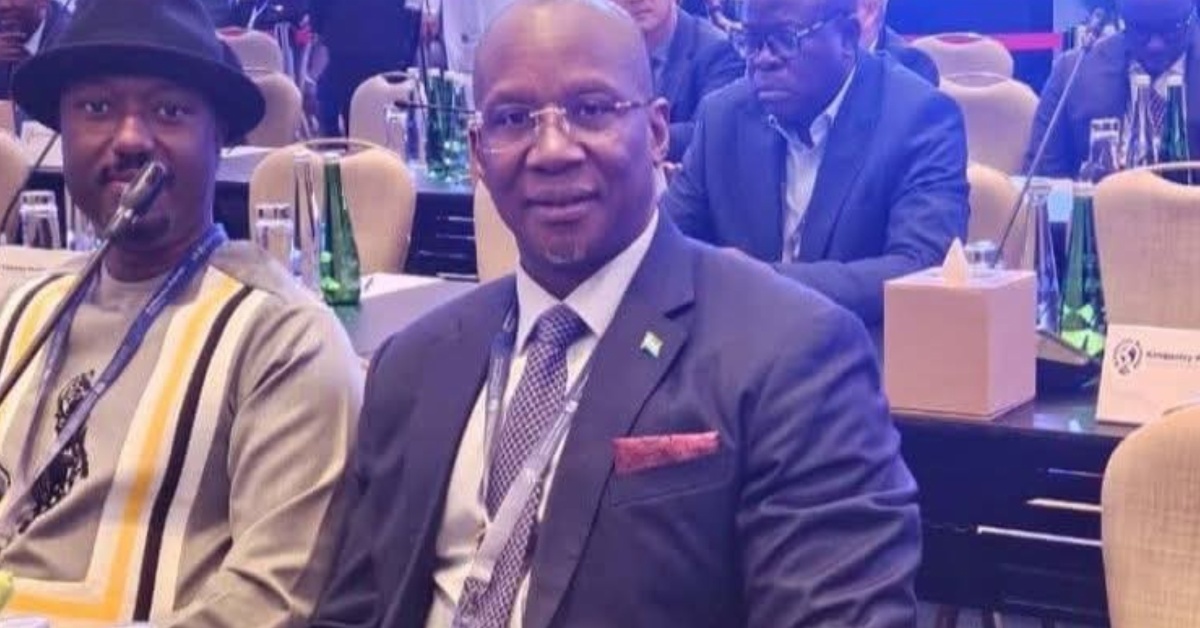
 Sierra Leone’s Minister of Mines and Mineral Resources and Chairman of the African Diamond Producers Association (ADPA), Honourable Julius Daniel Mattai, has issued a powerful call for urgent reform within the Kimberley Process (KP), urging member states to agree on a modern, principled, and Africa-centred definition of “conflict diamonds.”
Speaking during the Ministerial Session of the 2025 Kimberley Process Plenary in Dubai, Minister Mattai delivered one of the most impassioned addresses of the conference, grounding his remarks in Sierra Leone’s history and Africa’s lived experience with conflict-fuelled resource exploitation.
He reminded delegates that Sierra Leone and several African countries bore the human and economic scars of conflicts financed by illicit diamond trade a history that formed the basis for the creation of the Kimberley Process.

“No continent understands better than Africa the devastation and human cost that conflict diamonds can inflict,” Mattai stated. “Our people have lived the agony, carried the burden, and ignited the global conscience that created the Kimberley Process.”


In a bold critique, the Minister warned that the current debate on redefining “conflict diamonds” has been undermined by geopolitical rivalries and actors who have little connection to the realities of diamond-producing nations.
He accused “certain non-diamond producing stakeholders” of manipulating the process and stalling progress, saying their actions have left African mining communities vulnerable to continued exploitation.
“The definition of conflict diamonds has been increasingly manipulated hijacked by geopolitical interests,” he said. “Our voices and the hard-won lessons of our history should not be minimized or excluded.”
Representing the collective position of ADPA member states, Minister Mattai insisted that the new definition must reflect Africa’s priorities and must not be driven solely by external political agendas.
“Our diamonds are not mere commodities; they are the bedrock of hope and prosperity for millions,” he said.
He called for a shift from simply preventing conflict to promoting what he described as “peace diamonds” diamonds whose extraction and trade are tied to transparent governance, community development, dignity, and sustainable economic growth.
Mattai stressed that the continued failure to adopt a new definition is not a technical issue but a moral failure.
“The absence of a consensus is not a linguistic dilemma it is a moral emergency,” he emphasized. “It is time to leave behind the geopolitical shenanigans and semantics that have plagued progress.”
Commending the UAE’s chairmanship, he urged governments, civil society, and industry leaders to rise to a historic moment of collective responsibility and adopt a definition that strengthens the integrity and future of the Kimberley Process.
“Let us forge a definition that will be remembered not for the divisions we avoided, but for the unity and dignity we achieved,” he concluded.
The Kimberley Process Plenary is expected to deliberate further on the proposed definitions, with African diamond-producing countries uniting behind ADPA’s position.
The outcome could shape the next chapter of global diamond governance and determine how effectively the KP responds to emerging challenges in the diamond supply chain.