
“There Can Be No Sustainable Peace on Empty Stomach” – President Bio
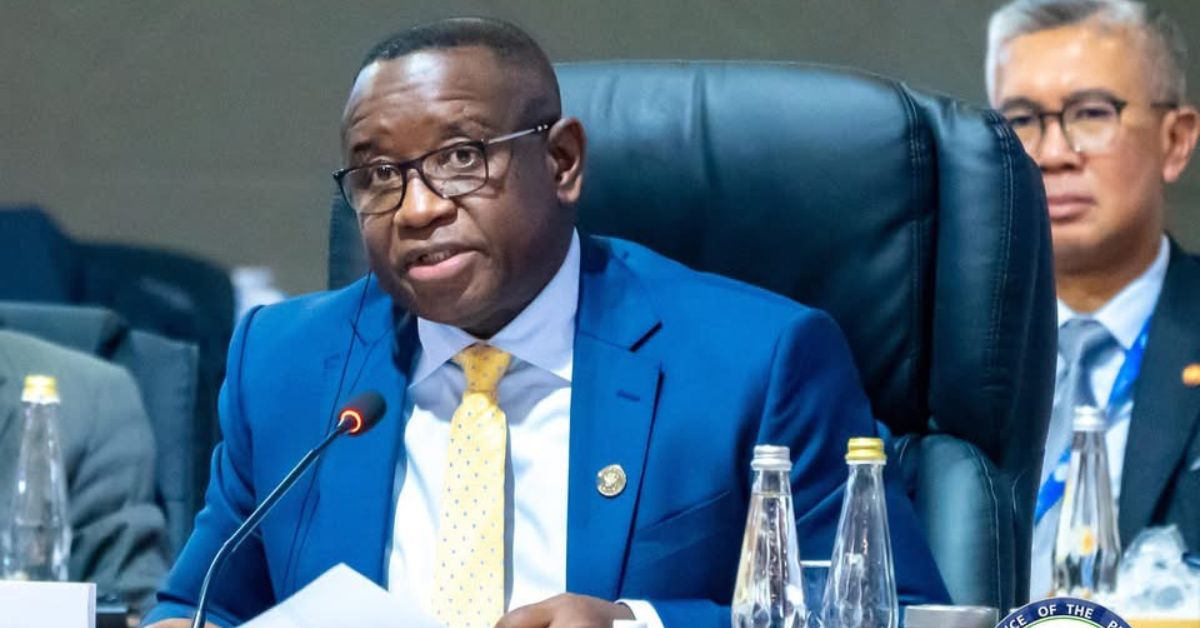
Sierra Leone’s President, Dr. Julius Maada Bio, has told the United Nations Security Council that food security must be recognised as a core peace and security issue, stressing that it should not be treated as a secondary humanitarian concern.
Addressing a high-level open debate on conflict-related food insecurity, President Bio described hunger as “a form of violence, slow, silent, and corrosive,” warning that it undermines global stability.
He said “there can be no sustainable peace on an empty stomach,” emphasising that starvation in conflict zones is not accidental but “a crime under international law.”

President Bio pointed to international instruments – including UN Security Council Resolutions 2417 and 2573, the Geneva Conventions, and the Rome Statute – which prohibit the deliberate starvation of civilians. “The framework exists; what is lacking is compliance and enforcement,” he said, calling on the Council to ensure humanitarian access, remove blockades, and hold perpetrators accountable.



Bio outlined how conflicts destroy food systems, noting that fields are mined or burned, livestock stolen, markets shut down, and prices pushed out of reach, deepening hunger and fuelling further unrest. Citing situations from Gaza to the Sahel, Sudan to Ukraine, and parts of Haiti, he said hunger is increasingly weaponised, becoming “a silent siege that kills long after the guns fall silent.”
Referencing Sierra Leone’s experience, the President highlighted his government’s Feed Salone Initiative, which places food security at the centre of national development efforts. The programme focuses on production, resilience, markets and value chains, and human capital. “Our goal is not merely to grow food, but to grow peace, putting livelihoods in people’s hands, dignity in their homes, and hope in their communities,” he said.
As Chair of ECOWAS, Bio also noted regional efforts to integrate food security into peacebuilding and climate adaptation strategies. These include expanding the ECOWAS Regional Food Security Reserve and strengthening the Early Warning and Response Network (ECOWARN). He urged the international community to support a coordinated global food security compact to replace fragmented global responses.
Bio proposed six priority actions for the Security Council, including protecting civilian food assets in conflict zones, institutionalising early-warning systems for monitoring disruptions in production and markets, safeguarding humanitarian access, and advancing accountability for starvation crimes. He also called for stronger links between peacebuilding financing and food security, and for empowering women and youth in agriculture.
“Starvation is never a natural outcome of conflict, it is a choice, a choice to break the law and betray our shared humanity,” he said. He appealed for global solidarity, noting Africa’s vast arable land and young population as a major opportunity for strengthening global food security.
President Bio concluded by urging the Security Council to make food security a central pillar of conflict prevention. “Preventing tomorrow’s wars requires treating food security as central to peace and security, not peripheral to it,” he said. “Let us ensure that no child is starved into submission, no harvest held hostage, and no community driven to violence by hunger.”