

Reviving Sierra Leone’s Commercial Transport: A Lifeline for Youth Employment and National Progress
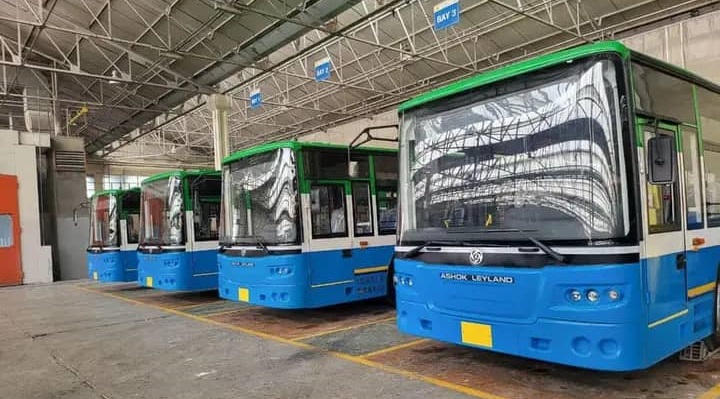
Across Africa, efficient and well-managed transportation systems have proven to be catalysts for economic growth, social mobility, and youth empowerment.
Countries such as Rwanda, Ghana, and Kenya are leading examples. Their investments in modern bus fleets, digital ticketing systems, regulated transport hubs, and structured driver training programs have not only improved urban mobility but also created thousands of jobs for young people. These nations recognized early that transportation is not merely about moving people from one point to another it is about unlocking economic potential.
Sierra Leone, however, continues to lag behind.
For decades, we have witnessed the rise and fall of several commercial transport initiatives, including Abess Transportation, Lilian Tours, and Sierra Stars. These collapses were more than business failures; they represented lost opportunities lost jobs, lost mobility options, and lost economic stimulus that could have transformed communities.

Learning from Regional Successes

Rwanda’s transport reforms demonstrate what political will and coordination can achieve. The introduction of smart payment systems, professionalized bus companies, and strict maintenance standards has significantly reduced congestion and improved reliability. Kenya’s modernized public transport corridors and Ghana’s progressive regulatory frameworks have similarly set benchmarks in the region.
These countries invested in systems, not just buses. They built accountability mechanisms, ensured security for assets, and created environments in which entrepreneurs could thrive. Their success is not accidental; it is engineered through integrity, discipline, and a commitment to the public good.
Sierra Leone’s Missed Opportunities
Sierra Leone’s transport challenges are not solely infrastructural they are also political and social. Too often, progress has been undermined by individuals who prioritize political gain over national development. Instead of empowering youths with skills and employment, they exploit vulnerable young people by distributing drugs, alcohol, and substances that further entrench cycles of poverty and violence.
This is not empowerment it is manipulation.
These youths are then mobilized to destroy public assets: buses burned, transport hubs vandalized, and community infrastructure damaged. These acts are not spontaneous; they are strategic attempts to derail initiatives designed to benefit the wider population.
In fact, recent incidents involving Waka Fine Buses in Freetown illustrate this troubling trend. The buses’ onboard phone-charging terminals one of their key selling points were deliberately damaged, in what many observers view as an attempt to undermine their competitive advantage. Such sabotage does not harm the business alone; it harms commuters, workers, and the broader public who depend on improved transport services.
Such actors do not care about development.
They do not care about the struggles of ordinary citizens.
They care only about retaining power regardless of the national cost.
The Path Forward: Protection, Integrity, and Coordination
If new buses are indeed being introduced to ease the transportation burden of Sierra Leoneans whether through affordable fares or free movement this initiative must be protected.
I call upon the Government of Sierra Leone, the security forces, community leaders, and all stakeholders to establish strong, proactive security measures around new transportation investments, particularly in areas prone to political unrest.
Entrepreneurs like Jagaban Kamara and Mohamed Sidibe (Sierra Stars) who are taking bold steps to modernize commercial transport, must be supported and protected. Their success is not just their own it represents improved mobility for workers, better market access for traders, and more predictable transit for students and families. It also encourages competitive pricing, which ultimately benefits the public.
We must safeguard not just vehicles and infrastructure, but the hope they symbolize, hope for economic participation, improved livelihoods, and a future where young people can envision meaningful employment.
A New Direction for Sierra Leone
Sierra Leone has the talent.
We have the youthful energy.
We have the need and the desire for progress.
What we lack still is coordination, integrity, and consistent protection of public investments.
It is time to change that.
Revitalizing our commercial transportation sector is not simply a policy choice; it is a national imperative. If we commit to transparency, security, and long-term planning, Sierra Leone can transform transport from a chronic challenge into a powerful engine of growth.
The question is no longer whether we can do it.
It is whether we will choose to.