
UNIMAK Lecturer Announces Candidacy for Bombali Shebora Chieftaincy
 Amidu Kallon
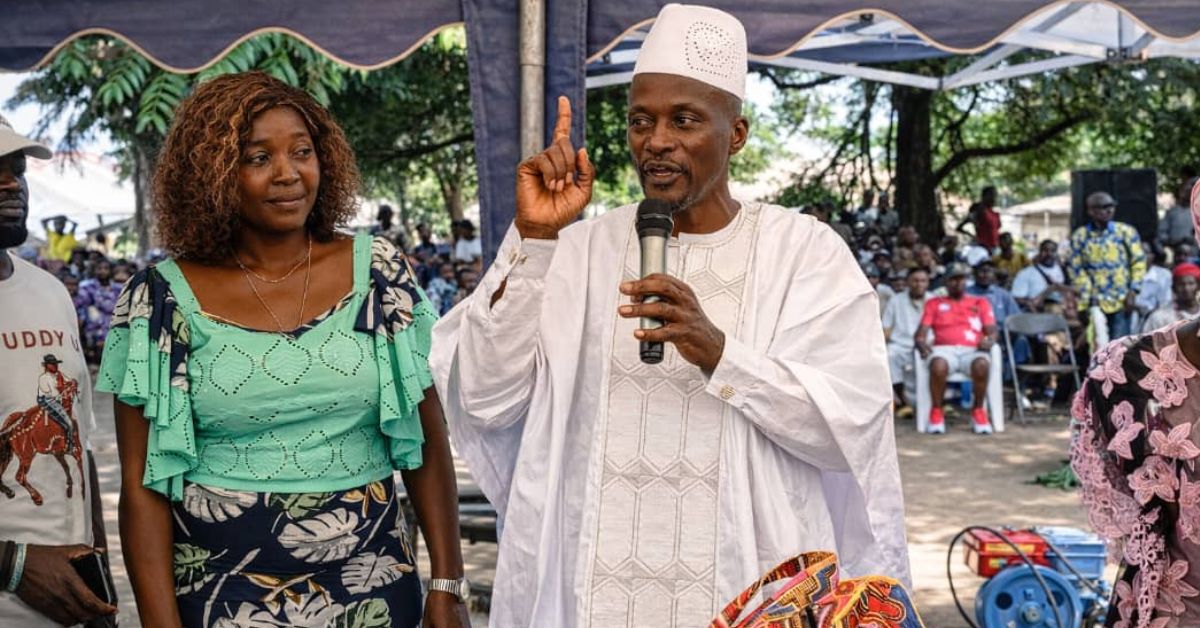
 Kisimi Kayleemasa Kamara made the announcement on Sunday, December 21, 2025, during a gathering of family heads, elders and community representatives at Pate Bana Marank.
The meeting drew a large turnout, reflecting the significance of the chieftaincy and the interest surrounding Kamara’s candidacy.
Addressing the gathering, Kamara, a senior lecturer at the University of Makeni (UNIMAK), said his decision was driven by a sense of duty to his people and a belief that traditional leadership could play a stronger role in local development.

“Our chiefdom has a rich history and strong traditions,” Kisimi Kayleemasa Kamara said, adding, “but we also face challenges, especially for our young people and farmers. I believe we can protect our customs while embracing ideas that improve education, agriculture and opportunity for all.”


He outlined priorities that include youth empowerment, improved access to education, support for farmers and closer cooperation between traditional authorities and government institutions.
Kamara, who also serves as the Chief Innovation Officer at eWomen Sierra Leone and Director of Innovation at the University of Makeni, intends to establish four hubs within the chiefdom: Kafala Eco Circular Hub (KECH), Matotoka Agro Tech Hub, Makeni Innovation Centre (MIC), and Kagbaran Creative Hub to support skills development and sustainable livelihoods.
To show his commitment to support local farmers in Pate Bana Marank, Kamara donated a Cassava grinder to residents of the community.
Several elders present welcomed his declaration, describing it as a sign of growing engagement by educated professionals in traditional governance. Pa Alhaji Sorie Kamara, a senior elder of the chiefdom, said the community would carefully consider all aspirants.
“Education is important, but so is respect for our customs,” he told this reporter. “Anyone who wants to lead must understand our traditions and follow the proper process. If he does that, the people will judge him fairly.”
The young people also expressed cautious optimism. Mariama Kamara, 23, said many youths were eager to see leadership that listens to their concerns.
“We want jobs, skills and a voice in decisions that affect us,” she said. “If a leader can speak for us and still respect the elders, that is something many of us will support.”
The Bombali Shebora Chieftaincy is among the most influential traditional institutions in the Northern Province, with authority over land matters, local justice and community cohesion. The selection of a paramount chief follows customary law and involves recognised ruling houses and an electoral college.
Local authorities have urged all aspirants and their supporters to conduct themselves peacefully as consultations continue. A representative of the chiefdom administration, who requested anonymity, said maintaining unity would be critical in the months ahead.
“The chieftaincy belongs to the people,” he said. “We expect a process that is calm, lawful and respectful, so that whoever emerges can lead with the confidence of the entire chiefdom.”
As discussions continue behind the scenes, residents of Bombali Shebora will be watching closely, aware that the choice of their next paramount chief will shape the future direction of the chiefdom for years to come.