

Why Remembrance Must Go Beyond Symbolism
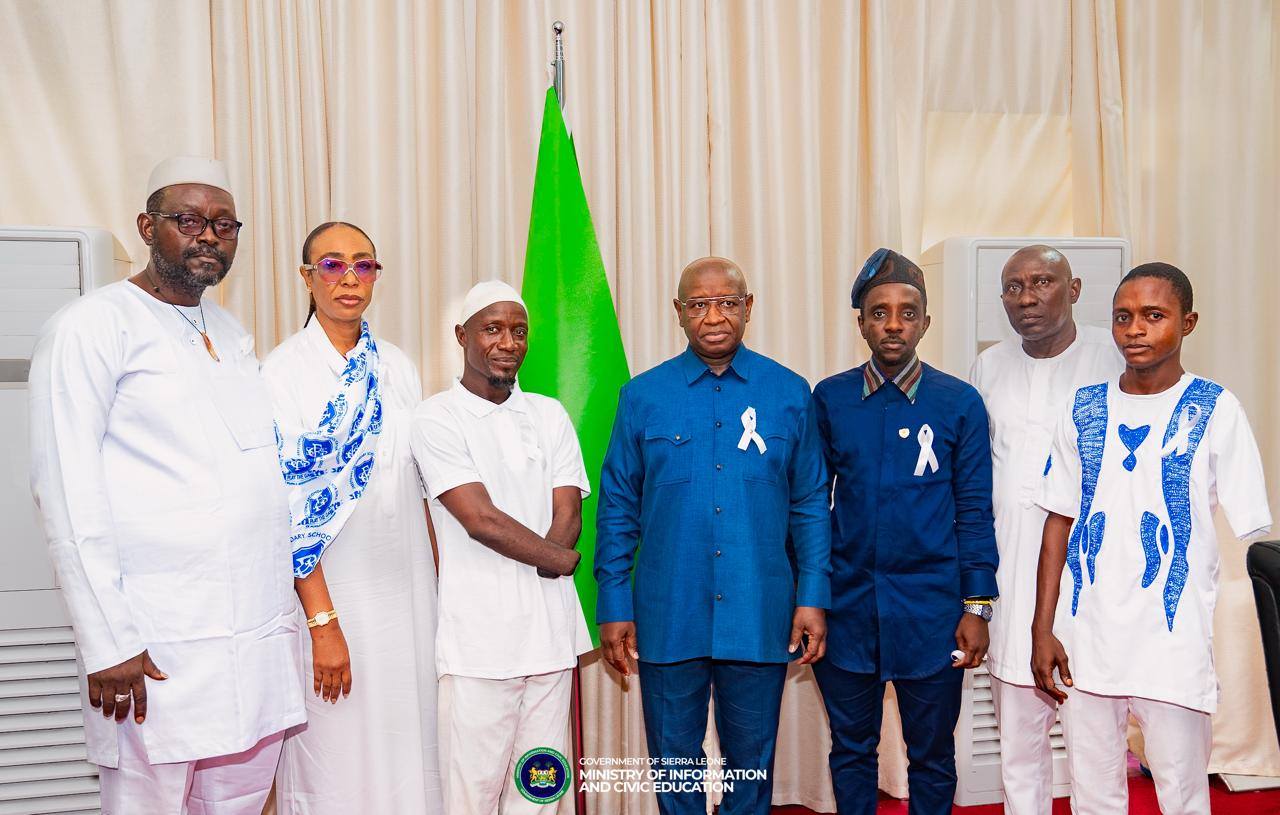
As we mark the inaugural National Remembrance Week, culminating in the first-ever National Remembrance Day on January 18, 2026, a simple white ribbon has become a powerful emblem of the nation’s unresolved past and hopeful future.
President Julius Maada Bio, donning the ribbon at State House on January 14, called on all Sierra Leoneans, both at home and in the diaspora, to wear white from January 14 to 21 as a symbol of peace, healing, and unity. This gesture, while symbolic, arrives at a pivotal moment nearly 24 years after the end of a brutal 11-year civil war that claimed over 50,000 lives, displaced millions, and left indelible scars through atrocities like amputations and child soldier recruitment.
But is this declaration enough to foster genuine reconciliation, or is it merely a starting point in a long-overdue journey?

The civil war which raged from 1991 to 2002 was fueled by corruption, inequality, and the exploitation of Sierra Leone’s diamond wealth by rebel groups like the Revolutionary United Front (RUF). In its wake, the Truth and Reconciliation Commission (TRC), established in 2002, issued a comprehensive report with over 400 recommendations aimed at preventing recurrence. Among them memorials, reparations for victims, free education and medical care for survivors, and annual commemorations to honour the dead and wounded.
President Bio’s proclamation of January 18 as Remembrance Day directly fulfills one of these calls, designating it a day of reflection rather than a public holiday ensuring life goes on while pausing for collective introspection.
This week’s activities underscore the initiative’s intent. A nationwide two-minute silence at noon on January 18 will halt traffic, workplaces, schools, and broadcasts, inviting Sierra Leoneans to contemplate the war’s lessons. Families are encouraged to discuss the conflict’s root causes, youth disenfranchisement, governance failures, with younger generations. Memorial walls, candlelight vigils at sites like the Tomb of the Unknown Civilian in Freetown, and special prayers in mosques and churches aim to weave remembrance into the fabric of daily life. Hashtags like #SaloneDaeMemba and #WiNorForget are flooding social media, with many organizations joining the white ribbon campaign, pinning ribbons on leaders to reaffirm global commitments to peace.
Yet, amid the optimism, valid criticisms linger. Some argue the launch feels rushed, why not wait until 2027, the 25th anniversary of the war’s end, allowing a year of public sensitization? Others point to irony. How can a government preach remembrance while survivors still endure poverty and neglect two decades later? With accusations of the culture of revenge and vengeance is this the right time?
The TRC’s emphasis on “truth telling” and countering “social forgetting” is noble, but with limited and still outstanding tangible reparations for the victims, remembrance risks ringing hollow. In a country where corruption and division persist, echoing the war’s precursors, this day must not devolve into performative politics. As one observer noted, Sierra Leone cannot afford to repeat the mistakes that ignited the conflict, nor can it build unity on vengeance.
President Bio has called this “just the first step,” and he’s right. Remembrance Day offers a chance to pivot from pain to progress, but it demands follow-through. Implementing the Persons With Disability Act, compiling accurate databases of survivors for targeted aid, and integrating war education into school curricula are essential.
International partners, already pinning white ribbons, should ramp up support for psychosocial programs and economic reintegration, ensuring Sierra Leone’s youth, once fodder for rebels, see a stake in peace.
As we approach January 18, let every white ribbon serve as a reminder that forgiveness does not mean forgetting, and healing requires action. Sierra Leoneans, wear white not just this week, but in spirit year-round. We must join Binta Mansaray and Joseph Kaifala and help honour the victims by building a nation where “Never Again” is more than a slogan. It must be lived reality.
Only when successive government’s attitudes changes to full adherence to rule of law, respect for human rights, political tolerance & inclusiveness rightly sanitizing the whole issue of governance; then could the perception of governments intention be alternated from mere symbolism to a forthright & honest approach to effect the desired change.