

Investigation Begins Over Death of 30-Year-Old Pregnant Woman at Kambia Government Hospital
 Daniel Amara
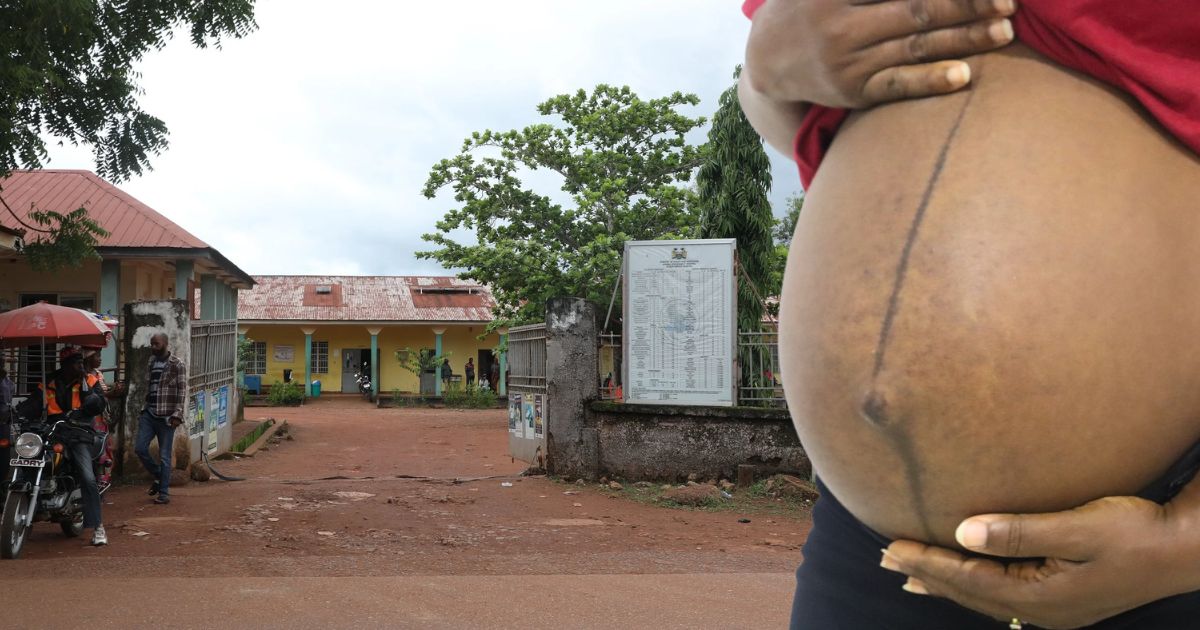
 The Ministry of Health has launched a formal investigation into the death of Kadiatu Pompay Kamara, a 30-year-old woman who died at Kambia Government Hospital following a surgical procedure.
Minister of Health Dr. Austin Demby condemned the incident, stating, “If the allegations are true, then such preventable maternal deaths are totally unacceptable”. He extended his condolences to the bereaved family, calling the loss “devastating”.
The investigation follows widespread public outrage and reports alleging that Ms. Kamara underwent a critical surgery performed by a Community Health Officer (CHO) without supervision from a trained medical doctor. The reports further claim that complications arose which exceeded the CHO’s expertise, leading to the patient’s death. Additional allegations suggest the hospital is currently operating without a trained medical doctor, leaving CHOs to perform major procedures like cesarean sections.

In its response, the Ministry pushed back against claims that the district lacks leadership, noting that Kambia is served by a Board Certified OBGYN Medical Superintendent and District Medical Officer Dr. Serah Conteh.
Addressing the role of CHOs, the Ministry clarified that while it is global standard for well-trained CHOs to perform minor surgeries as a “stop-gap measure” in underserved areas, they must be “closely supervised”.
Officials highlighted that despite this “shadow of grief,” Kambia District has made significant strides in maternal health, reducing maternal deaths by 28% between 2024 and 2025 and currently ranking sixth nationwide for low maternal mortality.
Nationally, the Ministry pointed to a 70% reduction in maternal mortality over the last 15 years—dropping from 1,165 deaths per 100,000 live births in 2008 to 354 currently. The rate of skilled birth attendants has also risen from 60% to 87% in recent years.
The tragedy has nonetheless exposed deep systemic gaps. The Ministry acknowledged a “stark shortage” of specialists, revealing that Sierra Leone currently faces a 91% surgical need with only 15 resident surgeons nationwide.
To address this, the government is adopting the National Surgical, Obstetric, and Anesthesia Plan (NSOAP) to expand access to care. Additionally, over 120 medical resident doctors are currently in training across various disciplines, a significant increase from five years ago.
“We are not there yet, but we are well on our way,” Minister Demby stated, framing the investigation as a “teachable moment” to improve outcomes for the 350,000 to 400,000 pregnancies that occur in Sierra Leone annually.
May the soul of the deceased test in perfect peace. May God Almighty confort the beraved husband and families.