

SLPHA Hosts Maritime Security Training at Queen Elizabeth II Quay
 Osman Tolo Sesay
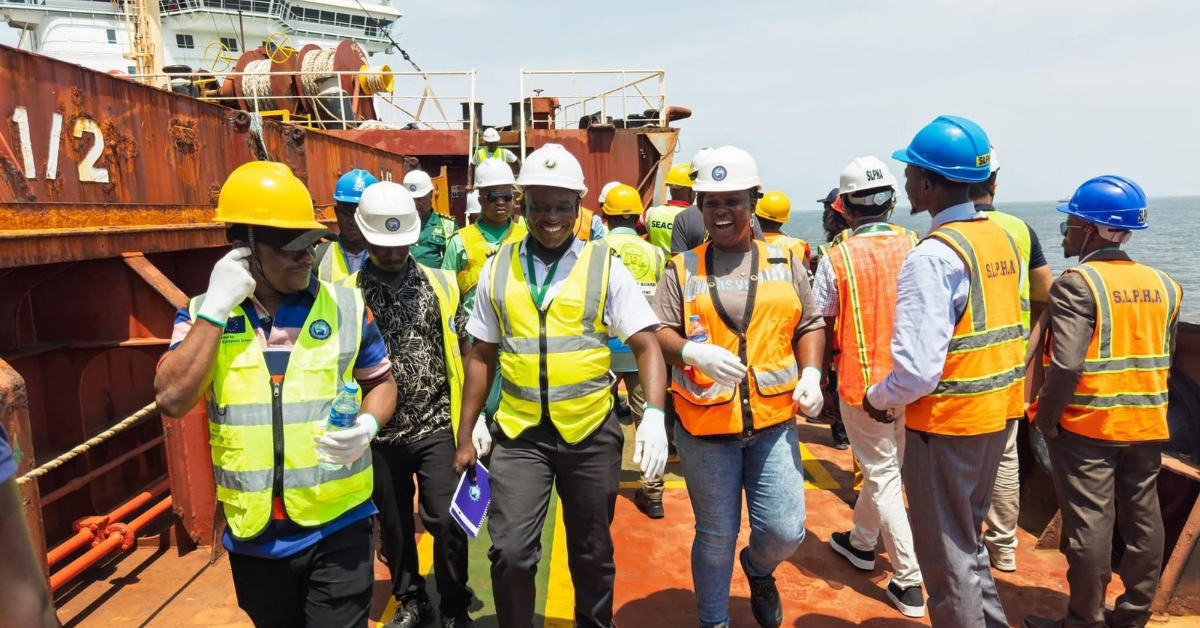
 The Sierra Leone Ports and Harbours Authority (SLPHA) has taken a significant step in strengthening the country’s maritime security framework by facilitating a hands-on training exercise for key stakeholders at the Queen Elizabeth II Quay in Freetown.
The two-day training, conducted in collaboration with the European Union-funded Seaport Cooperation Project (SEACOP), brought together personnel from multiple security and law enforcement agencies, including the Office of National Security (ONS), Sierra Leone Police, the Navy, Interpol, and the Transnational Organized Crime Unit (TOCU).
The exercise focused on enhancing participants’ operational capacity to detect and respond to illicit maritime activities. Through simulated real-life scenarios, officers were trained to identify illegal drugs concealed on vessels and manage situations involving unaccounted persons onboard ships—two critical aspects of combating transnational organized crime at sea.

SLPHA played a central role in the training by providing both a vessel and a controlled operational environment, enabling participants to engage in practical demonstrations.
This approach allowed officers to apply theoretical knowledge in realistic settings, thereby improving their readiness and coordination during actual maritime incidents.
Officials noted that the initiative reflects Sierra Leone’s broader commitment to strengthening maritime governance and contributing to global efforts against drug trafficking and organized crime.
The collaboration between national agencies and international partners also underscores the importance of joint action in addressing evolving security threats within the maritime domain.
The training is expected to enhance inter-agency cooperation and build a more resilient response system to safeguard the country’s ports and territorial waters.