
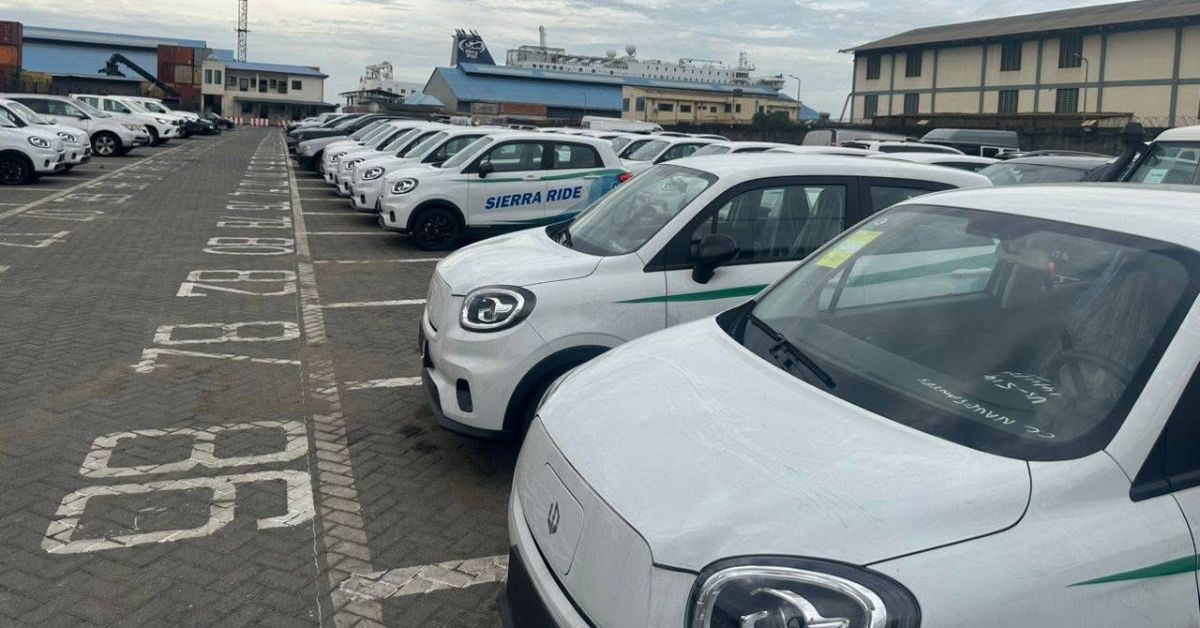
50 Brand New Electric Cars for Youth Empowerment in Sierra Leone, But Where is the Electricity?
 Jayah Koker
 The Ministry of Youth Affairs’ unveiling of 50 electric vehicles for a “Youth in Commercial Transportation” pilot is a welcome and timely experiment. It links two urgent priorities youth employment and low carbon urban mobility and signals a willingness to test new public private partnership models.
However, the promise of cleaner streets and new livelihoods will only be realized if the programme confronts four immediate, interlinked challenges: electricity reliability, technical capacity, youth commitment and governance, and road suitability.
The pilot’s strengths are obvious. Electric vehicles (EVs) can reduce urban emissions, lower long term operating costs, and create transferable skills in vehicle maintenance and digital fleet management. If the pilot proves viable, donor agencies and private partners could help scale a model that delivers both climate and development benefits.

Yet the risks are equally clear. Sierra Leone’s national grid is constrained and prone to outages; many local mechanics and drivers lack EV specific skills; weak oversight could allow assets to be misused; and Freetown’s potholed roads threaten low clearance vehicles. Left unaddressed, these gaps will turn the fleet into underused assets, erode driver incomes, and squander public and donor funds.



Four critical challenges and practical responses
Electricity reliability
Unreliable power means idle cars and lost income. The pilot should begin with a small number of hubs equipped with solar panels and battery storage so charging can continue during grid outages. A hybrid approach grid plus solar will improve uptime and produce clear data on real energy needs.
Technical skills and maintenance
EVs require different servicing and battery management. Make training mandatory: require all drivers to complete a certified EV operations course before deployment. Collaborate with technical institutes and donors to train local mechanics and establish a network of certified service centres with clear warranty and battery management protocols.
Youth commitment and governance
Sustained participation depends on transparent selection, clear contractual obligations, and robust oversight. Adopt cooperative or lease to own models that align incentives, use digital fare collection with escrowed accounts, publish performance data, and create community oversight committees. Periodic independent audits will protect public investment and build trust.
Road infrastructure and vehicle suitability
Low clearance cars suffer on rough roads. Select vehicle models with higher ground clearance or reinforce suspension for local conditions. Route EVs on better maintained corridors while coordinating targeted road repairs in pilot areas to protect the fleet and demonstrate tangible benefits to communities.
A phased rollout to reduce risk
Phase 1: Concentrated pilot with energy resilience
Operate a reduced number of vehicles from a few well located hubs fitted with solar panels and battery storage. This concentrates resources, reduces dependence on the grid, and yields reliable data on charging patterns and energy costs.
Phase 2: Skills and service network
Roll out mandatory training for drivers and a certified technician programme. Establish at least two local service centres with trained staff and spare parts inventories to minimize downtime.
Phase 3: Governance and business model testing
Pilot cooperative and lease to own arrangements, implement digital payments with escrow, and publish monthly performance reports. Create community oversight committees and schedule independent audits at regular intervals.
Phase 4: Road matching and targeted repairs
Deploy vehicles on corridors that are suitable for the chosen models and coordinate small, targeted road repairs in pilot zones. Use maintenance data to refine vehicle selection and routing.
Only if these gates are met should the government and partners expand the fleet, and only with a clear plan for cost sharing between public, private, and donor actors.
The Ministry’s 50 car pilot is an important first step toward greener, youth led transport in Freetown. To turn a symbolic launch into a replicable model, the government and partners must pair the fleet with solar assisted charging, certified training, robust oversight, and targeted road improvements.
Donors should prioritize funding for energy and skills components; local government should commit to performance gates and targeted repairs; private partners should provide fleet management and digital payment systems.
With a phased, data driven approach and clear accountability, this pilot can deliver jobs, skills, and cleaner urban mobility — and become a blueprint for sustainable youth employment across Sierra Leone.
The next 90 days should focus on installing solar at pilot hubs, accrediting training, publishing a transparent beneficiary selection process, procuring vehicles suited to local roads, and setting public performance gates. Get some basics right, and 50 cars can become the start of something much bigger.